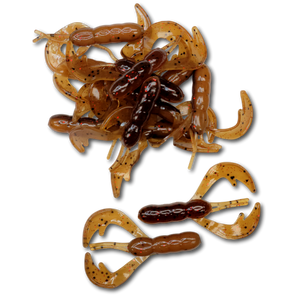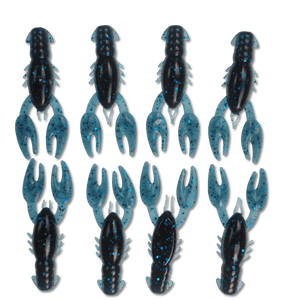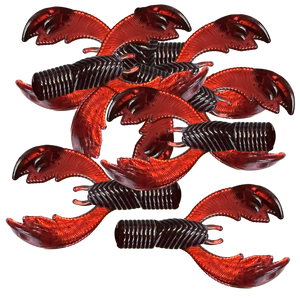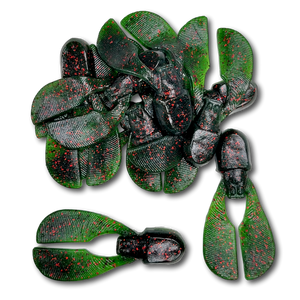

Soft Plastic Jig Trailers
Soft Plastic Jig Trailers are the easiest way to tune a jig’s “feel” without changing the jig. Pick the fall rate first, then match length (2.25"–5") and profile to the bite, and use color as your visibility control. Built for bass, with easy upsizing notes when you want more water push.
Category page • quick answers + rig setupsIf it feels “off,” don’t guess—change fall rate first, then length/profile, then color.
If it feels “off,” don’t guess—change fall rate first, then length/profile, then color.
Fall rate first: your #1 trailer tuning knob
A jig trailer changes how fast the whole package sinks and how it “glides” through the strike window. When bites are short, late, or you’re just ticking cover without getting eaten, treat the trailer as a fall-rate control—before you touch your jig weight.
- Slower fall (more hang time): chunk styles, compact craws, gilley-style bodies, thicker creature bodies.
- Faster fall (more direct): slimmer craws, streamlined creatures, tighter profiles that don’t “parachute.”
- More lift on retrieve: paddle tails, ripsimmer/swimmer shapes, bigger kicking appendages.
Length & profile: match the bait to the jig’s job (2.25"–5")
Your Length filter is doing real work here. Bigger isn’t always “better”—it’s usually just more: more water push, more drag, more lift, and a larger silhouette.
- 2.25"–3": mini craws, compact chunks, small grubs—clean, subtle, and easy to skip or swim.
- 3"–4": the “daily driver” zone—craws, chunks, bugs, medium creatures for most jig styles.
- 4"–5": big craws/creatures, paddles, gilleys—maximize lift and presence; great when you want the jig to feel “alive.”
Profile types in this category (and what each one is best at)
This category covers the main trailer “families” you’ll actually fish on bass jigs—plus a couple crossover shapes that shine when you want lift or a swimming look.
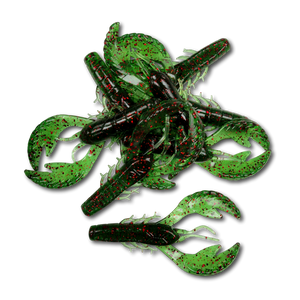
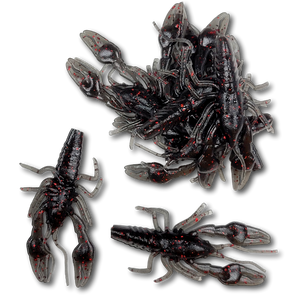
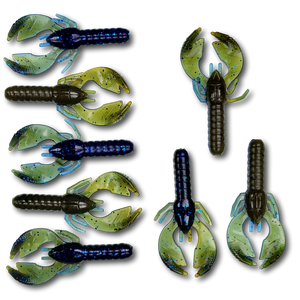
- Craws / mini craws: the classic—claws add braking on the fall and pulse on drag.
- Chunk / hyper chunk: compact and stable—great for a clean, controlled fall and easy skipping.
- Creature / bug baits (small/medium/large): lots of “micro-movement” that reads as alive even when you barely move the jig.
- Single / dual-tail grubs: fast lift + steady thump on swim and slow roll retrieves.
- Ripsimmer / swimmer shapes: keeps a jig moving like a baitfish without switching to a true swimbait setup.
- Paddle tails: maximum lift and vibration—excellent for swimming or ticking the tops of cover.
- Gilley-style bodies: bulky silhouette with “pause appeal,” especially on slow falls and short hops.
Color: visibility control (not a mystery box)
Use color to manage what the fish can see, and use profile/fall rate to manage what the fish can feel. Keep it simple:
- Clear water: natural greens/browns, muted craw tones, subtle two-tone.
- Stained water: darker bodies for silhouette, brighter accents if you want a “target.”
- Low light: strong silhouette colors (darker) or higher-contrast two-tone.
- Pressure: downshift contrast before you downshift size—often that’s enough.
What is a Soft Plastic Jig Trailer?
A Soft Plastic Jig Trailer is a soft bait you thread onto a jig’s hook shank to change the jig’s sink rate, bulk, lift, and action. It can make the same jig feel like three different baits—without changing the jig head, skirt, or hook.
Where it shines: when trailers outperform “one-piece” baits
Trailers shine when you want one jig to cover multiple looks—especially around cover changes, bite mood shifts, or when you need a very specific sink-and-pause cadence.
- Cover changes: rock → weeds → wood—swap trailer to keep the same jig “in tune.”
- Dialing the fall: slower to convert followers; faster to trigger reaction bites.
- Swim vs. drag: grub/paddle for swim; chunk/craw for drag and hop.
When & where to use (boat → river → bank → docks)
This guide assumes a practical progression: start where you can cover the most water, then tighten down when you need precision.
- Boat without electronics: use fall rate to “feel” bottom contact—choose a trailer that keeps the jig readable on the line.
- River: stabilize the jig with compact trailers; let current do the work with short lifts and controlled drifts.
- Bank fishing: prioritize castability and clean hooksets—compact chunks and craws are reliable.
- Docks: use skip-friendly, compact shapes; keep the package stable on the fall under shade lines.
Category is NOT (quick boundaries so you don’t buy the wrong thing)
- Not a full swimbait replacement—trailers tune a jig; they don’t behave like a dedicated swimbait.
- Not “one trailer fits all”—hook gap, skirt length, and jig style matter for how a trailer rides.
- Not just for dragging—many trailers are built to swim, tick cover, or glide on the fall.
- Not a cure for poor cadence—trailers amplify the motion you already fish; they don’t replace good timing.