

Table Rock Baits 2.00" Trout Worm Soft Plastic Bait
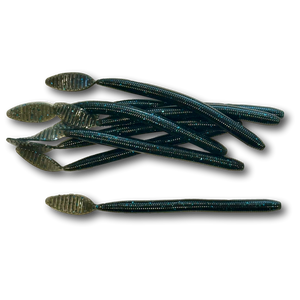
Compact 2" ribbed trout worm with a fine tapered tail for natural drifts, light jigs and micro Ned presentations. A versatile finesse profile for trout and pressured bass.
Compact 2.8" paddle-tail swimbait with a textured baitfish body and rounded kicking tail. Built for light jighead swimming, suspended fish and finesse bass or walleye presentations.
The Table Rock Baits 2.8-inch Paddle Tail is a compact swimming soft plastic for anglers who want a baitfish profile without moving up to a full-size swimbait. Its elongated, textured body tapers into a narrow flexible tail stem, ending in a single rounded paddle. As the bait moves through the water, that paddle can kick from side to side while the body provides a defined target for fish to follow. It's a useful combination for bass, walleye and larger crappie feeding on small shad, minnows or other baitfish.
The appeal is versatility. Put it on a properly matched swimbait jig head and swim it steadily across a point or alongside a weed edge. Count it down to suspended fish and reel through their depth. Or work it vertically with short lifts and controlled falls when walleye or bass are holding around deeper structure. At 2.8 inches, it gives BFS and light spinning anglers enough body to present a recognizable swimming lure without the bulk of a much larger bait.
This is not the same job as a straight-tail finesse worm or a subtle Gilley. The paddle is the working part of this bait. The first task is to find a retrieve speed that activates the tail while keeping the body tracking straight. If fish are chasing baitfish, that steady swimming signal can be an advantage. If they are refusing moving lures, a subtler profile may be the better choice.
Each package contains 6 baits.
The 2.8-inch Paddle Tail is at its most straightforward on an appropriately sized swimming jig head. Begin by getting the bait to track cleanly at the depth you want. From there, adjust the retrieve, fall and line angle to match the way fish are positioned.
Thread the bait straight onto a small swimbait jig head. Cast beyond a weed edge, gravel point, rocky bank or school of suspended fish. Allow the jig to sink to the intended depth, then retrieve at a speed that keeps the paddle working consistently. Add a brief pause near a depth change or piece of cover, letting the bait descend before resuming the swim.
Why It WorksThe rounded paddle produces swimming movement without requiring the angler to twitch continuously. The relatively compact body gives fish a manageable target, while the tail kick helps distinguish the lure from a stationary finesse plastic. A steady presentation also lets you cover water and repeat a productive depth.
RiggingStart by evaluating a light swimming head around 1/8 ounce in open water, then adjust for depth, wind and current. Choose the hook by the actual body thickness and length, not weight alone. Keep the rear body, narrow stem and paddle free of the hook bend and keeper. Check that the finished lure runs upright.
When walleye or bass are holding near deeper rock, brush edges or suspended baitfish, position above the target and lower the paddle tail to the appropriate level. Lift the rod tip a short distance, let the bait swim upward, then allow a controlled fall. Watch the line carefully on the descent and vary the length of the pause.
Why It WorksA short lift activates the paddle and moves the bait away from its holding position. The following fall changes direction and gives fish a chance to intercept it. This is useful when fish are concentrated at a known depth and covering a long horizontal distance is unnecessary.
RiggingUse enough jig weight to maintain control at the target depth. A vertical presentation in wind or current may require more weight than a shallow-water swim. Keep the body straight and ensure the paddle can move during the lift. Short controlled movements generally make it easier to recognize a bite than exaggerated rod sweeps.
Once the 2.8-inch Paddle Tail is rigged correctly, the biggest adjustments are usually running depth, retrieve speed and how closely it travels to cover.
On a light baitcasting setup, cast the Paddle Tail beyond a rocky point or shallow gravel transition. Count it down and retrieve slowly enough to keep the tail working while maintaining a consistent swimming depth. Smallmouth and spotted bass often relate to these transitions, and a compact swimbait can cover them without the bulk of a large baitfish imitation. If fish follow but refuse, change the running depth before dramatically changing speed.
Cast beyond suspended fish or a school of baitfish. Allow the jig to sink for a repeatable number of seconds before starting a steady retrieve. Keep the lure at or slightly above the fish whenever possible. Repeat the same count on subsequent casts to hold the presentation in the productive part of the water column. Avoid letting the lure fall well below feeding fish before starting the retrieve.
Cast parallel to a breakline, rock-to-sand transition or weed edge. Allow the jig to reach the desired depth, then swim the Paddle Tail slowly enough to stay near bottom without dragging continuously. Occasional brief contact can help confirm depth. When the lure approaches a change in structure, pause to let it fall and resume the retrieve.
An underspin can add a rotating flash beneath the bait when bass or walleye are feeding on baitfish in open water. Use a steady retrieve and pay attention to whether the fish are responding to the added blade. Before fishing, confirm the underspin's hook fits the plastic and that the blade clears both the body and the moving paddle. Added flash is an option, not automatically an improvement.
Larger crappie sometimes move away from tiny insect-style plastics and feed on small baitfish. When that happens, try the 2.8-inch Paddle Tail on an appropriately sized light head around suspended schools, docks or the outside edge of brush. Swim it through their level with an even retrieve. If fish follow without eating or repeatedly strike short, downsize to a smaller paddle tail.
Cast along the outside edge of grass or through open lanes around docks. Keep the lure just above the vegetation with a controlled retrieve. The rounded paddle provides movement while the bait travels along the edge. If exposed hooks repeatedly collect vegetation, move to a verified weedless presentation rather than forcing the jig head through heavy cover.
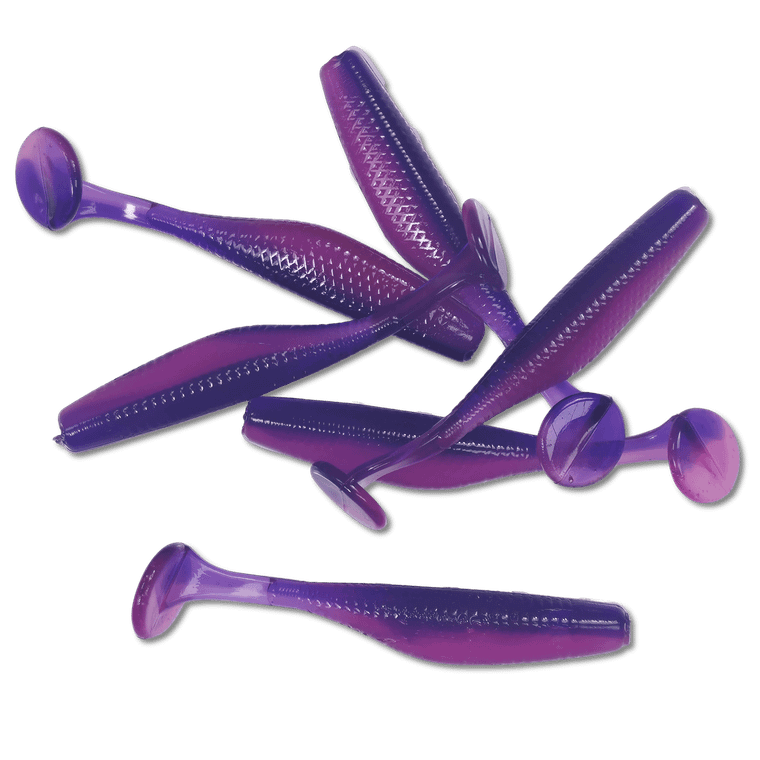
The supplied Morning Dawn photograph shows an elongated paddle-tail body with rich lavender and purple coloration, pink-magenta highlights and a single rounded paddle at the end of a narrow stem. Depending on the light and orientation, parts of the bait appear more purple while others show a stronger pink tint. This is a more colorful presentation than a plain smoke or natural shad pattern.
Morning Dawn is worth testing when a little color contrast helps fish follow a moving bait. It does not have to imitate a purple baitfish to catch fish. The important questions are whether fish can locate the swimming lure, whether its profile fits the forage, and whether they will commit at the speed and depth you are fishing.
Morning Dawn provides visible purple and pink contrast in clear water. Try it when fish are willing to follow a distinct color or when muted shad colors are not producing. If pressured bass inspect the bait without committing, reduce retrieve speed, change depth or compare a more natural color from the available product options.
The deeper purple portions may give the bait a useful silhouette as light decreases, while brighter pink areas add contrast. Keep the paddle moving consistently and adjust the running depth to put it near fish. In heavily stained water, a darker or more visible available color may be a better choice if fish cannot locate this presentation.
Pink and purple may appear different underwater as available light decreases with depth. Do not assume the bright studio appearance will remain unchanged. Focus on tail action, retrieve depth and proximity to fish. No glow-in-the-dark property has been verified for the pictured Morning Dawn color.
Need help choosing a head? Read the Swimbait Jig Head Guide and How to Rig a Swimbait on a Jig Head.
Maker: Table Rock Baits
Product: 2.8" Paddle Tail Soft Plastic Bait
Length: 2.8 inches
Package Quantity: 6 Baits Per Pack
Profile: Compact baitfish-style swimbait
Body: Elongated, textured body with a thicker front and tapered rear
Tail Connection: Narrow flexible stem
Tail: Single rounded paddle
Action: Paddle-tail swimming movement during retrieval
Material: Soft plastic
Color Shown: Morning Dawn, supplied photograph label
Appearance: Lavender-purple body with pink-magenta contrast
Primary Applications: Jighead swimming, BFS swimbait fishing and vertical jigging
Secondary Applications: Underspin swimming and suitable jig-trailer presentations
Primary Target Species: Largemouth bass, smallmouth bass, spotted bass and walleye
Situational Target Species: Larger crappie and trout feeding on appropriately sized baitfish
Useful Locations: Points, rock transitions, breaklines, weed edges, docks and suspended baitfish
Manufacturer Options: Color and Add Scent
Qwik Fishing Options: Select from the actual purchasing controls above
Table Rock Baits develops and tests its soft plastic profiles around Table Rock Lake and Lake Taneycomo. This 2.8-inch Paddle Tail appears in the maker's Bass Finesse Series, which emphasizes compact profiles, light tackle and control.
The manufacturer's scent availability should not be confused with guaranteed availability of a scent modifier on this Qwik Fishing listing. Use only the options shown in the product purchasing area.
Shop Paddle Tail Soft Plastics or Explore Jig Heads.
Have torn or worn soft plastics? Learn about soft-plastic recycling.
Practical answers about swimming action, head selection, bass and walleye fishing, and getting the most from this compact soft plastic.
It is a compact 2.8-inch soft plastic swimbait with an elongated, textured body and a single rounded paddle at the end of a narrow flexible tail stem. It is suited to swimming presentations where a moving paddle helps create a baitfish-like target for bass, walleye and other fish feeding on small forage.
The Paddle Tail uses a rounded tail surface to create movement as water passes over it. A straight-tail or tapered-tail profile generally offers less continuous kicking action and can be useful for gliding, hovering or subtle presentations. Choose the Paddle Tail when a swimming signal is useful; choose a subtler profile when fish follow but refuse a moving bait.
Largemouth, smallmouth and spotted bass are natural targets for a compact baitfish-style swimbait. Walleye can also respond to paddle tails worked along breaklines, rock and current transitions. Larger crappie may take it when feeding on substantial minnows, while trout are a situational possibility where the forage size and presentation fit.
Yes. Table Rock Baits includes this product in its Bass Finesse Series. The compact length is useful for BFS and light spinning applications around docks, points, rock and weed edges. Choose a head whose weight falls within your rod's casting range, then verify hook fit and swimming balance.
Hold the hook alongside the bait to identify a suitable exit point. Enter through the center of the thicker front end, follow the body centerline and bring the hook point out through the top without twisting the plastic. Seat the nose evenly against the jig head. Leave the flexible tail stem and rounded paddle completely free, and make sure the hook gap remains exposed.
Around 1/8 ounce is a reasonable starting point to evaluate for a 2.8-inch paddle tail in ordinary open-water bass or walleye applications, provided the hook actually fits. A lighter head can help in shallow, calm conditions; additional weight may be necessary for depth, wind or current. The right head should reach the fish, maintain clean tracking and leave the tail working freely.
Begin with a slow, steady retrieve that keeps the rounded paddle kicking. Count the lure down first if fish are deeper. Add a short pause when it reaches a point, weed edge or bottom transition. If fish follow but do not strike, adjust swimming depth and retrieve speed one at a time.
Check the rigging first. A hook that enters off-center or exits crooked can make the plastic roll or spiral. Next check head weight, hook size and retrieve speed. The body should remain straight and the paddle should move without pulling the lure onto its side. Re-rig the bait before assuming the problem is the lure color.
Yes. Rig it on a suitably sized jig with enough weight to maintain depth control. Lower the bait near fish or structure, use a short lift to activate the paddle and allow a controlled fall. Watch the line during the descent because fish may take the bait before it reaches the bottom.
An underspin is an option worth evaluating when additional blade flash may help fish locate a moving baitfish profile. Doug's Go-To Underspin offers a 1/8-ounce head on Qwik Fishing. Verify that the hook and keeper fit the 2.8-inch plastic and that the blade clears the paddle and body before fishing.
Potentially, depending on the jig's hook length, keeper, skirt bulk and overall balance. The 2.8-inch Paddle Tail is compact enough to consider for some finesse swim-jig presentations, but actual fit is not confirmed. The tail must remain unrestricted and the assembled jig should track without rolling.
Not necessarily. Larger crappie feeding on minnows may eat a 2.8-inch swimming bait. However, it is larger than many conventional micro crappie plastics. Use a suitably light head and compare it with a shorter paddle tail if fish are following without taking it or repeatedly striking only the tail.
The supplied photograph shows purple and lavender bodies with pink-magenta coloration and a slightly translucent appearance in some areas. The exact underwater color impression changes with light, depth and water clarity. Morning Dawn can provide a colorful contrast to more subdued baitfish patterns.
Glow-in-the-dark performance has not been verified for the pictured Morning Dawn bait. Bright purple or pink coloration does not establish glow properties. Only treat a particular color as a glow bait if the actual manufacturer or product option explicitly identifies that feature.
Each pack contains 6 Table Rock Baits 2.8-inch Paddle Tail soft plastics. The manufacturer's direct product listing offers Color and Add Scent selections. Check the purchasing controls above to see which choices are available through Qwik Fishing.
Keep them flat in their original packaging, away from prolonged direct sunlight and excessive heat. Avoid leaving the paddle folded against the body, since a distorted tail can affect swimming action. Separate strongly contrasting colors when practical and inspect the tail stem before rigging.
A small swimbait only fishes as well as its rigging allows. Start by matching a swimming head to the plastic. Add blade flash if fish need more visibility, consider a hover-style alternative for suspended presentations, or compare another compact paddle-tail profile. Always verify hook fit before ordering.
A 1/8-ounce swimming head to evaluate for controlled paddle-tail retrieves across points, flats and weed edges. Check body and hook fit.
Added Blade Flash Doug's Go-To UnderspinA 1/8-ounce underspin option for swimming near baitfish with extra flash. Confirm blade clearance and hook compatibility.
Suspended Fish Option Doug's Hover Jig Head (5 Pack)Selectable finesse weights and hook sizes for testing a different fall and swimming presentation. Balance and fit require evaluation.
Similar-Size Alternative Jiggin' Johnsons 2.75" Paddle Tail Minnah (10 Pack)Another compact swimming plastic near the same length to compare when fish want a different baitfish profile.