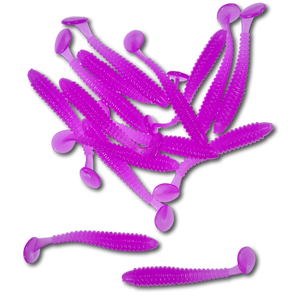




Jiggin' Johnsons' 3.5" PT Slider Paddle Tail Soft Plastic Bait
Slim 3.5" paddle-tail swimbait with a closely ribbed body and small kicking tail that tracks steadily at slow speeds. Excellent for walleye and bass around breaklines, current seams and weed edges.
Best For
Jig Head
Vertical Jigging
Jig Trailer
Finesse
Profile
Standard
Action
Moderate
$3.99
6 Baits Per Pack
(No reviews yet)

Write a Review

Jiggin' Johnsons' 3.5" PT Slider Paddle Tail Soft Plastic Bait
Why Choose the 3.5" PT Slider?
A narrow swimming profile that doesn't need a fast retrieve.
The Jiggin' Johnsons' 3.5-inch PT Slider is a slim paddle-tail soft plastic built for anglers who want a controlled swimming presentation without the exaggerated movement of a wide-tailed swimbait. Its long, closely ribbed body narrows into a thin tail connection ending in a small, curved paddle. That small tail is designed to begin kicking quickly and maintain a consistent action at slower retrieve speeds. The body provides a slender silhouette that can resemble small baitfish while remaining easy to control on an appropriately sized jig head. For walleye and bass, that combination is particularly useful when fish are holding along breaklines, current seams, flats or weed edges and will inspect a moving lure but are reluctant to chase it. Swim the PT Slider steadily, let it glide near a transition or work it vertically with controlled snaps and slack-line falls. Pike may also take the bait, with trout and crappie being situational targets when they are feeding on larger forage. Each package contains 6 baits.
Choose the PT Slider when:
- Walleye or bass are feeding on small, slender baitfish and a natural swimming profile matters.
- You need a paddle tail that maintains movement during a relatively slow retrieve.
- Fish are following larger or more aggressive swimbaits but refusing to commit.
- You want to cover breaklines, flats and weed edges while keeping the bait at a controlled depth.
- You are fishing current seams where a slender bait can swim and swing naturally with the flow.
- You need a soft plastic that can also be worked vertically near deeper structure.
Choose something else when:
- Fish are responding to a wide, hard-kicking paddle tail that produces more water movement.
- You need a broad split-tail grub like the D Bomb for a larger swimming signal.
- The fish are holding tight to bottom and want a stationary craw or goby presentation.
- You want a darting, non-paddle minnow for sharp jerk-and-glide movements.
- Heavy grass or wood requires a verified weedless rig that your available hook cannot provide.
- Your jig hook is too large for the PT Slider's slim body or interferes with the tail connection.
Primary Presentations
Keep the tail moving without pulling the bait away from fish.
The PT Slider's strongest quality is its ability to track cleanly while being retrieved slowly. Start with a jig that gives you the right depth and fall rate, then find the minimum retrieve speed that keeps the paddle working.
Primary
Jighead Swim / Slow Roll & Pause
Rig the PT Slider straight on a suitable jig head and cast beyond a breakline, weed edge, flat or school of feeding fish. Allow the jig to sink to the intended depth before beginning a slow, steady retrieve. Keep the rod relatively still and reel just fast enough to feel a light, consistent resistance from the moving bait. Pause near transitions and allow it to descend before continuing.
Why It WorksThe long, narrow body tracks without the large side-to-side displacement of a bulky swimbait. Its small paddle supplies a tight, repeatable kick while the lure moves through the strike zone. This gives walleye and bass a relatively natural target that can remain at a productive depth instead of rising rapidly during an overly fast retrieve.
RiggingChoose a jig head with a hook length and gap matched to the PT Slider's slim ribbed body. Start with a light swimming head when depth and current permit, increasing weight when you need more casting distance or depth control. Thread the bait straight and leave the thin tail connection and paddle completely free. Check that the rig swims upright rather than rolling.
Also Strong
Vertical Snap / Glide & Controlled Fall
Position over a rocky break, deeper structure or fish located near bottom. Lower the PT Slider on an appropriately weighted jig until it reaches the target depth. Use a short, controlled snap rather than a long sweeping lift, then introduce enough slack for the bait to fall and glide naturally. Watch for the line to hesitate or go slack before the jig reaches its expected depth.
Why It WorksThe PT Slider's slender body allows a relatively streamlined fall. A short snap moves the bait away from the structure, while the following descent gives fish an opportunity to take it without chasing horizontally. Too much continuous line tension can pull the lure back toward the angler rather than allowing the intended glide.
RiggingUse enough jig weight to maintain control at the fishing depth, especially in wind or current. Match hook strength to the intended fish. Keep the body straight and the paddle clear of the hook bend. Begin with shorter snaps and longer observation periods, then adjust the cadence according to how fish respond.
Secondary Uses
More ways to put a slim paddle tail in front of fish.
The PT Slider works well as a controlled swimming bait, but current, depth and structure can make other presentations more productive. These techniques keep its small tail working without requiring exaggerated movement.
Current-Seam Swing for River Walleye
Cast upstream or across a current seam where walleye are holding near rock, a point or a change in bottom depth. Allow the jig to sink while maintaining enough line contact to recognize a strike. As the bait enters the current, let the flow carry it through the seam rather than reeling constantly. Add occasional short lifts when it approaches the bottom or passes a likely holding position. Adjust jig weight and casting angle to keep the PT Slider within the intended depth range.
Slow Swimming Above Weed Edges
Cast parallel to a healthy weed line and count the PT Slider down until it runs just outside or above the vegetation. Retrieve steadily at the slowest speed that keeps its paddle moving. When the bait touches a weed, lift it clear and resume swimming. The relatively narrow profile is useful when you want to travel through tight lanes without the bulk of a larger-bodied swimbait.
Count-Down Swimming for Suspended Smallmouth
When smallmouth are holding near suspended baitfish or a deep edge, cast beyond the fish and use a consistent sinking count. Begin the retrieve just above their depth and keep the lure moving horizontally through the school. Repeat the same count on following casts. If fish follow but refuse, adjust your depth or add a brief pause before making a large change in retrieve speed.
Sand-to-Rock Transitions for Walleye
Work the PT Slider along the line where sand or gravel gives way to rock. Let the jig approach bottom, then swim it slowly just above the transition. Maintain occasional contact to confirm the depth without dragging the hook continuously through rock crevices. When the bait crosses a change in bottom composition, pause briefly and let it fall before resuming the retrieve.
Added Flash on an Underspin
When bass or walleye are following baitfish in open water, an underspin can be worth testing beneath a small swimming plastic. The blade adds visual flash while the PT Slider supplies a steady paddle-tail movement. Use a slow, controlled retrieve and keep the lure near the baitfish depth. Before fishing, verify that the actual underspin hook and keeper fit the slim body and that the spinning blade has adequate clearance from the tail.
Open-Water Swimming for Pike
Pike feeding on smaller forage may take a 3.5-inch swimbait worked along open weed edges, points or flats. Cast beyond the likely holding area and swim the PT Slider steadily through it, adding a pause when the bait reaches an edge or depth change. Use tackle and leader material appropriate for toothy fish, and recognize that this is a smaller offering than many conventional pike lures.
Color and Conditions
Blue Craw gives this minnow profile a muted, natural-looking color.
The supplied photograph shows the PT Slider in Blue Craw, a pale, translucent green-gray shade with scattered dark flakes and subtle reflective highlights. Although the color name references a craw, the PT Slider itself is a slim paddle-tail swimming bait rather than a crawfish imitation. The color may be useful where muted greens and darker speckling resemble local forage or provide a less conspicuous presentation. Underwater appearance will depend on light, water clarity and depth. Select other colors only from the actual product options above.
Clear Water
Blue Craw is worth trying when fish are closely inspecting a lure and you want a subdued green-gray body instead of a bright opaque swimbait. Its translucent appearance and dark flecks give the profile visual detail. Keep the retrieve slow and controlled, allowing the natural movement of the small paddle to carry the presentation.
Stained Water
In lightly stained water, the PT Slider's movement can remain useful even when its pale body is less distinct. If visibility becomes limited, compare a darker or brighter color from the available selections. Maintain a consistent running depth while testing colors so you can tell whether fish are responding to the change rather than a different presentation.
Low Light / Deeper Water
The Blue Craw color may appear darker or less green as available light decreases. Concentrate first on locating the fish and maintaining the proper depth. The supplied photograph does not establish glow-in-the-dark properties. Do not assume this color glows unless the actual product option specifically identifies that feature.
Tuning and Specifications
Get the body straight. Then find the slowest speed that works.
With the PT Slider, rigging accuracy matters. Its narrow body and small paddle are intended to track cleanly, and a crooked hook or oversized head can alter the balance. Before making long casts, check the rig in clear shallow water if possible.
On-the-Water Tuning
- Match the hook to the body: Choose the hook according to the slim ribbed section rather than simply using the largest hook that will fit a 3.5-inch bait.
- Thread straight: Enter through the center of the rounded nose and keep the hook shank aligned with the body.
- Protect the tail connection: Stop the hook before the narrow tail stalk. The small paddle must remain free to move.
- Check the hook gap: Leave enough exposed gap for reliable hookups. A thick jig keeper or oversized hook can crowd a slender plastic.
- Use the minimum productive speed: Start with a slow retrieve and increase speed only until the paddle works consistently.
- Watch for rolling: If the lure tracks sideways or rolls, inspect its alignment on the jig before changing weights.
- Match weight to depth: Use a lighter head for shallow slow swimming and increase weight when deeper water, wind or current requires more control.
- Count down consistently: Use the same sinking count on repeated casts to keep the bait near suspended fish.
- Control vertical falls: After a short snap, allow enough slack for a natural glide while watching the line for bites.
- Use current instead of speed: In moving water, let the river carry the bait through productive seams rather than constantly retrieving against the flow.
- Check underspin clearance: If using an underspin, make sure the blade spins freely without contacting the PT Slider or its paddle.
- Inspect after a fish: Straighten the body and confirm the narrow tail stalk and paddle have not been torn or bent out of alignment.
For steady swimming, compare Doug's Go-To Swim Jig Head. For swimming with added blade flash, evaluate the Go-To Underspin. Actual hook and keeper compatibility should be checked before selecting either option.
Product Specifications
- Maker: Jiggin' Johnsons' Tackle Box
- Product: PT Slider Paddle Tail Soft Plastic Bait
- Length: 3.5 inches
- Package Quantity: 6 Baits Per Pack
- Profile: Slim paddle-tail swimbait / minnow
- Body: Long, closely ribbed cylindrical section with a rounded front
- Tail Connection: Narrow, flexible stalk
- Tail: Single small, curved paddle
- Action: Tight, consistent paddle-tail kick at controlled swimming speeds
- Material: Soft plastic
- Color Shown: Blue Craw
- Appearance: Pale translucent green-gray with scattered dark flakes
- Primary Species: Walleye, smallmouth bass, largemouth bass and pike
- Situational Species: Trout and crappie feeding on larger forage
- Primary Uses: Jighead swimming, vertical snap-and-glide and current-seam swings
- Useful Locations: Breaklines, flats, weed edges, current seams and open water
- Qwik Fishing Product Options: Color and Add Scent
- Manufacturer Options: Color, extra tail color and optional scent
- Fulfillment: Made to order; ships with tracking in 1-2 business days from Iowa
Choose your color and any available scent selection using the purchasing controls above. Jiggin' Johnsons notes that adding scent may slightly change the finished bait's color.
The maker's direct store offers an additional tail-color customization. That option is not currently shown on the Qwik Fishing listing and should not be assumed available here.
Browse more products from Jiggin' Johnsons' Tackle Box, compare other Paddle Tail Swimbaits, explore Shad & Minnow Soft Plastics, or shop Jig Heads for rigging options.
Store the PT Slider flat in its original packaging so the long body and small paddle keep their intended shape. Avoid excessive heat and direct sunlight, and separate contrasting colors when practical to reduce color transfer.
Have damaged or worn soft plastics? Visit our Soft Plastic Recycling Information.
Product Q&A
Questions about the 3.5" PT Slider.
Practical answers about rigging, paddle-tail movement, retrieve speed and choosing the right presentation for walleye and bass.
What is the Jiggin' Johnsons' PT Slider?
The PT Slider is a 3.5-inch paddle-tail soft plastic with a long ribbed body, slender tail connection and small curved paddle. It is intended for natural-looking swimming presentations on suitable jig heads, particularly for walleye, bass and other predators feeding on small baitfish.
How is the PT Slider different from the D Bomb?
The PT Slider has a slender body and one relatively small paddle tail designed for a tighter swimming kick. The 3.5-inch D Bomb has a more substantial ribbed body and two broad split-paddle tail lobes intended to produce a wider swimming signal. Choose the Slider for a controlled baitfish presentation or consider the D Bomb when fish are responding to more pronounced tail movement.
What species is the PT Slider designed to catch?
The manufacturer primarily recommends walleye, smallmouth bass, largemouth bass and pike. Trout and crappie can be situational targets when they are feeding on larger baitfish. Match hook strength, line and rigging to the fish and surrounding cover.
How do I rig the PT Slider on a jig head?
Thread the front of the ribbed body straight onto an appropriately sized jig hook. Keep the hook shank aligned with the lure's centerline and bring the hook point out before the narrow tail connection. The small paddle must remain free, and enough hook gap should be exposed for reliable hookups. Check that the assembled bait tracks upright during a short test retrieve.
What jig head should I use with the PT Slider?
Choose a swimming jig head whose hook length, wire strength and gap match the PT Slider's relatively slim body. Doug's Go-To Swim Jig Head has an existing 1/8-ounce option worth evaluating for controlled swimming. Heavier or lighter weights may be appropriate depending on depth and current, but the listed companion's physical hook fit has not been verified.
How fast should I retrieve the PT Slider?
Start slowly. The manufacturer emphasizes that the small paddle begins working quickly and remains consistent at reduced speeds. Retrieve just fast enough to keep the tail moving and the bait tracking cleanly. If the lure rises above the intended depth, reduce speed or adjust jig weight instead of continuing to reel faster.
How do I fish the PT Slider for walleye?
Cast along a breakline, weed edge, flat or bottom transition, allow the jig to reach the intended depth and swim it slowly. Add short pauses near changes in structure so the bait can descend. In deeper water, use a vertical snap-and-glide presentation with short lifts and controlled slack-line falls. In rivers, allow the bait to swing through current seams while maintaining enough contact to detect strikes.
What is a current-seam swing?
A current-seam swing uses the river's flow to carry a lure across the boundary between faster and slower water. Cast upstream or across the seam, allow the jig to reach the intended depth and follow the drift with light line contact. The PT Slider's paddle can continue moving as water flows past it. Occasional small lifts may trigger fish holding near bottom, but constant reeling is not necessary.
Can I vertically jig the PT Slider?
Yes. The manufacturer recommends vertical snap-and-glide presentations for deeper fish holding near structure or bottom. Lower the lure to the fish, lift with a short controlled snap and allow it to descend on slack or semi-slack line. Watch for hesitation, a line twitch or unexpected slack that may indicate a strike.
Will the PT Slider work on an underspin?
An underspin is a rigging option to evaluate when additional blade flash may help attract bass or walleye feeding on small baitfish. Doug's Go-To Underspin has an existing Qwik Fishing listing. Before using it, verify that its hook and keeper fit the PT Slider's slim body and that the spinning blade does not interfere with the paddle tail.
Can I use the PT Slider as a swim jig trailer?
The PT Slider may be suitable for some swimming-jig trailer applications, but actual fit depends on the jig's hook, keeper, skirt and overall profile. Check that the ribbed body can be mounted straight and that the paddle remains unobstructed. If the skirt overwhelms the narrow plastic or the rig rolls during retrieval, choose a different trailer or head rather than forcing the combination.
Is Blue Craw a crawfish bait color or a baitfish color?
Blue Craw is the color name supplied for the photographed PT Slider. It appears as a pale translucent green-gray with scattered dark flakes. Although the color name refers to a craw, the PT Slider is a paddle-tail swimming profile and can be presented as small baitfish forage. Match the color to water clarity, light and local feeding conditions rather than relying on the name alone.
Does Blue Craw glow in the dark?
Glow-in-the-dark performance has not been verified for the photographed Blue Craw color. The dark flakes and reflective details should not be mistaken for confirmed glow material. Choose an explicitly identified glow option only if one is available and that feature is important to your presentation.
How many PT Sliders come in a pack, and is scent available?
Each package contains 6 Jiggin' Johnsons' 3.5-inch PT Slider soft plastic baits. The Qwik Fishing listing includes an Add Scent option. The manufacturer notes that adding scent can slightly change the finished bait's color. Select the available options through the purchasing controls above.
How should I store PT Slider soft plastics?
Keep the baits flat in their original packaging, away from direct sunlight and excessive heat. Avoid sharply bending the narrow tail connection or leaving the paddle folded for long periods. Separate strongly contrasting colors when practical to reduce color transfer, and check the bait's alignment before rigging.
Companion Tackle & Alternatives
Give the PT Slider a head that keeps it swimming straight.
The PT Slider works best when its long ribbed body is aligned on the hook and its small paddle remains unrestricted. Compare these existing Qwik Fishing products for steady swimming, added flash, suspended-fish presentations and a shorter swimbait alternative. Check physical hook fit before selecting a jig head.
Jighead Swimming
Doug's Custom Lures Go-To Swim Jig Head (3 Pack)
1/8-ounce swimming head to evaluate for controlled retrieves along weed edges, flats and breaklines. Check PT Slider hook fit.
Added Blade Flash Doug's Custom Lures Go-To Underspin1/8-ounce underspin option for slow swimming when added flash may help. Verify hook fit and paddle clearance.
Suspended Fish Option Doug's Custom Lures Hover Jig Head (5 Pack)Selectable weights and hook sizes for evaluating a controlled horizontal or gliding presentation. PT Slider balance and fit are unverified.
Shorter Swimbait Profile Jiggin' Johnsons' 3.0" Ripswim (10 Pack)A shorter paddle-tail minnow to compare when fish follow the longer PT Slider but prefer a more compact swimming bait.