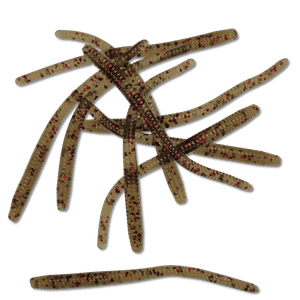


Jiggin' Johnsons' 4.25" Ring Worm Soft Plastic Bait
Classic 4.25" walleye ring worm with a deeply ribbed body and single curled tail that moves during slow drags, short lifts and controlled current drifts. Built for fishing close to bottom.
Compact 4.5" bass and walleye worm with a deeply ribbed body and broad single curly tail that moves on slow swims, gentle lifts and bottom drags.
The Jiggin' Johnsons' 4.5-inch Hummer is a compact curly-tail worm for bass and walleye anglers who want movement without having to work a bait aggressively. Its long, slender body is covered with closely spaced raised rings, ending in one broad, flexible, C-shaped tail. That tail is the feature that makes the Hummer different from a straight-tail finesse worm: it can curl, flex and move during a slow pull, gentle lift or steady retrieve while the ribbed body stays relatively compact. It is particularly useful along weed edges, around docks, across rocky transitions and near open flats where fish are willing to follow a moving soft plastic but may not chase a faster bait. Texas rig it when you need to move through cover, swim it on a properly sized jighead in open water, or drag it slowly near bottom for walleye. The Hummer provides a manageable four-and-a-half-inch profile with noticeable tail movement. Each package contains 9 baits.
The Hummer is not a worm that requires constant shaking or snapping. Its broad curl gives you movement at relatively slow speeds. Start by choosing the right rig for the cover, then use just enough motion to keep the tail working.
Rig the Hummer on a suitably sized offset worm hook, either weightless or with a light bullet weight depending on depth and cover. Pitch it beside docks, across sparse grass, near laydowns or along a rocky shoreline. Let the bait reach bottom, then move it slowly with a short sweep of the rod. Pause and allow the worm to settle before moving it again. If fishing through vegetation, keep the hook point protected without burying it so deeply that it cannot clear the plastic on a strike.
Why It WorksThe Texas rig lets the Hummer move through cover more cleanly than an exposed jig hook. Its ribbed body creates a textured target, while the broad curly tail can flex during small drags and gentle lifts. The pause keeps the worm in the fish's immediate feeding area rather than pulling it quickly away.
RiggingChoose an offset worm hook according to the body thickness and desired hook gap. Thread the nose straight, rotate the worm onto the hook and lightly skin-hook or protect the point as cover requires. Leave the broad curly tail completely free. Use a light bullet weight for deeper bottom contact or fish it weightless when you want a slower fall around shallow cover. Always verify that the body can move aside and expose the hook point during a strike.
Thread the Hummer onto a light round or ball-style jighead and cast along the outside edge of weeds, over open rock or across a productive flat. Allow the jig to reach the desired depth, then begin a smooth, steady retrieve. Keep the rod relatively quiet and use enough speed to maintain movement in the curled tail. When the lure reaches a break or likely holding area, pause briefly and allow it to descend before continuing.
Why It WorksThe broad curled tail can move with very little forward speed. Swimming it on a jighead gives anglers a way to cover water and find fish without the strong vibration or larger silhouette of a conventional paddle-tail swimbait. Small speed changes may also cause the tail to respond differently, providing another opportunity to trigger a following fish.
RiggingSelect a jighead whose hook shank and gap match the Hummer's ribbed body. Thread the worm straight, keeping the curl beyond the hook bend. Start with enough weight to cast and maintain the desired running depth, increasing only when wind, current or depth makes it necessary. Check that the worm tracks naturally and does not twist or roll during the retrieve.
The Hummer is useful because its tail gives you action without requiring large rod movements. These presentations adapt that feature to different cover, water conditions and fish behavior.
Cast the Hummer across a sand-to-rock transition, gravel flat or shoreline break where walleye are holding close to bottom. Use a jighead with enough weight to maintain contact, then drag the worm slowly with light rod pressure. Pause after the head touches harder bottom and allow the tail to settle. Keep the retrieve controlled rather than continuously hopping the bait. When the jig begins catching between rocks, lift it clear rather than pulling harder through the crevice.
Use a correctly sized offset hook without added weight when fishing shallow docks, scattered grass or open pockets around vegetation. Cast the Hummer beyond the target and let it fall naturally. Give it a gentle pull, then allow another controlled descent. The tail can move during the glide and settle. If the rig sinks too quickly or behaves unnaturally, check hook size and placement before adding more rod action.
Cast parallel to the outside edge of vegetation and retrieve the Hummer on a light jighead or suitably rigged weighted hook. Keep the lure traveling just beyond the weed tops. Start with a steady retrieve and use short pauses when it approaches an opening or transition. The tail provides movement while the slender body travels along the edge. Choose a protected-hook arrangement when the vegetation is too thick for an exposed jig.
Pitch the Hummer beside a dock post or shaded vertical edge and allow it to fall on controlled line. Work it with a small lift and pause at the depth where bass are holding. The broad curl can respond while the worm stays close to the structure. Avoid pulling the bait several feet away after every movement. When the water is clear and fish are reluctant, try a lighter weight or a slower presentation before changing colors.
Cast upstream or across a current seam where walleye are positioned near rock or a bottom break. Use enough weight to reach the intended depth, then allow the current to carry the Hummer through the feeding lane while maintaining light line contact. The broad curl can respond to water movement without a fast retrieve. Adjust your casting angle and jig weight when the worm rises too high or drags uncontrollably along bottom.
The Hummer can be evaluated on a Carolina rig when bass are spread across an open point, gravel flat or deeper transition. Use an appropriately sized offset hook and a leader that lets the worm travel behind the weight. Drag the rig slowly, pause, then continue. The curly tail can move while the main weight maintains bottom contact. Keep the worm straight on the hook and adjust leader length according to the depth and cover being fished.
The supplied photograph shows Chumberry, a rich translucent cranberry-red soft plastic with scattered black flecks throughout the ribbed body and broad curled tail. Its darker red body and slightly brighter, thinner tail create some visual variation within the same color. The raised rings catch available light differently from the smooth tail, giving the lure additional surface detail. Chumberry is worth considering when you want a stronger color presence than a natural green or smoke worm, although underwater appearance will depend on water clarity, light and depth. Select other colors only from the actual product options above.
Chumberry can provide a distinctive red presentation when bass are responding to darker or warmer-colored plastics. In very clear water, begin with a restrained retrieve and give fish time to inspect the lure. When they repeatedly follow without committing, try a more natural or translucent color from the available options rather than continually increasing rod movement.
The Hummer's deeply ribbed body and broad curly tail create a recognizable shape and movement even when color detail is less apparent. Chumberry offers a darker red silhouette worth evaluating in lightly stained water. If fish have difficulty locating it, compare a darker solid or higher-contrast color and keep the worm close to likely holding areas.
As available light decreases, Chumberry's red tones may darken and become less distinct. Prioritize the correct running depth and the speed needed to activate the tail. The pictured color has not been verified as glow-in-the-dark, and the black flecks should not be treated as glow material. Choose a specifically labeled glow color only when that feature is available.
The Hummer's deeply ribbed body gives the worm a distinctive shape, but the broad tail is what makes it especially useful for slow swimming and light bottom work. Keep the body properly aligned on the hook and leave the entire curved tail free to move.
For open-water swimming, compare Doug's Go-To Swim Jig Head. For Texas rigging, use an appropriate offset worm hook matched to the Hummer's body thickness and the cover being fished.
For more help with rigging, see our Best Hooks for Soft Plastics Guide and Soft Plastic Worm Guide.
Choose the actual color and any available scent selection using the purchasing controls above. The manufacturer's direct store offers Color and Add Scent options and notes that scent can slightly change the finished bait's appearance. Do not assume these options are available through Qwik Fishing unless shown in the purchasing controls.
Explore more products from Jiggin' Johnsons' Tackle Box, shop Soft Plastic Worms, or compare Jig Heads for open-water swimming presentations.
The Hummer is an appropriate worm to evaluate when bass are willing to eat a compact plastic with more tail movement than a straight-tail finesse bait. Its primary Texas-rig presentation is especially useful when cover makes exposed-hook swimming less practical.
Store the Hummer flat in its original packaging, keeping the broad curled tail from remaining sharply folded or compressed for long periods. Avoid excessive heat and direct sunlight, and separate contrasting colors when practical to reduce color transfer.
Have damaged or worn soft plastics? Visit our Soft Plastic Recycling Information.
Practical answers about the Hummer's distinctive curly tail, rigging choices, retrieve speed and deciding when to use it instead of a quieter finesse worm.
The Hummer is a 4.5-inch curly-tail soft plastic worm with a long, deeply ribbed body and one broad, flexible tail. It is intended primarily for bass and walleye, with enough tail movement for slow swimming and enough body length for appropriately sized Texas rigs and jighead presentations.
The Hummer's broad curled tail provides movement during slow retrieves, small pulls and changes in direction. A straight-tail finesse worm generally offers a quieter profile and depends more on the fall, shake or subtle body movement. Choose the Hummer when you want more activity at the rear of the bait without moving to a larger creature or swimbait.
The manufacturer identifies bass and walleye as its main targets. The Hummer is particularly useful along weed edges, near docks, across rock transitions and on open flats where these fish feed. Choose the appropriate hook, line and rigging method for the species and cover you are fishing.
Choose an offset worm hook that matches the Hummer's slender ribbed body. Insert the hook through the nose, rotate the bait onto the offset and place the hook point back into or against the body so it remains protected from cover. Keep the body straight and the curled tail completely free. Use a bullet weight when you need additional casting distance or bottom contact, or fish the worm weightless in shallow water.
Choose by the worm's actual body thickness, usable straight section and the gap needed for a proper hookup. A slender worm often rigs cleanly on a round-bend offset hook, while some wider-gap designs may be useful depending on the cover. There is no single confirmed hook size for the Hummer. Check that the body can move out of the way during a strike and that the hook does not reach into the curly tail.
Yes. Jighead swimming is one of the manufacturer's three preferred presentations. Rig the Hummer straight on a light round or ball-style jighead and retrieve it steadily along weed edges, open rock or flats. Begin slowly and increase speed only enough to keep the curled tail working. Match the head's hook dimensions to the body and keep the curl unobstructed.
Begin with a slow, steady retrieve. The manufacturer describes the tail as responsive at crawl speeds, so the worm does not require aggressive rod action. Try a short pause or gentle lift near cover to change the tail's movement. If fish are following but not taking the bait, reduce speed before attempting a faster retrieve.
For walleye, the manufacturer recommends dragging the Hummer slowly near bottom along flats, points and shoreline breaks. Select a suitable jighead, cast across the transition and move the bait with light rod pressure. Pause regularly and watch for subtle pickups. In current, adjust jig weight so the worm stays near the fish without dragging uncontrollably or rising too far above bottom.
Yes. A weightless Texas rig is a useful option in relatively shallow water when you want the worm to fall more slowly around docks, grass openings or other cover. Its tail may move during a gentle pull or descent. Use a hook that balances the slim body and verify the bait falls naturally rather than spinning or rolling.
Yes, especially when rigged Texas style with a protected hook point. Pitch the worm into open pockets or beside dock posts, let it settle and work it with short pulls and pauses. Keep the curl free and avoid dragging the worm unnecessarily through thick stems. If you choose an exposed jighead instead, fish outside the heaviest vegetation to reduce snagging.
Both use deeply ribbed bodies and a single curled tail. The 4.5-inch Hummer is presented by the maker as an active curly-tail worm that excels with Texas rigs, jighead swimming and controlled walleye drags. The 4.25-inch Ring Worm is especially oriented toward deliberate jig-and-drag, vertical jigging and current-seam drifting. Choose according to whether you want to cover water with a moving worm or concentrate on precise bottom-contact presentations.
The Legend offers a much longer ribbon-tail worm silhouette for fish willing to eat a larger presentation. It is worth considering around deeper points, ledges, brush and other bass structure where size and longer tail movement are useful. The Hummer is a more compact option when fish are feeding on smaller prey or you want to work a curly-tail worm around tighter cover.
Chumberry is the color identified in the supplied product photograph. It appears as a deep translucent cranberry-red with scattered black flecks. The color provides a stronger red profile than a natural smoke or green worm. Glow-in-the-dark properties have not been verified, so do not assume Chumberry glows unless the actual product option identifies that feature.
Each package contains 9 Jiggin' Johnsons' 4.5-inch Hummer curly-tail worms. The manufacturer's direct store offers an Add Scent option and notes that scent may slightly change the color of the finished plastic. Availability on Qwik Fishing depends on the purchasing controls displayed above.
Keep the worms flat in their original packaging, away from excessive heat and direct sunlight. Avoid leaving the broad curled tails tightly folded for long periods. Separate strongly contrasting colors when practical to reduce color transfer. Before rigging, check that the body is straight and the tail is free of damage or tangles.
The Hummer provides a compact worm with an active curled tail. Use an appropriate offset hook for fishing through cover or evaluate a light exposed jighead for open-water swimming. These four existing Qwik Fishing products offer one jig option and three useful worm alternatives. Hook compatibility with the featured jig has not been physically verified.
1/8-ounce head to evaluate for slow swimming and light open-water bottom contact. Check Hummer hook fit.
Walleye Bottom Contact Jiggin' Johnsons' 4.25" Ring Worm (8 Pack)Slightly shorter ringed worm for deliberate jig-and-drag, vertical jigging and current-seam presentations.
Larger Ribbon-Tail Worm Jiggin' Johnsons' 7.5" Legend Ribbontail WormLonger worm silhouette for bass willing to eat a bigger target around points, ledges and deeper structure.
Quieter Finesse Profile So Good Baits 4.5" Finesse WormSame-length finesse alternative when fish want less tail movement and a more restrained presentation.