



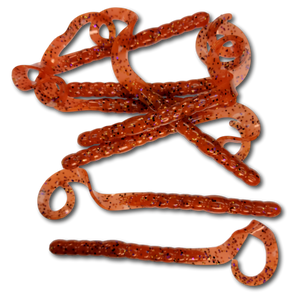

Jiggin' Johnsons' 4.25" Ring Worm Soft Plastic Bait
Classic 4.25" walleye ring worm with a deeply ribbed body and single curled tail that moves during slow drags, short lifts and controlled current drifts. Built for fishing close to bottom.
Best For
Jig Head
Vertical Jigging
Bottom Contact
Finesse
Profile
Standard
Action
Subtle
$3.99
8 Baits Per Pack
(No reviews yet)

Write a Review

Jiggin' Johnsons' 4.25" Ring Worm Soft Plastic Bait
Why Choose the 4.25" Ring Worm?
Keep it close to bottom. Let the rings and tail do the rest.
The Jiggin' Johnsons' 4.25-inch Ring Worm is a classic walleye soft plastic built around one simple idea: give fish enough movement to notice without pulling the bait out of their feeding area. Its long, slender body is covered with closely spaced raised rings, ending in a single broad, curved tail. Those pronounced ribs create a textured profile, while the curled tail can move during a slow drag, small lift or gentle current drift. The bait is especially useful for walleye holding near bottom along sand-to-rock transitions, river current seams, gravel flats and deeper breaks. Rather than hopping it aggressively, work it slowly and maintain enough contact to know where the jig is traveling. The Ring Worm also makes sense for bass and occasionally larger panfish when they are willing to eat a longer worm profile. Start with the manufacturer's preferred jig-and-drag approach, then switch to vertical jigging or a controlled river drift when conditions call for it. Each package contains 8 baits.
Choose the Ring Worm when:
- Walleye are holding close to bottom and are not chasing fast-moving baits.
- You need a worm that produces tail movement at very slow speeds.
- You are dragging a jig across sand-to-rock transitions, gravel flats or deeper edges.
- River fish are positioned along current seams and a natural drift makes more sense than a forced retrieve.
- You want more body texture and tail movement than a plain straight-tail finesse worm.
- Cold fronts or fishing pressure make controlled, near-bottom presentations more productive than aggressive jigging.
Choose something else when:
- Fish are actively chasing minnows and a paddle-tail or shad profile is a better forage match.
- You need a nearly motionless straight-tail worm with less movement.
- Bass are feeding on larger forage and respond better to a longer ribbon-tail worm.
- You need to work through heavy brush or thick vegetation without an exposed hook.
- The selected jig hook is too large for the Ring Worm's slender body.
- Small fish repeatedly nip the curled tail without taking the portion of the bait carrying the hook.
Primary Presentations
Two ways to keep a walleye worm in the strike zone.
The Ring Worm does not need a fast retrieve to be effective. Its best presentations emphasize bottom awareness, small movements and a controlled fall. Start with the lightest jig that allows you to maintain contact under the conditions.
Primary
Jig & Drag / Slow Bottom Contact
Cast the Ring Worm across a gravel flat, sand-to-rock transition or the upper edge of a deeper break. Allow the jig to settle near bottom, then move it slowly with a short sweep of the rod tip. Pause long enough for the lure to settle before moving again. Maintain occasional bottom contact so you know the jig is traveling through the intended depth instead of swimming well above it.
Why It WorksThe long, deeply ribbed body and single curled tail offer subtle movement without requiring a fast retrieve. Each small pull or change in line tension can activate the tail while keeping the worm close to fish holding along a specific bottom transition. This is particularly useful when walleye are feeding but reluctant to chase a moving lure.
RiggingChoose a jig head whose hook shank and gap fit the Ring Worm's slender ribbed body. Thread the worm straight and leave the curled tail unrestricted. In shallow, calm conditions, a lighter head may provide enough control; increase weight when wind, current or depth makes bottom contact difficult. Use the lightest practical jig that lets you recognize the lure touching down without constantly wedging it into rocks.
Also Strong
Vertical Jig / Small Lift & Controlled Drop
Position directly above a rocky break, gravel edge or fish marked near bottom. Lower the Ring Worm until the jig reaches the desired depth, then raise it only a few inches. Allow the bait to fall on controlled line and pause before repeating. Maintain a manageable line angle and watch for bites that occur as the jig settles or rests just above bottom.
Why It WorksA vertical presentation keeps the worm in a narrow feeding area instead of repeatedly moving it away from fish. The curled tail can react to small changes in direction while the heavily ringed body remains an easy target to inspect. In cold water or during a difficult bite, the pause can be as important as the lift.
RiggingUse a jig with sufficient weight to maintain depth and line control. If wind or boat movement creates a large bow in the line, increase weight or reduce drift speed. Match the hook to the bait's narrow body and the target species, keeping the hook gap open. Avoid sharp, high snaps until fish demonstrate that they want a more aggressive presentation.
Secondary Uses
More ways to work a ring worm near bottom.
Although the Ring Worm is particularly suited to slow jigging, there are several ways to use its ribbed body and curled tail. The main adjustment is how you control the worm's position relative to bottom, current and fish.
Current-Seam Drift for River Walleye
Cast upstream or slightly across a current seam where faster water meets a slower holding area. Let the Ring Worm descend toward bottom while following the drift with the rod tip. Maintain enough line tension to recognize a bite without constantly pulling the worm against the current. Use small adjustments to keep the jig from dragging heavily or rising too far above the fish. Increase head weight when the current prevents you from maintaining bottom contact.
Sand-to-Rock Transitions
Work the Ring Worm slowly across a transition where soft bottom meets gravel, cobble or rock. Make short drags and pause after the jig touches the harder material. Walleye often use changes in bottom composition as travel and feeding areas. Maintain enough contact to recognize the transition, but lift the jig over larger rocks rather than allowing the hook to wedge between them.
Wind-Driven Drifts Across Walleye Flats
Use the boat's controlled drift to carry a jigged Ring Worm across a productive flat. Keep the lure close to bottom and adjust line length to maintain a manageable angle. Add small rod movements occasionally rather than constantly hopping the bait. If the jig falls too far behind the boat, increase weight or slow the drift until you regain control of the presentation.
Cold-Front Smallmouth Around Gravel and Rock
When smallmouth are holding tight to gravel, scattered rock or deeper shoreline transitions, drag the Ring Worm slowly along the structure. Use short rod movements and longer pauses than you might with an active swimming bait. Its slimmer worm profile can offer an alternative when a larger craw or creature is drawing attention without producing hookups. Keep the hook clear of rock crevices and inspect the worm after each snag or fish.
Slow Swimming Just Above Bottom
On open flats or relatively clean bottom, cast the Ring Worm and allow the jig to settle before starting a very slow retrieve. Keep it traveling just above bottom, making occasional contact to check depth. The curved tail can move while the bait travels without requiring a fast retrieve. This is a useful variation when fish show some willingness to follow but do not want the stronger kick of a larger swimming grub.
Subtle Drop-Shot Presentation
A drop shot is an alternative worth experimenting with when bass or walleye are holding slightly above bottom and you want the worm to remain at a controlled height. Choose a hook and leader arrangement that can support the bait without bunching its ribbed body or restricting the curled tail. Shake lightly and pause often. The Ring Worm is designed primarily for jig presentations, so test its balance on the selected drop-shot hook before treating this as a preferred rig.
Color and Conditions
Valentine offers a natural tan profile with small red accents.
The supplied photograph shows Valentine, a translucent tan-to-amber soft plastic with scattered black and red flakes. Its closely spaced ribs create alternating highlights and shadows along the body, while the broad curled tail has a lighter, more translucent appearance. This gives the worm a natural-looking, textured profile with some color contrast. Underwater appearance depends on light, depth, clarity and the surrounding bottom. Select other colors only from the actual product options above.
Clear Water
Valentine is a sensible color to try where a natural tan or amber worm fits the conditions. Its translucent plastic and small flecks create detail without a large opaque silhouette. Start with a light jig and a slow drag, letting the curled tail move naturally during small changes in line tension. If fish inspect without taking it, try a quieter color or reduce the amount of movement before making a major change.
Stained Water
In lightly stained water, the worm's pronounced ribs and curled tail provide profile and movement, but the relatively pale Valentine color may not offer the strongest silhouette contrast. Try a darker or more visible color from the available options if fish have difficulty locating it. Keep the bait near bottom and slow the presentation enough to give fish an opportunity to find and intercept it.
Low Light / Deeper Water
As light decreases, the tan body and red flakes may become less distinct. First choose enough jig weight to maintain bottom control, then consider a higher-contrast color if needed. The pictured Valentine color is not confirmed to glow in the dark. Do not treat its colored flakes as glow material unless a specific product option identifies that feature.
Tuning and Specifications
Keep the hook in the body and the curl working freely.
The Ring Worm's long, deeply ribbed body gives it a distinctive appearance and useful flexibility. Choose the jig according to the worm's actual body thickness and your fishing conditions. Avoid a hook that extends too far toward the curled tail or makes the plastic bunch unevenly on the shank.
On-the-Water Tuning
- Hook length: Match the hook shank to the ribbed body, leaving the thinner tail section unrestricted.
- Hook gap: Keep enough exposed gap for reliable hookups, especially when using heavier wire for walleye or bass.
- Thread straight: Enter through the center of the rounded front and avoid twisting the worm on the jig.
- Protect the curl: The broad curved tail should not be trapped against the jig head, hook bend or keeper.
- Start with bottom feel: Choose the lightest head that allows you to recognize bottom contact under the conditions.
- Adjust for current: Increase weight when the jig drifts too far downstream, the line bows excessively or the worm cannot reach the intended depth.
- Drag, do not race: Begin with short, deliberate pulls and long enough pauses for the bait to settle.
- Use short lifts: A few inches of vertical movement may be enough to activate the tail and reposition the bait.
- Watch the line: Light bites may appear as a small twitch, unexpected slack or a stop before the jig reaches bottom.
- Limit snagging: Lift over larger rocks and avoid dragging an exposed jig through heavy brush.
- Check tail movement: Observe the bait in shallow water, when possible, to see how the curled tail responds at your intended retrieve speed.
- Short strikes: If fish are repeatedly nipping the tail, shorten the movement or switch to a smaller finesse profile rather than extending the hook into the curl.
- Inspect after a fish: Straighten the worm, check the hook point and make sure the curled tail is not damaged or wrapped around the shank.
For a light exposed-hook starting point, evaluate Doug's Go-To Swim Jig Head. The actual hook fit remains unverified, and deeper water or stronger current may call for a different head weight or hook style.
For more detail on matching jig weight to water conditions, read our Walleye Jigging Guide or Jig Head Weight Guide.
Product Specifications
- Maker: Jiggin' Johnsons' Tackle Box
- Product: Ring Worm Soft Plastic Bait
- Length: 4.25 inches
- Package Quantity: 8 Baits Per Pack
- Profile: Slender ringed worm with a curled tail
- Body: Long, cylindrical section covered with closely spaced raised rings
- Tail: Single broad, curved, C-shaped tail
- Action: Subtle movement from the curled tail during slow drags, lifts and current-assisted presentations
- Material: Soft plastic
- Color Shown: Valentine
- Appearance: Translucent tan and amber with scattered black and red flakes
- Primary Species: Walleye
- Additional Species: Bass and larger panfish
- Primary Presentations: Jig-and-drag, vertical jigging and current-seam drifting
- Alternative Presentations: Slow swimming and experimental drop-shot rigging when hook fit is suitable
- Useful Locations: River current seams, gravel flats, sand-to-rock transitions and bottom breaklines
- Manufacturer Options: Color, extra tail color, bottom/second/belly color and optional scent; Qwik Fishing purchasing options may differ
- Fulfillment: Made to order in Iowa; check the purchasing area for current shipping information
Choose the actual color and any available customization through the purchasing controls above. The manufacturer's direct store offers additional color and scent selections, but those should not be assumed available through Qwik Fishing unless shown here. The maker notes that adding scent can slightly change the finished bait's color.
Browse more products from Jiggin' Johnsons' Tackle Box, explore Soft Plastic Worms, or shop Jig Heads for rigging options.
Store the Ring Worm flat in its original packaging, keeping the curled tail from remaining sharply folded for long periods. Avoid excessive heat and direct sunlight, and separate contrasting colors when practical to reduce color transfer.
Have damaged or worn soft plastics? Visit our Soft Plastic Recycling Information.
Product Q&A
Questions about the 4.25" Ring Worm.
Practical answers about the Ring Worm's profile, walleye presentations, jig selection and keeping the bait close to bottom.
What is the Jiggin' Johnsons' Ring Worm?
The Ring Worm is a 4.25-inch soft plastic with a long, deeply ribbed body and a single curled tail. It is primarily intended for walleye fishing with slow, controlled presentations that keep the bait near bottom. It can also interest bass and larger panfish under suitable conditions.
Why does the Ring Worm have so many raised ribs?
The closely spaced rings give the worm a strongly textured body and additional surface detail. They create a different profile from a smooth worm and can interact with moving water during a slow retrieve or drag. The manufacturer pairs this ringed body with a curled tail for subtle movement without the need for aggressive rod action.
What makes the Ring Worm different from a regular curly-tail worm?
The Ring Worm has pronounced ribs extending along most of its slender body rather than a relatively smooth worm shape. Its broad curled tail is intended to work at slow speeds. The overall design favors controlled jigging and bottom contact for walleye rather than relying on a fast, continuous swimming retrieve.
What species is the Ring Worm intended for?
The manufacturer identifies walleye as the primary target, with bass and larger panfish as secondary species. Its length and tail action make it particularly useful around near-bottom feeding areas, especially river seams, gravel flats and transitions from sand to rock.
How should I rig the Ring Worm on a jig head?
Thread the rounded front of the worm straight onto an appropriately sized jig hook. Bring the hook point through the ribbed body while leaving enough exposed gap for reliable hookups. Keep the hook and keeper away from the narrow tail connection so the curved tail remains free. Check that the assembled bait hangs and tracks naturally before fishing.
What jig weight should I use for walleye?
Start with the lightest jig that maintains control of the bait and allows you to feel bottom. Around 1/8 ounce can be a useful starting point in shallow, calm water, while 1/4 ounce or more may be needed for deeper water, wind or current. These are starting ranges, not mandatory sizes. The correct hook must also fit the Ring Worm's slender ribbed body.
How do I fish the Ring Worm with a jig-and-drag presentation?
Cast across a productive flat or transition and allow the jig to settle near bottom. Move it with a short, slow sweep of the rod, then pause and let it settle again. Maintain enough contact to know where the jig is traveling, but avoid continuously scraping the hook through rocky crevices. The curled tail can move during each small pull and fall.
Can I use the Ring Worm for vertical jigging?
Yes. Vertical jigging is one of the manufacturer's preferred applications. Lower the worm over fish or structure, lift it a few inches and allow a controlled drop. Pause after the fall and watch for subtle bites. This approach is especially useful when fish are concentrated near a specific depth or bottom feature.
How do I drift the Ring Worm through river current seams?
Cast upstream or across the seam and allow the bait to move naturally toward the slower holding water. Maintain light line contact so you can detect strikes without constantly pulling the jig against the flow. Adjust the jig weight or casting angle when the worm rises too high, falls too quickly or drags uncontrollably. The goal is a slow, believable presentation near the fish.
Is the Ring Worm good for cold-water walleye?
It is a useful profile to consider when cold-water fish are holding close to bottom and are reluctant to chase faster lures. Begin with small lifts, short drags and longer pauses. Keep the jig at the fish's depth and use just enough weight for control. If fish are actively chasing baitfish instead, a swimming minnow or paddle tail may be a better first choice.
Can I fish the Ring Worm on a drop shot?
A drop shot is an alternative worth testing when fish are holding slightly above bottom and you want the worm suspended at a specific height. Choose a hook that supports the ribbed body without restricting the curled tail. The manufacturer primarily recommends jig-and-drag, vertical jig and current-seam drift presentations, so drop-shot balance and action should be checked with the actual rig.
How does the Ring Worm compare with the 7.5-inch Legend Worm?
The 4.25-inch Ring Worm provides a compact, heavily ribbed body and curled tail for controlled walleye presentations. The 7.5-inch Legend is a much longer ribbon-tail worm, making it an option when bass or walleye are responding to a larger silhouette. Choose the Ring Worm when precise bottom contact and a smaller overall profile are more important.
What is the Valentine color, and does it glow?
The supplied Valentine photograph shows translucent tan-to-amber plastic with scattered black and red flakes. It offers a natural, lightly speckled appearance that can be useful around gravel, rock and similar bottom transitions. Glow-in-the-dark properties have not been verified, so the visible flakes should not be treated as confirmed glow material.
How many Ring Worms come in a package, and can I add scent?
Each package contains 8 Jiggin' Johnsons' 4.25-inch Ring Worm soft plastic baits. The manufacturer offers optional scent and color customization on its direct store. Availability through Qwik Fishing depends on the purchasing controls shown above. The maker notes that added scent can slightly alter the finished bait's color.
How should I store Ring Worm soft plastics?
Keep the worms flat in their original packaging, away from direct sunlight and excessive heat. Avoid sharply folding or compressing the curled tails for long periods. Separate strongly contrasting colors when practical to reduce color transfer. Before rigging, check that the worm is straight and the tail is free of damage or tangles.
Companion Tackle & Alternatives
Choose a jig for the conditions, or change the worm profile.
The Ring Worm is primarily a controlled bottom-contact bait. Start with a jig that fits its ribbed body and lets you maintain bottom feel, then adjust weight for depth, wind and current. These existing Qwik Fishing options include one jig head to evaluate and three alternative worm profiles when the fish want something different.
Light Jig Head Option
Doug's Custom Lures Go-To Swim Jig Head (3 Pack)
1/8-ounce exposed head to evaluate for shallow dragging or slow swimming. Check Ring Worm hook fit and bottom control.
Shorter Finesse Profile Jiggin' Johnsons' 3.4" Twitch (8 Pack)Shorter finesse bait worth trying when pressured fish want less profile and a quieter presentation.
Larger Worm Profile Jiggin' Johnsons' 7.5" Legend Worm (8 Pack)Longer ribbon-tail worm for bass or walleye that are willing to eat a more substantial presentation.
Quieter Worm Alternative So Good Baits 4.5" Finesse WormSimilar-length finesse worm to evaluate when fish want a less active profile than the Ring Worm's curled tail.
Related Products
-
-
View Bait
Jiggin' Johnsons' 1.0" Triton Soft Plastic Bait
Compact 1" ribbed micro bait with five antennae that flare on tiny shakes and stop cleanly. Made for ice fishing, hovering and tight-cover panfish.
Best ForIce Jig Micro Jig Vertical Jigging FinesseProfile Compact Action Subtle$2.99 -
View Bait
Jiggin' Johnsons' 1.0" Mayfly Soft Plastic Bait
Tiny 1" mayfly imitation with fine legs and split tail that flutter on a natural drift. Ideal for selective panfish, bug hatches and finesse fishing.
Best ForMicro Jig Float Rig Ice Jig FinesseProfile Compact Action Subtle$2.99 -
View Bait
Jiggin' Johnsons' 1.0" Scrambler Soft Plastic Bait
Tiny 1" micro creature with independently moving legs and feelers. Built for quivering, hovering and deadsticking for cautious panfish.
Best ForIce Jig Micro Jig Vertical Jigging FinesseProfile Compact Action Subtle$2.99


