

Jiggin' Johnsons' 4.25" Ring Worm Soft Plastic Bait
Classic 4.25" walleye ring worm with a deeply ribbed body and single curled tail that moves during slow drags, short lifts and controlled current drifts. Built for fishing close to bottom.
Slim 3" trout worm with a finely ribbed body and subtle straight-tail action for natural split-shot drifts, float fishing and light jighead presentations. Ideal for trout and finicky panfish.
The Jiggin' Johnsons' 3-inch Trout Worm is a slender, finely ribbed finesse plastic for anglers who want a natural presentation without an exaggerated tail action. Its long, narrow body has small raised rings and tapers gently toward the ends. There is no curly tail, boot paddle or large appendage to create a strong kick. Instead, the worm responds to gentle current, small changes in line tension and the slightest rod movement. That makes it useful for trout in creeks, pools and tailwaters where a bait drifting naturally through a feeding lane can be more convincing than something constantly swimming or jumping. The same presentation appeals to crappie, perch and panfish suspended around shoreline cover or holding near bottom. Fish the Trout Worm on a split-shot rig through current, suspend it beneath a float or work it slowly on a light jighead. Its strength is staying in the strike zone and giving fish time to take it. Each package contains 10 baits.
The Trout Worm is particularly useful when you can reduce unnatural movement and allow the bait to travel through the fish's feeding lane. Begin with a split-shot drift in current or a light jig beneath a float when fish are holding at a known depth.
Nose-hook or lightly thread the Trout Worm onto a small hook and place a split shot up the line. Cast upstream or quartering across a current seam and let the worm travel naturally through the softer water where trout are holding. Follow the drift with the rod tip while maintaining enough line contact to recognize a strike. Avoid constantly pulling the worm toward you or dragging the weight so heavily that the bait stops drifting naturally.
Why It WorksTrout often position themselves where current brings food past them with little effort. The split shot helps control depth while the worm trails behind it. The narrow, flexible body can respond to changes in water flow without a large paddle or curly tail creating unnecessary movement. A controlled drift places the bait in front of fish without requiring them to chase.
RiggingChoose a small, sharp hook that fits the Trout Worm's narrow body. Nose-hooking leaves more of the worm free to flex, while lightly threading it can help keep the bait aligned. Place the split shot far enough above the hook to allow a natural trailing presentation, adjusting spacing for depth and current. Use only enough weight to reach the feeding lane without repeatedly dragging hard along bottom.
Rig the Trout Worm straight on a suitably small jighead and suspend it beneath a fixed or slip float. Adjust the depth so the worm hangs slightly above weeds, brush or cruising trout and panfish. Let the float settle, give it a very small twitch and allow the worm to hang again. In gentle current, allow the float to drift naturally through likely feeding water without continually jerking it.
Why It WorksA float holds the worm at a consistent depth and gives fish time to inspect it. The slender body can flex on small movements and settle naturally when the float stops. This is useful for stocked trout and suspended crappie that may not want to chase a steadily retrieved lure.
RiggingChoose a light jig with a hook that fits the Trout Worm's slim ribbed body. A Pillhead or suitably selected Ice Jig is worth evaluating, subject to actual hook fit. Thread the bait straight, leave enough exposed hook gap and keep the remaining body flexible. Balance the float to support the jig, then adjust the fishing depth before increasing movement.
The Trout Worm's simple profile is useful because you can change the depth, drift and fall rate without needing a different tail action. These presentations emphasize control and keeping the bait close to fish that are unwilling to move far.
Cast the Trout Worm on a light jighead across a gravel edge, shallow point or clean bottom near shore. Allow it to fall on controlled slack and settle. Move the jig with a short, slow pull or tiny lift, then let it descend again. The flexible ribbed worm can bend and settle during the pause. Avoid large hops that lift the bait well above trout or panfish feeding near bottom.
Identify a seam where faster current borders a slower pocket, then cast slightly upstream of the feeding lane. Drift the Trout Worm behind a small split shot or suitable lightweight rig. Follow the line naturally as the bait enters the seam and allow it to slow in the softer water. Adjust your weight when the current carries the bait too high or causes excessive bottom dragging. Keep the presentation controlled rather than forcing it to swim against the current.
For stocked trout cruising a pond or small lake, suspend the Trout Worm beneath a light float at the depth where fish are passing. Let the bait settle and use occasional small twitches rather than repeatedly retrieving it. When fish approach but turn away, try a longer pause or change the float depth before changing colors. Do not assume the worm floats by itself; its actual position depends on hook, weight and rig balance.
Make a careful cast upstream of a pool entrance or the softer water below a riffle. Let the Trout Worm drift naturally through the feeding zone with minimal rod movement. Maintain enough line control to detect a strike without lifting the worm unnaturally. Smaller split shot and a longer, controlled drift may help when clear-water trout are easily disturbed by splash or unnatural movement.
Set a small float or light jig to hold the Trout Worm beside dock posts or shaded cover where crappie are suspended. Keep the worm just above the fish and work it with small lifts and complete pauses. Its lack of a large tail makes it a useful alternative when crappie are inspecting swimming minnows but refusing to strike. Avoid letting the exposed hook drift into the dock or surrounding brush.
A small drop-shot arrangement is worth evaluating when trout, perch or panfish are holding slightly above bottom in slower water. Nose-hook the Trout Worm on a suitably sized hook and position the weight below it. Use tiny line movements and long pauses, keeping the worm near the fish rather than pulling it through the water. The maker primarily recommends split-shot, float and light jighead presentations, so test the worm's balance on this alternative rig before relying on it.
When bluegill, perch or crappie are holding near vegetation after a weather change, work the Trout Worm slowly along the outside edge or suspend it just above the weeds. A small jig and occasional tiny lift can keep the bait close to fish without moving it far. If fish follow but will not commit, shorten the lift and extend the pause. The simple worm profile can be useful when a more active grub is drawing attention but not bites.
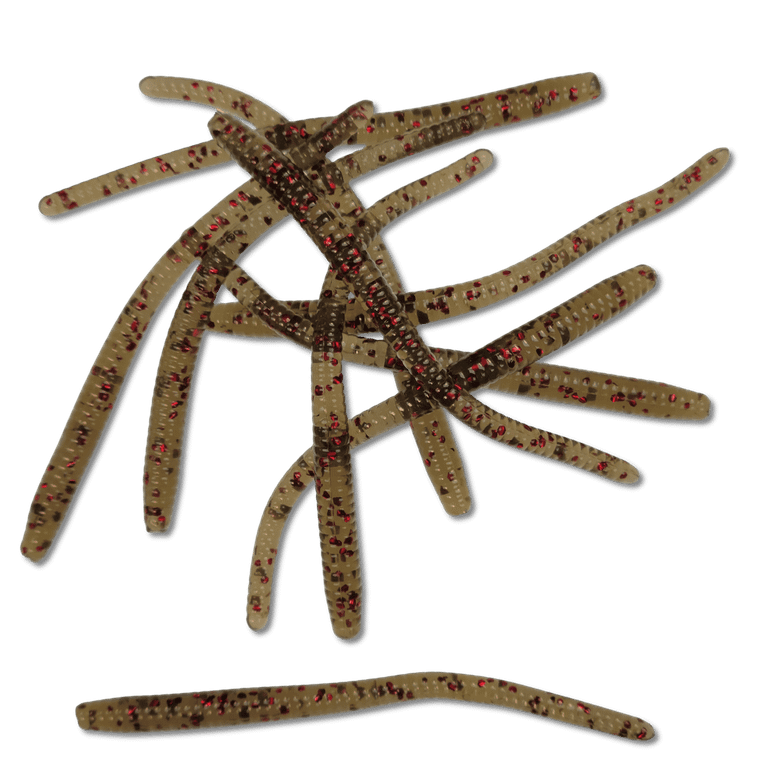
The supplied photograph shows Bloody Motor Oil, a translucent olive-brown to smoky green color with scattered dark flecks and reflective red glitter. The raised ribs catch available light differently from the smoother areas of the worm, giving the narrow body a subtly textured appearance. The color is worth considering when you want a natural-looking worm with a little contrast rather than a bright, solid-colored lure. Its underwater appearance depends on water clarity, depth and available light. Choose additional colors only from the options offered on the product listing.
Bloody Motor Oil is a sensible starting color for clear creeks and ponds when trout are closely inspecting a worm. Its translucent olive-brown body provides a comparatively subdued presentation, while the dark and red flecks add detail. Focus on a natural drift and restrained movement. If fish repeatedly follow without biting, adjust depth or reduce line tension before making major color changes.
The darker flecks and olive-brown body may offer some contrast in lightly stained water, but the translucent plastic can become harder to see as visibility decreases. Try a more visible or higher-contrast color from the available options when needed. Keep the bait drifting through likely holding water and avoid increasing rod movement so much that the worm appears to fight the current.
As light decreases, Bloody Motor Oil's olive and red details may appear darker or less distinct. Prioritize the correct depth and a controlled drift or fall. The reflective red glitter does not establish glow-in-the-dark performance. Choose an explicitly labeled glow color only when that feature is available and important to your fishing conditions.
The Trout Worm's slender body makes it useful on light tackle, but it also means hook size and rigging alignment matter. A large hook can overpower the profile, while excessive weight or tension can prevent the bait from drifting and settling naturally.
For under-float and light jighead presentations, compare the Jiggin' Johnsons' Pillhead Jig and Ice Jig. For natural current drifting, a small hook and separate split shot may be the more appropriate rig.
For additional help selecting weights, reading current and matching small soft plastics to trout, explore our Trout Jig and Plastic Guide.
Select the actual color and any available scent option through the purchasing controls above. The manufacturer's direct store offers color and scent selections, but these should not be assumed available on Qwik Fishing unless shown here. The maker notes that adding scent can slightly change the finished bait's color.
The Trout Worm is intended for subtle finesse work rather than exaggerated swimming action. Its narrow body is suited to anglers who want to control the bait's depth and movement through rigging, line tension and current instead of relying on a large moving tail.
Explore more products from Jiggin' Johnsons' Tackle Box, browse Soft Plastic Worms, or use our Trout Jig and Plastic Guide to compare presentations.
Store the Trout Worm flat in its original packaging, away from direct sunlight and excessive heat. Avoid leaving the slender body sharply bent for long periods. Separate strongly contrasting colors when practical to reduce color transfer.
Have damaged or worn soft plastics? Visit our Soft Plastic Recycling Information.
Practical answers about natural trout drifts, small hooks, float fishing and getting the most from a slender finesse worm.
The Trout Worm is a 3-inch finesse soft plastic with a slender, finely ribbed body and a straight tail. It is designed for natural presentations with very little rod movement, particularly when fishing for trout, crappie, perch and panfish. Its preferred uses include split-shot drifting, float fishing and light jighead work.
The Trout Worm has no large curly tail or paddle. Its narrow, flexible body responds to current, light line tension and small movements. A curly-tail worm produces more pronounced rear action during a retrieve. Choose the Trout Worm when you want a quieter profile that can drift or settle naturally in front of cautious fish.
The manufacturer identifies trout, crappie, perch and panfish as its primary targets. Rainbow, brown and brook trout can all be appropriate targets where local conditions and regulations allow this type of bait. Its slim profile is particularly useful when fish are feeding on small natural forage or refusing larger plastics.
Place a small split shot above a suitably sized hook, nose-hook or lightly thread the worm, and cast upstream or across the current. Allow the rig to drift through seams, pools or softer current pockets. Follow the drift with the rod tip and maintain enough contact to detect bites without pulling the worm unnaturally. Adjust the weight and spacing until the bait travels at the intended depth.
Both approaches can work. Nose-hooking leaves more of the worm free to move and is useful for natural split-shot drifts. Lightly threading the front portion onto a small jig hook can keep it straight and secure for float fishing or dragging. The correct choice depends on hook size, current, depth and how the worm behaves on the assembled rig.
Choose a small, sharp hook based on the worm's actual body thickness and the fish being targeted, not solely its three-inch overall length. For jig presentations, the Pillhead offers #4, #6 and #8 hook choices. Those are options to evaluate, not confirmed matches. Leave enough hook gap exposed and avoid overpowering the narrow plastic with a heavy or excessively long hook.
Yes. The manufacturer specifically recommends a micro jig beneath a float. Suspend the worm at the depth where trout or crappie are holding, using a small jig and an appropriately balanced float. Give the float occasional tiny twitches, then allow the worm to settle. If fish are inspecting but not striking, lengthen the pause or adjust the fishing depth.
Look for current seams, eddies, pool entrances and slower pockets beside moving water. Cast slightly upstream and allow the worm to drift through the area with minimal added movement. Choose enough split shot to reach the feeding lane without dragging heavily. Keeping the bait moving naturally with the current is usually a better starting point than continually retrieving it against the flow.
Yes. A light jighead drag-and-glide is one of the manufacturer's preferred presentations. Thread the worm straight on a suitably sized hook, cast across a productive edge and allow it to fall on controlled slack. Move it with a small drag or short hop, then let it settle. Check hook fit and use the lightest head that provides adequate depth and line control.
Floating properties have not been verified for this particular bait. Do not assume that it is positively buoyant simply because it is called a Trout Worm. Its position in the water depends on the hook, split shot, jighead, float and current. If buoyancy is important to your chosen rig, confirm the material's behavior before relying on it.
A light drop shot is an alternative worth evaluating when fish are holding slightly above bottom in relatively slow water. Nose-hook the worm on a small hook, select the appropriate leader length and use tiny line movements followed by pauses. The manufacturer favors split-shot, float and light jighead presentations, so test the worm's balance with a drop-shot rig before making it your primary approach.
Yes. The manufacturer includes stocked trout among the intended applications for its micro-jig-under-float presentation. Suspend the worm at the level where fish are cruising and let it settle naturally between very small movements. If trout approach but will not take it, try a longer pause, a different depth or a lighter rig before switching to a more active lure.
The Trout Worm is a longer, slender, finely ribbed three-inch profile intended for natural trout drifts and finesse jigging. The 2-inch Micro Stick provides a shorter, more compact alternative when small fish are nipping the longer worm or a smaller silhouette is needed. Choose based on the size fish are willing to take and the hook that best fits the bait.
The Pintail Fluke is a small baitfish-style alternative when trout, perch or crappie are feeding primarily on minnows or fry. Its shape is more appropriate for imitating a slender baitfish, while the Trout Worm favors a worm-like profile that drifts or settles naturally. Compare the two when fish are showing interest but refusing one type of forage presentation.
Bloody Motor Oil is the color identified in the supplied photograph. It appears translucent olive-brown to smoky green, with dark flecks and reflective red glitter throughout the narrow body. The color offers a muted natural appearance with small contrasting accents. Its underwater appearance changes with water clarity, depth and available light.
Glow-in-the-dark properties have not been verified for Bloody Motor Oil. The reflective red glitter should not be treated as confirmed glow material. Choose an explicitly identified glow color if one is offered and that feature matters to the presentation.
Each package contains 10 Jiggin' Johnsons' 3-inch Trout Worm soft plastic baits. The manufacturer's direct store offers Color and Add Scent options, but availability through Qwik Fishing depends on the purchasing controls shown above. The maker notes that adding scent can slightly alter the finished color.
Keep the worms flat in their original packaging, away from direct sunlight and excessive heat. Avoid storing the slender bodies sharply folded for extended periods. Separate strongly contrasting colors when practical to reduce color transfer. Straighten each worm and check the hook alignment before fishing.
The Trout Worm's strength is its natural, understated action. For jigging or float fishing, choose a small head that supports the narrow worm without restricting movement. For current drifting, a separate hook and split shot may be the more natural starting point. These four existing Qwik Fishing products offer two jighead options and two useful alternative finesse profiles. Physical hook compatibility must be checked.
1/16-ounce head with #4, #6 and #8 hook choices for light jigging and beneath-a-float presentations. Check Trout Worm fit.
Compact Vertical Jig Jiggin' Johnsons' Ice Jig (5 Pack)Selectable jig and hook sizes for controlled vertical and float presentations. Confirm balance and hook fit with the three-inch worm.
Shorter Finesse Worm Jiggin' Johnsons' 2" Micro Stick (20 Pack)Downsize to a compact finesse profile when trout or panfish are short-striking the longer Trout Worm.
Small Baitfish Alternative Jiggin' Johnsons' 2.75" Pintail Fluke (12 Pack)Small minnow-style profile for trout, perch and crappie feeding on fry instead of naturally drifting worms.