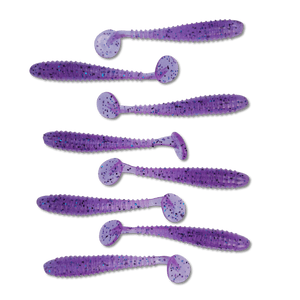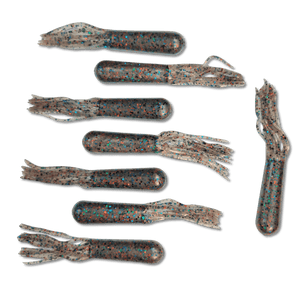




Jiggin' Johnsons' 4.0" Tracer Shad Soft Plastic Bait
Slender 4" baitfish-profile soft plastic with a fuller body and fine forked tail for controlled swims, glides and subtle vertical presentations. Ideal for bass and walleye following small forage.
Best For
Jig Head
Hover Jig
Vertical Jigging
Finesse
Profile
Standard
Action
Subtle
$3.99
(No reviews yet)

Write a Review

Jiggin' Johnsons' 4.0" Tracer Shad Soft Plastic Bait
Why Choose the 4.0" Tracer Shad?
Give them the shape of a shad. Let the pause finish the job.
The Jiggin' Johnsons' 4-inch Tracer Shad gives bass and walleye anglers a full-length baitfish profile without the exaggerated appendages of a creature bait or a large swimming grub. Its rounded, fuller front body narrows gradually toward a slender section ending in two short, fine forked tips. That shape makes it worth considering when predators are following shad, shiners and other similarly sized forage but are not necessarily committing to a hard-kicking swimbait. Rigged appropriately, the Tracer Shad can be swum along structure, worked through a school of suspended fish or lifted and allowed to settle near a breakline. Its main appeal is the combination of a substantial four-inch silhouette and a restrained tail profile. Use a steady retrieve when fish are moving, then experiment with short glides and pauses when they follow without striking. The primary targets are bass and walleye, with pike also a possibility when they are feeding on larger baitfish. Each package contains 8 baits.
Choose the Tracer Shad when:
- Bass or walleye are focused on four-inch shad, shiners or other baitfish.
- Fish are suspended and a natural-looking baitfish silhouette matters more than a strong tail thump.
- You want to cover open-water edges, points or weed lines with a controlled swimming presentation.
- Fish follow moving lures but respond better when the bait slows, glides or falls.
- You need a baitfish profile for lift-and-glide presentations along deeper breaks or structure transitions.
- You want a finesse-style alternative to a bulky four-inch paddle-tail swimbait.
Choose something else when:
- Fish are chasing aggressively and clearly want the stronger kick of a traditional paddle tail.
- You need a larger, bulkier shad silhouette for particularly big forage.
- The bite is centered on crawfish, gobies or other bottom-oriented prey rather than baitfish.
- You want a worm or soft creature bait that can be dragged through bottom cover.
- Your available hook does not fit the body or cannot be rigged with sufficient exposed gap.
- Fish are feeding on very small forage and a four-inch presentation is too large.
Primary Presentations
Find the depth first. Then change the speed.
The manufacturer recommends steady swimming, bottom slow-rolling and lift-and-glide fishing. With the fine forked tail visible in this product photograph, treat these as controlled baitfish presentations rather than relying on an unverified strong paddle-tail kick.
Primary
Jighead Swim / Count Down & Change Pace
Rig the Tracer Shad straight on an appropriately sized jig head and cast beyond a weed edge, rocky point, open-water baitfish school or other likely feeding area. Count the jig down to the depth where fish are holding, then retrieve steadily. Keep the bait near that depth rather than allowing it to rise above the fish. Change the pace with a few quicker reel turns followed by a slower stretch or brief pause.
Why It WorksThe fuller front body creates a recognizable baitfish silhouette while the narrow tail offers a restrained trailing profile. Keeping the lure at the same depth gives fish time to track and intercept it. A brief speed change or pause may trigger followers by making the lure appear to hesitate or lose momentum.
RiggingChoose a jig head whose hook shank and gap match the body length and thickness. Thread the lure straight, leaving the tail section beyond the hook bend. Select enough weight to reach and maintain the desired running depth, but avoid unnecessary weight that makes the bait drop too quickly during pauses. Test the assembled rig for rolling or unwanted spinning.
Also Strong
Lift & Glide / Suspended Bass and Walleye
Cast beyond suspended fish or a deeper rock transition and allow the Tracer Shad to reach the intended depth. Raise the rod tip with a short, controlled lift, then lower it while introducing enough slack for the lure to fall without being pulled sharply toward you. Watch the line during the descent. Pause after each fall before repeating.
Why It WorksA lift changes the lure's speed and direction, while the following descent resembles a baitfish that has lost momentum. The narrow forked tail is suited to a comparatively quiet trailing presentation. This can provide a different trigger when fish have already followed a steady retrieve but refused to bite.
RiggingUse a jig or suitable hover-style head with enough weight for depth control. The actual glide angle depends on hook placement, head geometry and plastic balance. Begin with short lifts and test how the assembled rig falls rather than assuming it will automatically suspend horizontally. Keep the hook gap exposed and the tail unrestricted.
Secondary Uses
More ways to work a four-inch shad profile.
Once you establish where bass or walleye are feeding, the Tracer Shad offers several ways to control the lure's position and pace. The most useful adjustments are often changes in depth, fall rate and line tension rather than dramatic rod movements.
Bottom Slow Roll Across Rock-to-Sand Transitions
Cast the Tracer Shad across a gravel point, rock edge or transition between sand and harder bottom. Allow the jig to sink near the structure, then retrieve slowly enough to maintain occasional contact without dragging continuously. When the head touches a rock, lift gently and continue the retrieve. Walleye often use these transitions as feeding areas, so keep the bait traveling just above them rather than lifting it several feet away with each movement.
Hover-Style Presentation for Suspended Smallmouth
When smallmouth are holding near suspended baitfish, evaluate a suitable hover-style head that can keep the Tracer Shad at their depth. Cast beyond the fish, let the lure reach the target level and use small rod movements followed by controlled pauses. Watch how the bait balances on the actual hook. The goal is to keep the shad silhouette in view without pulling it away too quickly. Hook fit and horizontal fall behavior must be tested with the chosen rig.
Cast-Through for Schooling Bass
When bass are chasing visible baitfish, cast the Tracer Shad beyond the activity rather than landing directly on the school. Retrieve through the feeding area at a controlled pace. If fish turn toward the lure but fail to strike, briefly stop reeling or give it a short twitch and resume. Work the edge of the school where fish may isolate an easy target rather than repeatedly casting into the middle of the commotion.
River Current-Seam Swim for Walleye
Cast upstream or across a seam separating faster current from slower water. Allow the jig to sink to the appropriate depth and let the current move the Tracer Shad into the feeding lane. Maintain enough line contact to detect a strike without pulling the bait unnaturally across the current. Adjust the head weight or casting angle when the lure rises too high or drags excessively along bottom. Short pauses near current breaks can be particularly useful.
Shallow Grass-Edge Twitch & Pause
In shallow water with sparse grass, a suitable protected hook arrangement may allow the Tracer Shad to be worked along openings and outside edges. Cast past a pocket, make a short pull or twitch and allow the lure to settle before repeating. Keep the retrieve controlled and avoid dragging the body through dense stems. Check that the selected hook can actually be rigged with enough clearance for a reliable hookup; the bait's suitability for a weedless arrangement has not been physically confirmed.
Vertical Jigging Along Deep Breaklines
Position over or immediately beside a deeper breakline where walleye are holding. Lower the Tracer Shad on an appropriately weighted jig to just above the bottom or fish. Use short lifts followed by controlled descents and watch for unexpected slack or line movement. If the fish repeatedly approach without committing, shorten the lift and extend the pause. The four-inch body can present a noticeable baitfish target without the need for aggressive jigging.
Color and Conditions
Valentine gives this shad a warm, speckled baitfish look.
The supplied photograph shows Valentine, a translucent tan-to-amber color with scattered black flecks and small red flakes. The fuller body has a warmer amber appearance, while the narrow tail is lighter and more translucent. The overall color offers a natural-looking, lightly mottled presentation that may be useful around rock, stained sand, shallow vegetation or waters with darker baitfish. Its actual underwater appearance will depend on available light, depth and water clarity. Select other colors only from the purchasing options available above.
Clear Water
Valentine is worth trying when you want a translucent, lightly speckled baitfish presentation rather than a bright, fully opaque shad. The tan-amber body and darker flecks create visual detail without an exaggerated color pattern. Begin with a natural swimming speed or slow lift-and-glide presentation, and let fish inspect the bait before changing to a more aggressive retrieve.
Stained Water
The warm amber body can provide some contrast in lightly stained water, but a more opaque or higher-contrast color may be easier for fish to locate as visibility decreases. Compare available colors while keeping the same jig weight, running depth and retrieve style. The main goal is to give bass or walleye a baitfish silhouette they can track and intercept.
Low Light / Deeper Water
At greater depths or in low light, Valentine's tan and red details may appear less distinct. Prioritize keeping the lure near the level where fish are feeding. The black and red flakes should not be mistaken for confirmed glow material. If an explicitly labeled glow color is offered, select it through the actual purchasing options when that feature is important.
Tuning and Specifications
Keep the shad straight and let the rig control the movement.
The Tracer Shad's fuller front body gives it a defined baitfish shape, while the tapered rear section is relatively fine. Proper hook placement and head weight help determine whether the lure tracks naturally, falls smoothly or behaves erratically. Check the assembled rig rather than assuming every shad hook creates the same action.
On-the-Water Tuning
- Match the hook to the body: Select hook length and gap according to the Tracer Shad's fuller front section, not simply its four-inch overall length.
- Thread straight: Enter the center of the rounded nose and keep the plastic aligned along the hook shank.
- Protect the forked tail: Stop the hook before the narrow rear section. Leave both fine tail tips free.
- Check hook exposure: Ensure the hook gap is not crowded by the plastic, particularly when using a heavier or larger-gauge hook.
- Test tracking: Watch the lure during a short swim. If it rolls or spins, check alignment and hook placement before changing retrieve speed.
- Control depth with weight: Use enough head weight to reach and maintain the desired depth without making the bait fall unnecessarily fast.
- Watch the fall: Test the assembled rig's glide or descending angle. Different head styles and hook positions produce different results.
- Count down consistently: For suspended bass or walleye, repeat the same sinking count to keep the lure traveling through a productive depth.
- Change pace deliberately: Alternate steady swimming with a short slowdown or pause when fish are following.
- Use short lifts: A small lift followed by a controlled descent is often more useful than a large upward snap around stationary fish.
- Be cautious with weighted hooks: Confirm the bait has sufficient body depth and hook clearance before attempting a protected presentation.
- Handle short strikes: If fish repeatedly nip the tail, reduce movement or consider a smaller profile rather than placing an oversized hook through the narrow rear section.
- Inspect after a fish: Straighten the plastic, check the hook point and make sure the forked tail has not torn or become caught around the bend.
For suspended-fish applications, evaluate Doug's Hover Jig Head. For a conventional cast-and-swim option, compare Doug's Go-To Swim Jig Head. Check actual hook fit and lure balance before fishing either combination.
Product Specifications
- Maker: Jiggin' Johnsons' Tackle Box
- Product: Tracer Shad Soft Plastic Bait
- Length: 4.0 inches
- Package Quantity: 8 Baits Per Pack
- Profile: Full-length shad / minnow-style soft plastic
- Body: Smooth, elongated baitfish shape with a fuller front and tapering rear section
- Tail Shown: Short, fine forked tail with two narrow tips
- Fishing Action: Controlled swimming, lift-and-glide and subtle movement during pauses
- Material: Soft plastic
- Color Shown: Valentine
- Appearance: Translucent tan and amber with scattered black and red flakes
- Primary Species: Largemouth bass, smallmouth bass and walleye
- Additional Species: Pike and other predators feeding on similarly sized baitfish
- Primary Presentations: Jighead swimming, controlled slow rolling and lift-and-glide
- Alternative Presentations: Hover-style finesse, vertical jigging and shallow protected-hook swimming when compatible
- Useful Locations: Open-water edges, weed lines, points, rock transitions and current seams
- Manufacturer Options: Color, bottom/second/belly color, extra tail color and optional scent; Qwik Fishing options may differ
- Fulfillment: Made to order; check the live purchasing area for current shipping information
Select the actual color and any available customization through the purchasing options above. The manufacturer's direct store offers additional color and scent selections, but those should not be assumed available through Qwik Fishing unless shown in the purchase controls.
The manufacturer describes the Tracer Shad as a swimming shad bait. The product image shown here has a fine forked tail. A conventional paddle-tail profile may offer a more pronounced swimming kick when that is the desired presentation.
Explore more from Jiggin' Johnsons' Tackle Box, compare other Soft Plastic Shad Baits, or shop Jig Heads for different swimming and vertical presentations.
Store the Tracer Shad flat in its original packaging, keeping the tapered rear section and fine forked tail from remaining folded for long periods. Avoid excessive heat and direct sunlight, and separate contrasting colors when practical to reduce color transfer.
Have damaged or worn soft plastics? Visit our Soft Plastic Recycling Information.
Product Q&A
Questions about the 4" Tracer Shad.
Practical answers about choosing a hook, working a shad profile around suspended fish and deciding when to switch between steady swimming and a slower glide.
What is the Jiggin' Johnsons' Tracer Shad?
The Tracer Shad is a four-inch soft plastic baitfish profile intended primarily for bass and walleye. It has a fuller, rounded front body that narrows toward a fine tail. The photographed bait has two short forked tail tips. It can be evaluated on appropriately sized jigs for swimming, controlled gliding and vertical presentations.
Is the Tracer Shad a paddle tail or a fork-tail shad?
The manufacturer's product description refers to a paddle-tail shad, but the product photograph supplied for this listing shows a slender forked tail rather than a conventional boot-shaped paddle. For the pictured version, anglers should expect a different, generally quieter type of tail presentation than a traditional paddle-tail swimbait. Verify the selected bait's actual tail profile when comparing swimming actions.
What species is the Tracer Shad intended for?
Bass and walleye are the manufacturer's primary suggested targets. Pike may also strike the bait when they are feeding on similar-sized forage. The four-inch length makes the Tracer Shad particularly suitable when predators are tracking shad, shiners or other moderately sized baitfish.
How do I rig the Tracer Shad on a jig head?
Thread the rounded front of the bait straight onto a jig hook whose shank and gap match the body. Bring the hook point out before the thin tail section. Leave both forked tips free and confirm the hook gap is exposed. A straight rig is important for maintaining a natural baitfish presentation and avoiding unwanted spinning during retrieval.
What jig head should I use with a four-inch Tracer Shad?
Choose head weight according to fishing depth, current, casting distance and the desired fall rate. A conventional exposed-head jig may be useful for casting and swimming. Doug's Go-To Swim Jig Head offers a 1/8-ounce option, but its actual hook fit with the Tracer Shad has not been physically confirmed. Check hook shank length, gap and the bait's body thickness before ordering.
Can I use the Tracer Shad on a hover jig head?
A hover jig head is an option worth evaluating when bass or walleye are suspended and you want a slow, controlled baitfish presentation. Doug's Hover Jig Head offers selectable weights with 1/0 and 2/0 hook configurations. Actual compatibility, swimming balance and glide angle have not been tested with this bait, so check the assembled rig rather than assuming it will suspend horizontally.
How should I swim the Tracer Shad for bass?
Cast beyond a weed line, point or baitfish school and count the jig down to the intended depth. Begin a steady retrieve that keeps the lure traveling through the strike zone. When fish follow without biting, briefly pause or change speed to create a different movement. Adjust the jig weight if the lure rises too high during the retrieve.
How do I slow-roll the Tracer Shad for walleye?
Cast across a rock-to-sand transition or another likely walleye feeding edge. Allow the jig to approach bottom, then retrieve slowly while maintaining occasional contact with the structure. Keep the bait moving just above bottom rather than dragging it continuously through crevices. Use short pauses near changes in depth and watch for strikes as the bait begins moving again.
What is a lift-and-glide presentation?
After the Tracer Shad reaches the desired depth, lift it a short distance with the rod and allow it to descend on controlled slack. The direction and speed change can make the bait resemble a struggling or slowing baitfish. Watch the line closely on the descent, and adjust jig weight or hook position if the lure falls too rapidly or tracks unnaturally.
Can I use the Tracer Shad around submerged grass?
Yes, particularly along outside weed edges and open lanes. An exposed jig head works where the hook can travel clear of the vegetation. A weighted swimbait hook may offer an alternative around sparse grass, but the Tracer Shad's actual body thickness and hook clearance must be checked. Do not assume it can be rigged weedless with every hook size.
How does the Tracer Shad compare with the 4-inch Ripswim?
The photographed Tracer Shad has a fuller front that narrows into a fine forked tail. The 4-inch Ripswim is a paddle-tail swimming minnow with a more conventional active tail. The Tracer Shad is worth trying for a restrained glide or subtle baitfish presentation, while the Ripswim provides an alternative when fish respond better to stronger, continuous swimming movement.
What is the Valentine color?
Valentine is the color identified in the supplied product image. It appears translucent tan to amber with scattered black flecks and smaller red flakes. The combination provides a warm, speckled appearance that can be worth evaluating around rock, vegetation and baitfish-oriented feeding areas. Its underwater appearance depends on water clarity, depth and light.
Does Valentine glow in the dark?
Glow-in-the-dark properties have not been verified for the pictured Valentine color. The black and red flakes visible in the plastic should not be treated as confirmed glow material. Select an explicitly labeled glow color if one is offered and that feature is important to your fishing conditions.
How many Tracer Shads are included, and can I customize them?
Each package contains 8 Tracer Shad soft plastic baits. The manufacturer's direct store offers color, additional color and scent selections. Availability on Qwik Fishing depends on the purchasing options displayed above. Adding scent can slightly change the final appearance of a hand-poured bait.
How should I store Tracer Shad soft plastics?
Keep the baits flat in their original packaging, away from excessive heat and direct sunlight. Avoid sharply folding the thin rear section or leaving the forked tail compressed for long periods. Separate strongly contrasting colors when practical to reduce color transfer. Straighten the lure and inspect the tail before rigging.
Companion Tackle & Alternatives
Choose the presentation before choosing the hook.
The Tracer Shad can be evaluated on different heads depending on whether you want a slow glide, steady swimming retrieve or protected shallow-water presentation. Check each hook against the bait's body length and thickness. These are existing Qwik Fishing products, but physical compatibility has not been confirmed.
Hover & Glide
Doug's Custom Lures Hover Jig Head (5 Pack)
Selectable weights with 1/0 and 2/0 hook options for evaluating controlled presentations around suspended fish. Check fit and balance.
Cast & Swim Doug's Custom Lures Go-To Swim Jig Head (3 Pack)1/8-ounce swimming head for evaluating steady retrieves along points and weed edges. Confirm hook length and gap.
Shallow Cover Option Doug's Custom Lures Weighted Swim Bait Hooks (5 Pack)3/0 and 4/0 weighted-hook options to evaluate for protected swimming around sparse grass. Body fit remains unverified.
More Active Swimming Jiggin' Johnsons' 4.0" Ripswim (8 Pack)A conventional paddle-tail minnow for fish responding to stronger tail action instead of the Tracer Shad's pictured forked-tail profile.