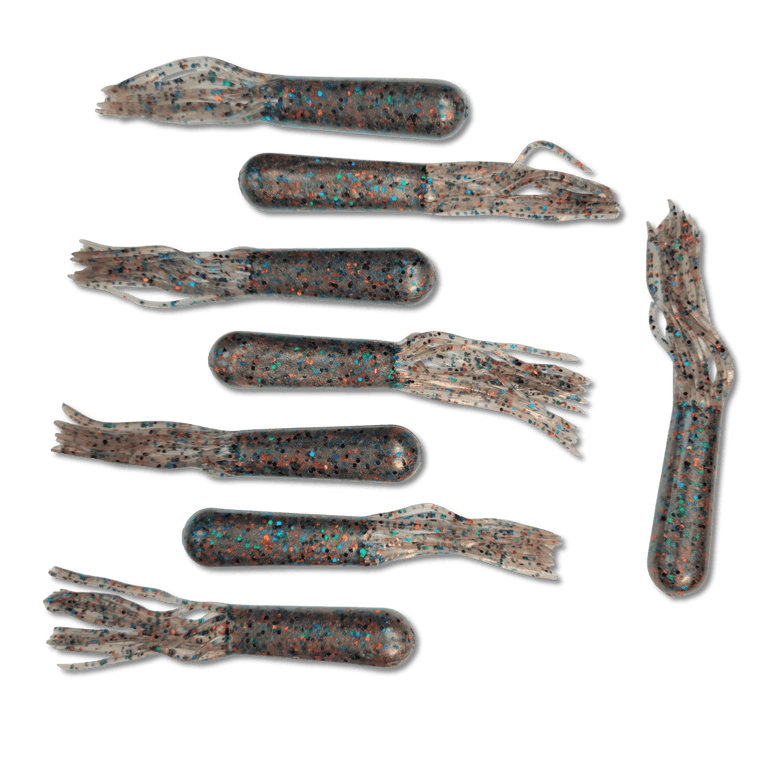


Jiggin' Johnsons' Skirted Tube 4.0" Soft Plastic Bait

$4.99
Current Stock:

$6.99 Flat Rate Shipping  ·  Orders Over $50 Ship Free

Your baits are made to order to ensure freshness and ship with tracking in 1-2 business days from Iowa.
Adding to cart… The item has been added
Pack Quantity:
Pack contains 8 baits
(No reviews yet)
Arky/Flipping

When/Where: When you want a compact “meat + flare” profile around wood, dock edges, and thicker cover—especially when fish won’t chase far.

How: Treat it like a short-skirt trailer: thread it straight so the head of the tube seats tight, then let the tentacles do the breathing when you shake or stall.

Why: A tube’s skirt collapses on the bite and then re-flares on the pause, giving you a natural stop-and-go look without changing cadence.

Tuning: If you want more flare, shorten the tube slightly at the nose so more skirt sits behind the jig head.

Football Jig

When/Where: Rocks, gravel, and hard-bottom edges—smallmouth water, points, and transitions where “crawl + hop” is the deal.

How: Drag until you feel bottom, then add short hops. Let it fall on semi-slack so the skirt breathes as it glides back down.

Why: The head tracks bottom while the tube flares and collapses, which reads like a bottom critter even at slower speeds.

Tuning: If you’re hanging in rock, reduce hop height and keep it more of a steady drag with micro-pauses.

Finesse/Compact Jig

When/Where: Pressured fish, clearer water, or anytime you want a smaller “impact” presentation that still has skirt movement.

How: Hop, shake, and stall. The tube does most of the work when you stop moving it—so give it pauses.

Why: You get a compact body with a lot of secondary motion, which helps when fish are inspecting rather than reacting.

Tuning: Keep it perfectly centered on the keeper; off-center tubes will drift/roll instead of gliding clean.

Standard (Ball) Jig Head

When/Where: The “tube anywhere” setup—shorelines, breaks, and current seams when you want a simple cast-and-work bait.

How: Swim it just off bottom, then pop it down with short hops. On the fall, the skirt pulses and the bait glides instead of dropping like a rock.

Why: A ball head keeps it clean and consistent; the skirt adds life even when your retrieve is basic.

Tuning: Go lighter to maximize glide; go heavier to keep contact in wind or deeper water.

Texas Rig

When/Where: Grass lines, laydowns, and cover where an exposed hook tube head will hang up.

How: Use a light weight and fish it like a compact creature: lift, shake, and let it fall. The skirt flutters on the fall and breathes on slack line.

Why: You keep the tube’s flare and profile, but gain weedlessness and the ability to slide through cover.

Tuning: Make sure the hook exits dead center so the tube tracks true on the pull.

Tube Jig Head

When/Where: Classic tube water—rock, gravel, and edges where you want that clean spiral/glide on the fall.

How: Insert and seat the head so the body stays straight. Pop it off bottom, then let it fall on semi-slack to get maximum skirt movement.

Why: A tube head gives the most “true” tube action—glide, flare, and a natural-looking collapse on the bite.

Tuning: If it’s helicoptering too much, reduce slack on the fall and keep the line angle a bit tighter.

Pack Quantity::
Pack contains 8 baits