

Jiggin' Johnsons' Bladed Micro Jig, Various Colors

Compact bladed jig with flash and vibration for swimming small plastics. Choose 1/16 or 1/8 oz and #2, #4 or #6 hooks.

Best For
Bladed Jig Swim Jig Micro Jig Finesse
Profile Compact
Action High Action
$4.99
2 Bladed Micro Jigs Per Pack
Current Stock:
$6.99 flat-rate shipping Orders over $50 Ship Free
All baits are made fresh to order and ship, with tracking, in 1-3 business days from Iowa.
Adding to cart… The item has been added
(No reviews yet)
Why Choose the Bladed Micro Jig?

Bladed-jig flash and vibration. A much smaller package.

The Jiggin' Johnsons' Bladed Micro Jig brings a metal vibrating blade to a compact jig head made for smaller soft plastics and finesse fishing. Instead of relying only on the swimming action of a trailer, the blade adds flash, vibration and water displacement as the jig moves. Choose 1/16 ounce for a lighter, shallower presentation or 1/8 ounce for more depth, casting distance and control. With #2, #4 and #6 hook options, it can be matched to a range of small minnows, paddle tails and grubs for crappie, perch, trout, walleye and finesse bass.

Choose the Bladed Micro Jig when:

  • You want flash and vibration in a smaller profile than a conventional bladed jig.
  • Crappie, perch or trout are feeding on small moving forage.
  • You're casting along docks, weed edges or brush openings and want a reaction-style presentation.
  • Fish follow a plain swimming jig but need more movement or visual attraction to commit.

Choose something else when:

  • Fish want a nearly motionless, ultra-subtle presentation without vibration.
  • You need a weedless jig for thick grass, wood or heavy brush.
  • You want to maintain a very slow fall with a lighter head than 1/16 ounce.
  • You need a full-size bladed jig with substantially more bulk for larger forage or heavy-cover bass fishing.
Primary Presentations

Two ways to let the blade do its job

Primary

Slow Roll & Swim

Cast past suspended fish, dock edges or shallow weed lines, then retrieve at a speed that keeps the metal blade moving. Adjust the rod angle and retrieve speed to keep the bait at the depth where fish are feeding.

Why it works

The blade adds vibration, flash and water movement to the compact trailer. This gives fish another way to locate and react to the bait without increasing the overall profile to a full-size vibrating jig.

Rigging

Start with a small minnow, grub or paddle tail that fits the selected #2, #4 or #6 hook. Try 1/16 ounce for shallower or slower presentations and 1/8 ounce when depth, wind or casting distance requires more control. Verify that the blade starts and the jig tracks upright.
Also Strong

Lift, Fall & Glide

Let the jig sink to the depth of suspended or bottom-oriented fish. Lift it with the rod, then allow it to fall on controlled line before repeating. Experiment with short lifts and longer sweeps.

Why it works

The moving blade provides bursts of flash and vibration during the lift. The pause and controlled fall give fish a slower opportunity to intercept the compact soft-plastic trailer.

Rigging

Keep the soft plastic centered behind the head and the hook gap open. Use enough weight to stay in contact with the jig without making the fall unnecessarily fast. Watch for bites as the jig slows or begins falling.

Secondary Uses

More ways to fish a compact bladed jig

Cast Along Docks and Weed Edges

Cast alongside the outer edges of docks, weeds or brush rather than directly into heavy cover. Start the retrieve as the bait reaches the desired depth, then change speed or pause near openings and isolated targets. The exposed hook is best kept clear of dense vegetation and wood.

Stop-and-Go Around Suspended Crappie

Cast past suspended fish and retrieve just fast enough for the blade to engage. Briefly stop or slow the bait before resuming. The change from vibration to a falling or gliding presentation may encourage fish that follow a steady retrieve.

Finesse Bass and Smallmouth

Use the Bladed Micro Jig when bass are feeding on smaller baitfish or when a larger vibrating jig seems excessive. Swim it along rock, weed edges or open pockets, keeping the trailer compact and the jig free of snags.

Perch, Trout and Walleye in Open Water

Where fish are actively feeding on small moving forage, cast or count down the jig and work it through the productive depth. The 1/8-ounce option may help maintain control at greater depth, while the 1/16-ounce option is worth trying when a slower presentation is needed.

Color and Conditions

Match the head, blade flash and trailer to the water

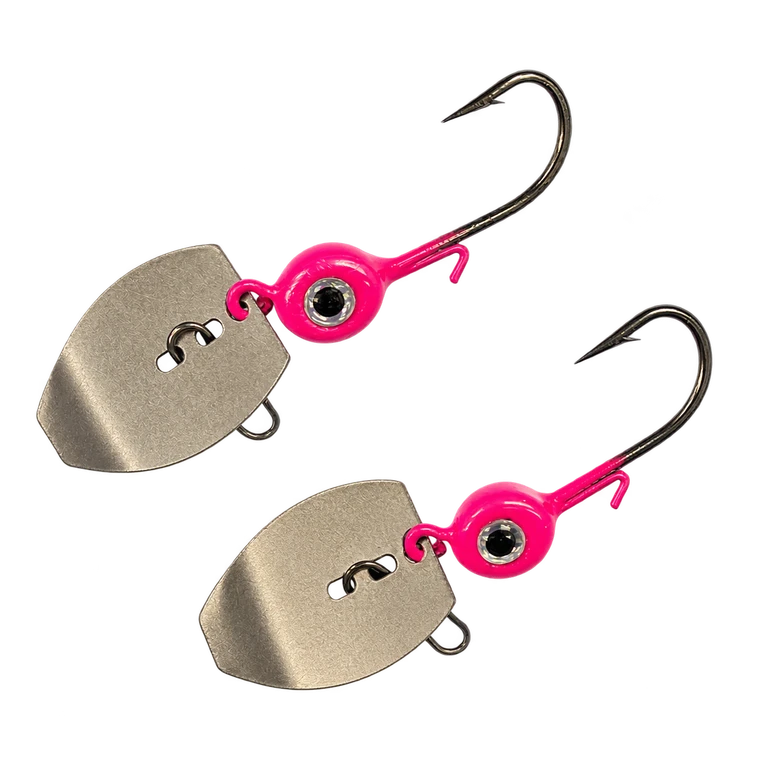
The supplied photo shows the Bladed Micro Jig in Hot Pink with a silver-colored metal blade. The bright head creates a strong visual target, while the blade adds flash as it moves. Select from the actual colors available in the product options above. Use water clarity and forage size as starting points, but pay close attention to retrieve speed and whether the blade is working consistently.

Clear Water

Try a natural or more subdued jig color if available, paired with a small baitfish-style trailer. Begin with a controlled retrieve and adjust the amount of blade vibration according to how fish respond.

Stained Water

Hot Pink can be a bold starting point when you want the head to stand out. The flashing blade and vibrating retrieve may help fish locate the bait when visibility is limited.

Low Light / Deeper Water

Choose a color and trailer combination that provides useful contrast. Move to the 1/8-ounce option when extra depth or line control is needed, and maintain enough retrieve speed to activate the blade.

Tuning and Specifications

Get the blade moving without overpowering the trailer

On-the-water tuning

  • Choose the hook size based on the trailer's actual body length and thickness.
  • Thread the soft plastic straight to help the jig track upright.
  • Keep the metal blade free of the trailer, line and hook keeper.
  • Start the retrieve firmly enough to engage the blade, then reduce speed if the blade continues working.
  • If the jig rolls or rises too much, check trailer size, rigging alignment and retrieve speed.
  • Use 1/16 ounce when a lighter fall is useful; step up to 1/8 ounce for more control.
  • Inspect the blade connection and exposed hook after contact with cover.

Product specifications

  • Maker: Jiggin' Johnsons' Tackle Box
  • Product Type: Bladed Micro Jig
  • Weights: 1/16 oz and 1/8 oz
  • Hook Sizes: #2, #4 and #6
  • Package Quantity: 2 Bladed Micro Jigs Per Pack
  • Head: Compact painted jig head with eye detail
  • Blade: Metal blade for flash and vibration
  • Hook: Exposed single hook
  • Trailer Keeper: Molded keeper behind the jig head
  • Color Shown: Hot Pink
  • Primary Uses: Slow swimming, lift-and-fall and casting around cover edges

Select the actual color, hook size and weight from the product options above. Available combinations may vary.

Explore more from Jiggin' Johnsons' Tackle Box or read our Soft Plastic Trailer Guide.

Product Q&A

Questions about the Bladed Micro Jig

How many Bladed Micro Jigs come in a package?

Each package contains two Jiggin' Johnsons' Bladed Micro Jigs. Select your preferred weight, hook size and color from the available product options.

What weights are available?

The maker offers 1/16-ounce and 1/8-ounce versions. The 1/16-ounce head is useful for lighter, shallower presentations. The 1/8-ounce version provides additional casting distance, depth and control when conditions require it.

What hook sizes can I choose?

Hook choices are #2, #4 and #6. Choose the size that fits your soft-plastic trailer and leaves an adequate exposed hook gap. The #2 is larger than #4, while #6 is the smallest of the three.

How is this different from a regular micro jig head?

The Bladed Micro Jig has a metal blade that produces flash, vibration and water displacement during movement. A regular unbladed jig head mainly relies on the soft plastic and angler's rod movements for action.

Can I fish it without a trailer?

The metal blade can move without a soft-plastic trailer, but the manufacturer primarily positions this jig for use with small minnows, paddle tails, grubs and other finesse plastics. A properly fitted trailer provides more body and a complete forage profile.

What soft plastics work with the Bladed Micro Jig?

Small paddle tails, grubs and minnow profiles are the main starting points. Jiggin' Johnsons' 1.75-inch Paddle Tail Minnah, 1.75-inch Arrow Grub and 2-inch Ripswim are relevant choices to evaluate. Check hook fit and blade clearance before fishing.

What retrieve should I start with?

Begin with a steady, controlled retrieve just fast enough to keep the blade working. Then try small speed changes, brief pauses or lift-and-fall movements to see how fish respond.

Will this jig work for crappie and panfish?

Yes. The compact design gives crappie, perch and other panfish a smaller flashing and vibrating presentation than a typical bass-sized bladed jig. Match the head, hook and trailer to the fish and forage size.

Is this the same as a full-size bladed bass jig?

No. The Bladed Micro Jig is built around a smaller head, lighter weights and small soft-plastic trailers. It provides similar flash-and-vibration principles in a more compact finesse presentation.

Is the silver blade removable?

The maker's accessible specifications do not establish that the blade is intended to be removed or exchanged. Treat it as part of the jig's assembled design unless the maker confirms otherwise.

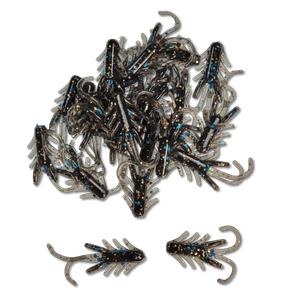
Micro Bladed Jig Trailers

Give the blade the right soft-plastic partner

These existing Qwik Fishing soft plastics provide different body sizes and swimming profiles. A compact trailer usually helps preserve the Bladed Micro Jig's finesse purpose. Check hook fit, blade clearance and tracking before settling on a combination.