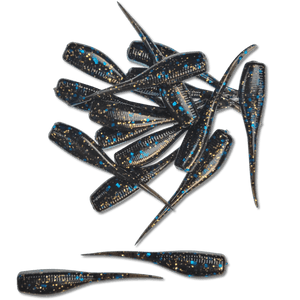


Jiggin' Johnsons' 1.75" Tad Kicker Soft Plastic Bait
Compact 1.75" tadpole-style bait with a plump ribbed body and flexible forked kicker tail that moves on slow swims and controlled falls. Excellent for crappie, panfish and finesse fishing.
Compact 2" finesse bait with a ribbed body and two slender, flexible tails that respond to slow swims, controlled falls and tiny rod movements. Excellent for suspended crappie and panfish.
The Jiggin' Johnsons' 2-inch Rad Tad is a finesse soft plastic designed for crappie, bluegill and perch that need a little movement without a lot of speed. Its short, segmented body ends in two long, slender, flexible tails that separate behind the bait. Instead of producing the stronger thump of a paddle tail or the broad flutter of a Flap Jack, the Rad Tad gives you a quieter trailing action that responds to slow swimming, light rod movements and controlled falls. That makes it especially useful around brush piles, standing timber, docks and suspended schools where fish have time to study a lure before committing. Cast it beyond the fish and count it down, work it vertically with small lifts, or suspend it beneath a float and let gentle current provide the movement. The important thing is not to rush the retrieve. Each package contains 15 baits.
The Rad Tad rewards patience. Its strongest applications keep the short body in front of fish while allowing the two slender tails to respond to small changes in speed, line tension and direction.
Cast the Rad Tad beyond a brush pile, weed edge or suspended school. Let it fall on semi-slack line while counting to a repeatable depth. Begin a slow, steady retrieve once it reaches the level where fish are holding. Pause occasionally and allow the bait to drop slightly before resuming. Adjust your count until the lure is traveling just above the fish instead of beneath them.
Why It WorksThe short body provides a small target while the two long tails trail and move behind it. During the pause, they can shift as the lure changes direction and settles. This gives crappie time to inspect the bait without forcing them to follow a fast-moving lure away from their preferred depth.
RiggingStart with a light jig head that fits the ribbed body. A 1/16-ounce Pillhead is an option to evaluate when the depth and conditions suit that weight. Thread the bait straight, keep the hook point exposed and leave both tails free. Increase weight only when wind, casting distance or depth requires more control.
Lower the Rad Tad directly beside standing timber, a dock post or the outer edge of submerged brush. Stop just above the depth where fish are holding. Lift the rod tip only a few inches, then allow the bait to settle slowly while maintaining enough line control to detect a strike. Pause before repeating the movement.
Why It WorksThe Rad Tad can remain in a narrow strike zone while its thin tails respond to small movements. That is useful when fish rise toward a lure but hesitate to chase it. A controlled descent also gives anglers a chance to recognize light bites as the jig falls.
RiggingChoose a compact jig with an appropriately sized hook and enough head weight to maintain vertical control. Keep both tails beyond the hook bend. If fish approach and turn away, shorten the lift and extend the pause rather than automatically increasing jigging speed.
The Rad Tad is versatile, but its two long tails make it particularly well suited to restrained presentations. These applications focus on depth control, gentle movement and giving fish time to eat.
Rig the Rad Tad on a small jig beneath a fixed or slip float and set the depth so the bait travels just above weeds, submerged wood or scattered rock. Let wind or a gentle current move the float naturally. Add an occasional small twitch, then allow the lure to settle back beneath it. The long tails can move with the drift without requiring constant rod-tip action.
Lower the Rad Tad beside standing timber and stop at the depth where crappie are positioned. Keep the presentation near the outside of the wood instead of dragging the exposed hook into branches. Use a short lift and controlled fall, then hold the bait still. When fish are grouped at one depth, repeated small movements often make more sense than searching the entire water column.
Pitch or cast the Rad Tad alongside a dock post or shaded vertical edge. Let it fall slowly while watching the line. Many useful opportunities occur during the initial descent, so avoid immediately reeling the bait away. Once it reaches the target depth, use a slight upward pull and another controlled fall.
When bluegill are feeding around scattered vegetation, suspend the Rad Tad just above the weeds beneath a light float. Allow it to drift slowly through openings while keeping the line relatively quiet. If fish repeatedly strike the long tails without getting hooked, switch to a shorter, more compact profile rather than adding a larger hook that interferes with the bait.
For suspended crappie over deeper water, use sonar or a known productive depth to establish a count-down. Cast past the school, let the Rad Tad sink to just above the fish and retrieve slowly through that level. Watch for changes in line tension during the pauses. Repeat the same count so each cast travels through the productive part of the water column.
The Rad Tad can be worked vertically beneath a boat or through the ice when crappie or perch are interested in a two-inch finesse plastic. Use a correctly sized jig and hold the bait just above the fish. Tiny lifts, a controlled fall and longer pauses are the starting cadence. If fish continually inspect without biting, try downsizing or choosing a less active profile.
The supplied photograph shows Lavender Haze, a translucent lavender-purple soft plastic with scattered black flakes and reflective blue-purple glitter. The short ribbed body has a slightly stronger purple appearance, while the thin, smooth tails transmit more light. That difference gives the bait some visual separation between its body and trailing appendages. Underwater visibility will vary with clarity, depth and available light. Select any additional colors from the actual product options above.
Lavender Haze is worth trying when you want a translucent, lightly colored finesse presentation rather than a solid, high-visibility bait. The blue-purple glitter adds small reflective points without turning the entire profile opaque. Begin with a slow count-down swim or controlled vertical drop and let fish inspect it before increasing movement.
The translucent Lavender Haze body may provide less silhouette contrast when visibility is limited. Consider a darker or more vivid color from the available options when fish have trouble locating it. Keep the same head weight and presentation while testing colors so you can judge the effect of the change.
As light decreases with depth, the lavender body and reflective glitter may appear different from the product photograph. Focus first on keeping the bait near the fish. Lavender Haze should not be assumed to glow in the dark; choose an explicitly labeled glow color if one is available and that feature is important.
The Rad Tad's longer twin tails provide movement with very little effort, but their length also makes hook placement important. Rig the short body correctly and avoid extending the hook into the flexible trailing section.
For slow swimming, compare the Jiggin' Johnsons' Pillhead Jig. For controlled vertical presentations, evaluate the Ice Jig. Check physical hook fit before ordering.
Select the actual color and available customization using the purchasing controls above. The manufacturer's own store offers extra tail-color and scent choices, but those options should not be assumed available on Qwik Fishing unless shown here. The manufacturer notes that adding scent can slightly change the finished bait's color.
Explore more from Jiggin' Johnsons' Tackle Box, shop Crappie & Panfish Soft Plastics, or browse Ice Fishing Soft Plastics.
Store the Rad Tads flat in their original packaging, with the two long tails laid out naturally rather than folded sharply. Keep the baits away from excessive heat and direct sunlight, and separate contrasting colors when practical to reduce color transfer.
Have torn or worn-out soft plastics? Visit our Soft Plastic Recycling Information.
Practical answers covering its unusual split-tail profile, jig selection, slow presentations and the situations where it makes more sense than an active swimming bait.
The Rad Tad is a 2-inch finesse soft plastic with a short ribbed body and two long, slender, flexible tails. It is designed for slow swimming, controlled vertical drops and float-assisted presentations where subtle movement is more useful than a strong tail kick.
Most conventional grubs use a single curly tail that provides pronounced movement during a steady retrieve. The Rad Tad has two long, narrow tails that separate behind a compact body. Its movement is more restrained and particularly useful during slow falls, pauses and gentle changes in line tension.
The manufacturer recommends the Rad Tad for crappie, bluegill, perch and mixed panfish. Its small, subtle profile is especially appropriate when fish are holding around cover or suspended in schools and are not aggressively chasing larger baits.
Thread the front of the short ribbed body onto a small jig hook, keeping the bait centered and straight. Bring the hook point out before the body transitions into the two thin tails. Leave enough exposed hook gap for reliable hookups and make sure both tails are free to move without contacting the hook bend.
Begin by evaluating a lightweight jig with a hook that fits the compact body. The Jiggin' Johnsons' Pillhead offers a 1/16-ounce head with #4, #6 and #8 hook choices. The Ice Jig provides selectable head and hook sizes for vertical work, and the Galaxy Jig offers a 1/16-ounce round head with a #6 hook. Physical compatibility depends on the actual bait and selected hook and has not been confirmed.
Cast beyond the school, let the jig fall on semi-slack line and count it down to just above the fish. Retrieve slowly with steady line contact and add occasional pauses. The goal is to let the two tails move while keeping the bait in the productive depth range. Avoid speeding up unless the fish are actively chasing.
Position the bait directly beside the brush or standing timber and lower it to just above the fish. Lift the rod tip a few inches, then let the lure settle naturally. Watch for a line tick or sudden slack on the descent. Keep the jig outside the branches when possible, since exposed hooks can easily snag heavy wood cover.
Yes. The manufacturer specifically recommends float-assisted drifts. Adjust the float so the Rad Tad hangs just above weeds, rock or wood. Allow a gentle current or wind to move the float and add an occasional small twitch. The lure stays near the desired depth while its long tails move with the drift.
Slow is the better starting point. The manufacturer emphasizes controlled falls and deliberately slow retrieves. Begin with a steady, gentle swim or small vertical lifts, then pause long enough for the bait to settle. If fish are following without committing, slow down further before changing spots or increasing movement.
The Rad Tad has two long, slender tails that favor subtle movement and slow presentations. The Flap Jack uses two broad, flattened rear flaps for a wider fluttering profile. The Ripswim uses a single paddle tail that provides a tighter, more consistent kick during swimming. Choose based on how much tail movement the fish are responding to.
Yes. The manufacturer includes the Rad Tad in its ice-fishing lineup. It can be used vertically for crappie and perch that are willing to inspect a two-inch finesse bait. Use a correctly sized jig and a restrained lift-and-pause cadence. When fish are extremely neutral or short-striking, a smaller profile may be a better option.
Lavender Haze is the color identified in the supplied product photograph. It appears translucent lavender-purple with black flakes and reflective blue-purple glitter. The photograph does not establish glow-in-the-dark properties, so do not assume the color glows unless the actual product option identifies that feature.
Each package contains 15 Rad Tad soft plastic baits. The manufacturer offers scent and extra tail-color options on its own storefront, but availability through Qwik Fishing depends on the purchasing controls shown above. Adding scent can slightly affect the appearance of the finished color.
Keep the baits flat in their original packaging, away from direct sunlight and excessive heat. Avoid leaving the two long tails sharply folded for extended periods. Separate strongly contrasting colors when practical to reduce color transfer. Before fishing, make sure the tails are straight and free of tangles.
The Rad Tad works best when the jig supports its short ribbed body without interfering with the two long tails. Compare these existing Qwik Fishing products for slow swimming, vertical presentations and alternative tail action. Check physical hook fit before ordering a jig head.
1/16-ounce head with #4, #6 and #8 hook choices for slow swimming, controlled falls and float work. Check Rad Tad fit.
Vertical Finesse Jigging Jiggin' Johnsons' Ice Jig (5 Pack)Selectable head and hook sizes for vertical finesse work around suspended crappie and panfish. Confirm hook compatibility.
Round-Head Alternative Jiggin' Johnsons' Galaxy Jig (5 Pack)A 1/16-ounce round-head jig with a #6 hook for controlled casting and small-jig presentations. Verify body and hook fit.
More Active Swimming Profile Jiggin' Johnsons' 2.0" Ripswim (15 Pack)Compact ribbed minnow with a single paddle tail when crappie or perch want a tighter, more consistent swimming kick.