

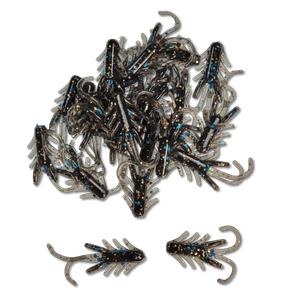
Jiggin' Johnsons' .75" Micro Hog Soft Plastic Bait
Tiny .75-inch creature with fine legs for ultra-light panfish, float and ice presentations when fish want a subtle target.
Compact 1" bug bait with a ribbed body, small legs and broad trailing paddles that respond to tiny movements. Ideal for float rigs, micro jigs and ice fishing.
The Jiggin' Johnsons' Micro Beetle puts an insect-like profile into a small soft plastic for bluegill, crappie, perch and other fish feeding on little things. Its compact, ribbed body has short legs and feelers, followed by broad, flattened paddle-shaped appendages and fine curved strands. Those different parts give the bait movement without requiring a hard snap or fast retrieve. A tiny twitch, slow fall or slight current can make the appendages shift while the body stays close to the fish. That makes the Micro Beetle particularly useful beneath a small float, on an appropriately sized ice jig or around shallow cover where panfish are inspecting baits rather than chasing them. The manufacturer lists its length at 1.13 inches, and each package contains 24 baits.
The important thing with this profile is keeping it at the right depth and allowing its small paddles and legs to move naturally. Start with less rod movement than you might use for a swimming grub or minnow.
Rig the Micro Beetle on an appropriately small jig or hook beneath a light float. Set the depth so it hangs slightly above shallow weeds, dock shade or the level where bluegill and crappie are holding. Let the float settle, give it one small twitch, then allow the bait to hang again.
Why It WorksThe float keeps the bug-like profile at a consistent depth instead of pulling it away from fish. Small changes in line tension and water movement can shift the paddles and fine appendages while the lure remains in a tight area.
RiggingSelect a very small hook or light jig head that fits the short ribbed body. Thread the bait straight and stop before the hook shank interferes with the trailing paddles. Balance the float to support the jig and set the suspension depth just above cover.
Lower the Micro Beetle to the depth where fish are showing on sonar or holding beneath the ice. Make several barely visible quivers, then stop completely. Rather than repeatedly lifting the bait away, hold it in front of the fish and watch for a change in line tension.
Why It WorksThe compact body creates a small target, while the legs and flattened rear appendages provide a little motion around that target. The pause gives fish time to inspect and take the bait without having to chase it.
RiggingUse an ice jig with a small enough hook to fit the Beetle's body while keeping an exposed hook gap. Pick enough head weight to control the presentation at the fishing depth. Avoid pulling the fine appendages onto the hook bend.
The Micro Beetle can be useful beyond its primary float and ice presentations. These applications still favor light tackle, modest movements and careful hook selection.
Make a short cast along a sparse weed line or across an open pocket in a pond. Let the Micro Beetle settle to the desired depth and retrieve slowly, adding brief pauses. Its rear paddles and fine strands provide a different silhouette from a conventional grub. Avoid retrieving so quickly that the tiny bait spins or loses its natural presentation.
Lower the Beetle alongside a dock post or shaded vertical structure where crappie or bluegill are holding. Work the lure at the depth of the fish, not automatically at the bottom. Make one short lift, allow it to settle and hold it in place. Keep the line as vertical as practical to avoid dragging the exposed hook into wood.
For small-water trout or panfish, cast a suitably light rig slightly upstream or across a gentle current seam. Let the current carry the Micro Beetle while maintaining enough line control to recognize a strike. Small current changes can move the appendages without continual rod-tip action. Avoid excessive weight that causes the bait to drag unnaturally across the bottom.
Fish the Beetle beneath a small float just outside lily pads, beside scattered weeds or near openings in shallow vegetation. Keep it suspended above the stems and allow occasional tiny movements. Its small insect-like shape is a sensible option when bluegill are feeding close to cover and repeatedly ignoring larger offerings.
When fish rise to inspect the Beetle but turn away, make a smaller adjustment before changing baits. Reduce jigging amplitude, lengthen the pause and experiment with suspending the lure slightly higher. A small bug profile often benefits from staying within a fish's immediate reach rather than swimming away after every movement.
Use a light micro jig and lower the Beetle beside brush or through open lanes between submerged stems. Allow it to fall under controlled slack so the flattened paddles are not constantly pulled tight. Once it reaches the target depth, hold it briefly before moving again. Select a hook small enough to preserve the bait's shape and work around snags rather than dragging through them.
The supplied photograph shows the Micro Beetle in Neo Orange, with a vivid orange ribbed body and softer peach-orange trailing paddles and appendages. The two-tone appearance is easy to distinguish against the black photographic background. In water, its visibility will depend on light, depth, clarity and the background behind the bait. The Micro Beetle is small enough that presentation and hook fit may matter more than a slight color change. Select other colors only from the actual available product options.
Start with a natural or subdued bug color if one is available, especially when fish have a good view of the lure. Neo Orange offers a brighter alternative when you want a more obvious target. Keep the presentation restrained and give fish time to inspect it.
Neo Orange is worth trying when the bait needs more visual presence in lightly stained water. Its orange-and-peach contrast gives the small profile a distinct appearance. If fish follow without committing, adjust depth and cadence before making repeated color changes.
Start by keeping the lure at the depth fish are using. Bright orange does not automatically mean glow-in-the-dark, and glow properties have not been verified for Neo Orange. If an explicitly labeled glow color is offered, choose it through the product options when that feature is important.
Most rigging problems with a bait this small come from using too much hook or pulling the plastic onto the jig so far that the moving appendages cannot work independently.
For vertical fishing, evaluate the Jiggin' Johnsons' Ice Jig. For an alternative open-water head, compare the Pillhead Jig. Actual hook fit should be checked for the selected size.
Choose the actual color and scent selection using the purchasing options above. Adding scent may slightly alter the finished bait's color.
Explore more products from Jiggin' Johnsons' Tackle Box, browse Crappie & Panfish Soft Plastics, or visit our Ice Fishing Soft Plastics Guide.
Store these baits flat in their original packaging, away from excessive heat and direct sunlight. Keep colors separated when possible to prevent color transfer.
Have worn or damaged soft plastics? See our Soft Plastic Recycling Information.
Answers to help you choose the right rig, fish the profile effectively and decide whether this is the small bait you need.
The Jiggin' Johnsons' Micro Beetle is a compact insect-style soft plastic with a ribbed body, small legs and paddle-shaped trailing appendages. It is designed for finesse fishing with very small jigs or hooks, particularly when fish are feeding on small aquatic insects or inspecting slow presentations.
The product is marketed as the 1-inch Micro Beetle, but the manufacturer's detailed product description specifies 1.13 inches. It remains a very small soft plastic intended for ultralight and micro-jig presentations.
Bluegill, crappie, perch and trout are the manufacturer's primary suggested targets. Other panfish may also take the bait when they are feeding on small insects or similarly sized forage. Choose the presentation and hook for the species and water you are fishing.
The Micro Beetle has a relatively chunky, ribbed body with broad flattened trailing paddles and smaller appendages. The Mayfly uses a more elongated, segmented insect profile with finer legs and a split tail. The Triton has a ribbed center and five flexible antennae with rounded tips. All are small finesse baits, but they offer visibly different silhouettes and types of movement.
Thread a small hook straight through the central ribbed body, keeping the hook gap exposed. Stop before the hook shank crowds the rear paddles or other appendages. A straight bait is easier to control and less likely to spin during a slow retrieve. Avoid stretching or tearing the fine parts while rigging.
Start by evaluating a genuinely small ice or panfish jig such as the Jiggin' Johnsons' Ice Jig. The Pillhead offers 1/16-ounce weight and #4, #6 or #8 hook choices, while the Galaxy Jig uses a 1/16-ounce head with a #6 hook. These are options to compare, not confirmed physical matches. Select the hook based on the Beetle's actual body length and thickness, keeping the gap and appendages clear.
Yes. This is one of the manufacturer's recommended approaches. Suspend the Beetle on a light jig or micro hook beneath a small float. Position it slightly above weeds or the depth where fish are cruising. Let it settle and give it occasional tiny twitches rather than moving it constantly.
Yes. Its compact bug-like shape and small appendages make it suitable for a slow vertical presentation. Use a jig with an appropriate hook, lower it to the fish's depth, apply a few light quivers and pause. It is especially worth considering when bluegill or crappie inspect larger baits without striking.
Yes. On ultralight tackle, a small jig can carry the Beetle through shallow pond water, creek pools or open lanes near vegetation. Retrieve slowly with occasional pauses. This is a controlled, subtle swimming presentation rather than the strong tail kick of a larger paddle-tail bait.
The short legs, thin strands and flattened paddles can shift during a slow fall, slight twitch or gentle water movement. The bait is intended for restrained action. It does not require the constant swimming speed of a conventional swimbait, and the exact movement will depend on hook position, jig weight and retrieve speed.
Each package contains 24 Jiggin' Johnsons' Micro Beetle soft plastic baits. The manufacturer independently confirms the 24-bait pack quantity.
The product offers an Add Scent option. Select your preference using the product options above. The maker notes that scent may cause a slight change in the finished color, so a scented bait may not look identical to the unscented example photographed.
Neo Orange is a bright orange-and-peach color in the supplied photograph, but glow-in-the-dark performance has not been verified. Do not assume it glows unless the actual option identifies that property. Store the soft plastics flat in their original packaging, away from excessive heat and sunlight, and separate colors when practical to reduce bleeding or transfer.
Choose an appropriate jig head for your water and presentation, or compare a smaller creature profile if fish are not committing to the Micro Beetle. Hook compatibility depends on the exact size selected and has not been physically verified.
Compact head with selectable hook and jig sizes for vertical bug presentations. Check Beetle fit.
Float & Micro Jig Jiggin' Johnsons' Pillhead Jig (5 Pack)A 1/16-ounce pill-shaped head with #4, #6 and #8 hook options to evaluate for small plastics.
Round-Head Alternative Jiggin' Johnsons' Galaxy Jig (5 Pack)A 1/16-ounce round-head jig with a #6 hook for controlled casting, swimming and float presentations. Confirm fit.
Smaller Bug Profile Jiggin' Johnsons' .75" Micro Hog (24 Pack)A smaller creature with fine legs and curled trailing tips when fish want less bulk than the Micro Beetle.