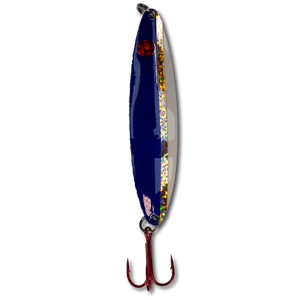




Litts Fish Lures Custom Hand Painted Craw Pattern Flutter / Trolling Spoons
$14.99
(No reviews yet)

Write a Review
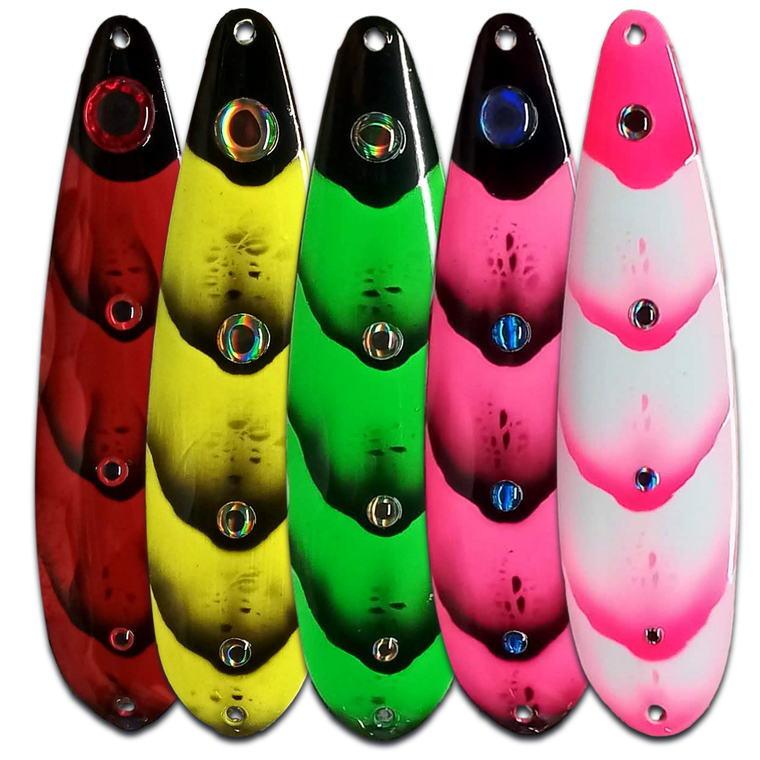
Litts Fish Lures Custom Hand Painted Craw Pattern Flutter / Trolling Spoons
Open-Water Trolling
When & Where: The core presentation for this spoon. Works across open basin water, along thermal breaks, and over structure for salmon, trout, and walleye. At home anywhere you're running a spread — Great Lakes, big inland water, or any fishery where flutter action triggers pelagic fish.
How: Run it on a standard trolling spread behind a downrigger, dipsy diver, or planer board. Speed between 2.0–3.5 mph is the typical productive range; the flutter action engages well across that window. Vary speed slightly when fish are marking but not committing.
Why: The spoon body flutter gives an erratic, wounded-baitfish action at trolling speeds. The Craw pattern's bold contrast — a dark back over a bright belly — creates a strong silhouette that reads well at distance and at depth.
Tuning: Adjust trolling depth with ball weight or downrigger position. The #5 (4.5") body pushes more water and runs with a wider flutter; the #4 (3.75") is a tighter, quicker action — useful when fish are keyed on smaller baitfish or when you want a different cadence in the spread.
Downrigger Presentation
When & Where: Targeting fish holding at a specific depth — common on Lake Superior and other Great Lakes where salmon and lake trout suspend along temperature breaks or hug bottom structure at depth.
How: Clip the line to a downrigger ball and set the release tension light enough to trip cleanly on the strike. Run a 6–10 foot leader from the ball to the spoon to give it room to work freely.
Why: Puts the spoon precisely in the strike zone, especially when fish are showing on sonar at a defined depth. The Craw pattern holds its visual contrast even as ambient light decreases with depth.
Tuning: Gregory's tip: at deeper presentations, polished brass on the back tends to maintain visibility better in low-light, deep-water conditions than nickel. Both work — brass is a practical starting point when you're running 40 feet or more.
Planer Board Spread
When & Where: Covering water laterally — useful in shallower trolling passes, near-shore salmon runs, or when fish are spread across a flat rather than holding at a defined depth. Standard on Great Lakes charter programs.
How: Attach to an inline board or a side-planer to push the spoon out to the side of the boat's wake. The flutter action remains effective well out to the sides. Stagger depths and distances across a full spread.
Why: Gets the spoon away from boat pressure and into water that hasn't been disturbed. Lets you cover a wider swath on a single pass, which matters when searching for active fish.
Tuning: Size selection matters here — run the #4 in a mixed spread alongside #5s for a size contrast that can trigger followers that pass on the larger profile.
Casting (Larger Waters / Shore)
When & Where: The #5 has enough body weight to cast a fishable distance, making it an option from piers, breakwalls, or rocky Lake Superior shoreline for trout and coho working the shallows, especially during spring and fall runs.
How: Cast across current or along structure edges and retrieve at a moderate pace that keeps the spoon fluttering. A slow, irregular retrieve — with brief pauses — mimics a struggling baitfish and can draw reaction strikes.
Why: Not every good moment requires a full trolling rig. For shore anglers or pier fishers, the Craw pattern's bold contrast works well in the mixed light conditions common along Superior's rocky shoreline.
Related Products
-
-
-
View Bait
Dougs Custom Lures 2.5" Ned Craw Soft Plastic Finesse Craw
Compact ribbed craw with subtle twin-claw movement for Ned rigs and finesse
Best ForNed Rig Jig Trailer FinesseProfile Compact Action Subtle$6.99 -