
Soft Plastic Panfish Baits
These tiny plastics (about 0.5"–2") let you match the bite without overthinking it: control fall rate first, then pick a profile that looks “right,” then choose color for visibility. Built for bluegill, perch, crappie, rock bass, and anything else that eats small.
Decision shortcut: fall rate first → then profile/length → then color for visibility.
What are Soft Plastic Panfish Baits?
Soft Plastic Panfish Baits are small, bite-sized plastics designed to look like the “snack layer” panfish and perch hunt every day—bugs, larvae, fry, tiny minnows, mini craws, and micro swimmers. The win is control: you can slow down, speed up, or hover in place without changing the entire presentation.
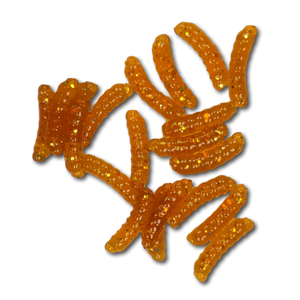
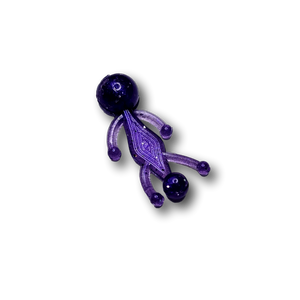
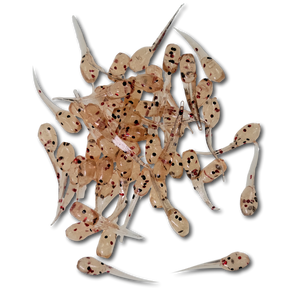
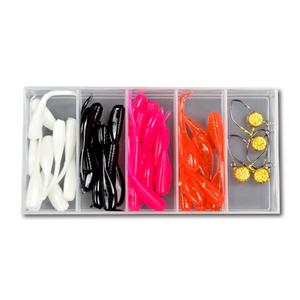
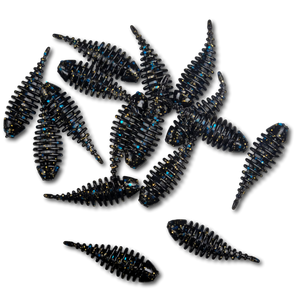
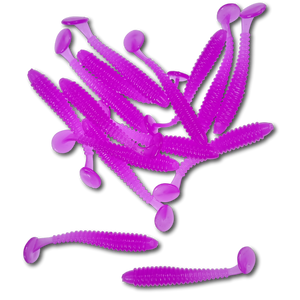
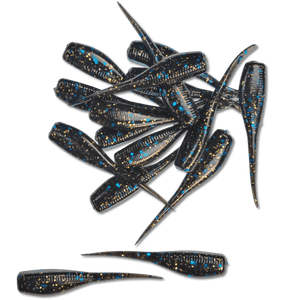
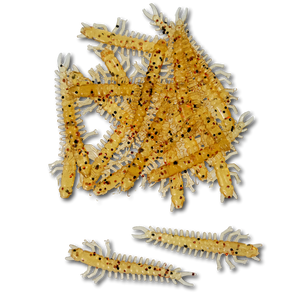
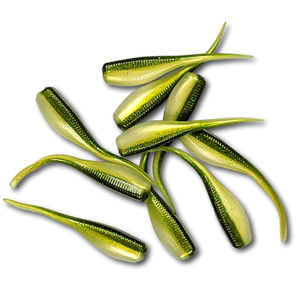
In this category you’ll see profiles like waxworms and spikes, tiny creatures and bugs, fry and minnows (including gilley-style bodies), mini grubs, mini frogs, skirted minnows, zipper minnows, mini shad, and micro sticks up to about 2".
Fall rate first: your #1 tuning lever
Start every decision by asking: Do I need it to fall fast, fall slow, or hang? Panfish eat on the fall and on the pause—your job is to put the bait in their lane long enough for them to decide.
- Fast fall: find active fish, cut through wind, fish deeper water, or keep the bait tight to a small target.
- Slow fall: neutral fish, pressured water, shallow flats, and anytime bites feel like “pecks.”
- Hover: when fish follow or stare—hold it in the strike zone and make the “one inch” moves.
Length & profile: match the bite (0.5"–2")
After fall rate, choose length (your easiest “size” control) and then choose a profile that matches what fish are already keying on: bugs/larvae, fry, minnows, or micro swimmers.
- 0.5"–1": waxworms/spikes, tiny bugs, “just a taste” bites, clear water, and cautious fish.
- 1"–2": fry/minnows, mini grubs, mini shad, zipper minnows, and anytime you want a more visible target without going “big.”
If you’re seeing short strikes, don’t change everything—trim 1/8"–1/4" off the bait and re-run the same cadence.
Color is visibility control (not magic)
Pick color to answer one question: Do I want the bait to disappear, glow softly, or pop? When bites are light, visibility and contrast often matter more than “matching” a specific forage.
- Clear water / bright light: natural/translucent, subtle flakes, lighter contrast.
- Stained water / low light: darker body for a silhouette, or a brighter accent (tail/pop).
- Perch/bluegill mood: small changes win—same bait, slightly different shade.
When & where to use them (boat → river → bank → docks)
This is a “small targets, small moves” category. You’ll get more bites by staying in the zone longer than by covering water fast.
- Boat (no electronics): pick obvious edges—weedline turns, shade lines, isolated cover, and depth changes you can feel with your jig.
- River: use current seams, behind rocks, inside bends, and slack pockets—let current add life to tiny plastics.
- Bank fishing: work parallel to the bank and fish “lanes” (weed edge, riprap edge, dock line) instead of fan-casting randomly.
- Docks: skip, pendulum, and soak—most bites happen on the initial fall or the first pause.
Where it shines
Soft Plastic Panfish Baits shine when the bite is small, selective, or pressured—and when you need a bait that can be fished slow without looking dead. They also let you scale up or down fast without changing the whole system: keep the same head/hook and simply change length or profile.
Category is NOT
- Not a “one bait does everything” shortcut—tiny changes in fall rate and length matter here.
- Not a fast, burn-and-turn category—most bites happen on the fall or on a pause.
- Not only for one species—bluegill, perch, crappie, and rock bass all respond to the same levers.
- Not about perfect matching—visibility and contrast often beat “exact forage” when bites are light.