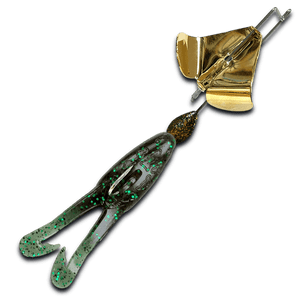


Soft Plastic Frogs
Soft plastic frogs are not only topwater baits. Some buzz across shallow grass, some crawl over mats and pads, some skip under docks, and some work as weedless search baits where treble-hook lures cannot go.
The Quick Answer
Start with where and how you want the frog to move. Does it need to buzz, crawl, slide, pause, skip, or come through heavy cover without fouling? Once that job is clear, hook fit, leg action, buoyancy, body thickness, retrieve speed, and color get much easier.
Start with the Frog’s Job
A soft plastic frog can be a buzzing bait, a weedless search bait, a mat bait, a dock-skipping bait, or a pause bait. The cover and retrieve decide which frog makes sense. Before you worry too much about color, decide whether the bait needs to move fast, stay clean through cover, sit high, slide over vegetation, or pause in holes where fish can line it up.
Buzzing Toads
Use buzzing toads when fish are shallow and active enough to chase. They shine across sparse grass, shallow flats, open lanes, flooded cover, and long banks where you want to keep moving.
Weedless Cover Frogs
Use weedless soft plastic frogs when the bait needs to come through pads, duckweed, bank grass, reeds, shoreline cover, and messy vegetation without constantly fouling.
Skip and Pause Frogs
Use compact frogs when you need to skip under docks, overhangs, shade lines, or tight cover. A frog that skips well and can pause in place gives fish a cleaner target.
Finesse / Smaller Frogs
Use smaller frogs when bass are missing the bait, the water is clear, the cover is thin, the forage is small, or fishing pressure makes a big loud frog feel like too much.
Soft Plastic Frog Size and Profile Guide
Frog size is only part of the decision. Body width, leg style, belly thickness, buoyancy, hook slot, and how cleanly the bait collapses around the hook all matter. A frog that looks perfect in the package still needs to rig straight and give the hook enough room to work.
| Profile | Best Use | Why It Works | Watch-Out |
|---|---|---|---|
| Small / finesse frogs | Pressured fish, clear water, missed blowups, ponds, smaller bass, and smaller forage. | A smaller frog gives fish an easier target and can keep getting bites when a full-size surface bait feels too aggressive. | They can be harder to cast and may need lighter hooks, cleaner rigging, and a slower hookset rhythm. |
| Standard soft plastic frogs | Everyday shallow grass, pads, bank cover, flats, reeds, shoreline cover, and general bass use. | This is the best starting point because it gives you enough profile to draw strikes without becoming too hard to rig or hook up. | Hook gap still matters. A thick standard frog can crowd the point if the hook is too small. |
| Buzzing toads | Steady retrieves, covering water, sparse grass, warm water, shallow flats, and active fish. | Kicking legs create surface commotion and let you search shallow water quickly without using treble hooks. | If fish are swiping or missing, slow down, pause near cover, or move to a subtler frog. |
| Compact skipping frogs | Docks, overhangs, shade pockets, holes in cover, laydowns, and tight casting lanes. | A compact body skips better and lands with less splash, which helps when fish are tucked into shade or tight cover. | Compact bodies can still be thick. Make sure the hook has enough bite and the bait collapses cleanly. |
| Wide-body frogs | Mats, slop, pads, duckweed, heavy grass, big targets, and situations where surface presence matters. | A wider body rides higher, shows up better, and can crawl over vegetation without digging in as easily. | Wide bodies need enough hook gap. If the body blocks the point, blowups turn into missed fish. |
| Long-leg / high-action frogs | Stained water, active fish, warm water, long casts, and calling fish up from grass or edges. | More leg action creates more surface disturbance and gives fish something to track from farther away. | Too much commotion can hurt you on calm water, clear water, or pressured fish. |
| Subtle-leg / natural frogs | Calm water, clear water, pressured fish, slower retrieves, and fish that follow but will not commit. | A quieter frog can look more natural and stay in the strike zone longer without overpowering the fish. | It may not call fish from as far away, so casting accuracy and cover placement matter more. |
Rigging Soft Plastic Frogs
Most soft plastic frogs are Texas-rigged or rigged on wide-gap frog and toad hooks. Hook gap and body thickness matter a lot. The frog has to stay straight, come through cover, and still collapse enough for the hook point to find fish.
Hook gap matters
A thick frog body needs enough hook gap for the plastic to move out of the way. Too small of a gap can turn good blowups into skin-hooked fish or missed hookups.
Rig it straight
A crooked frog rolls, spins, tracks sideways, or loses the surface action it was built to have. Take the extra few seconds to line up the hook and center the body.
Screw-lock hooks help
Screw-lock hooks can keep soft frogs straight longer, reduce tearing at the nose, and help the bait track cleanly on long casts and steady retrieves.
Weightless rides higher
Weightless rigs stay higher and usually work better over vegetation, pads, bank grass, and shallow cover when you want the frog to stay on or near the surface.
Weighted hooks add control
A light belly-weighted hook can improve casting distance, help a frog track, and let you swim it slightly under the surface. Too much weight can pull the bait under or kill the surface action.
Check the bait often
After a fish, missed strike, or hard pull through cover, check the hook point, body alignment, and nose of the bait. A torn or twisted frog will not fish the same way.
Best Soft Plastic Frog Presentations
The same frog can be a fast search bait, a slow cover bait, a dock-skipping bait, or a follow-up bait after a missed blowup. Pick the presentation first, then choose the frog profile, hook, and cadence that let you repeat it.
Steady Buzz Retrieve
Keep the frog moving just fast enough for the legs to kick and the bait to stay on top. This is a strong way to cover shallow flats, sparse grass, and active fish.
Slow Crawl Over Grass
Use a slower retrieve over grass tops, pads, duckweed, and surface vegetation. Let the frog crawl instead of racing it away from fish buried in cover.
Stop-and-Go Over Pads
Move the bait across pads and lanes, then pause in the gaps. The pause gives bass time to find the bait and commit before it leaves the strike window.
Pull Through Mat Holes
Crawl the frog over the mat, then let it drop, sit, or slow down in holes and open pockets. Those openings are often where fish get the cleanest shot.
Skip Under Docks
Use compact frogs around docks, overhangs, and shade lines. Skip past the edge, let the bait settle, then work it through the darker water instead of pulling it out too soon.
Edge-of-Cover Pause
Pause the frog where grass ends, pads open up, shade starts, or cover creates a clean lane. Fish often track the bait and eat when it changes speed.
Burn Over Shallow Flats
When fish are chasing, speed can trigger bites. Burn a buzzing toad over shallow flats, scattered grass, and warm-water feeding areas where bass are willing to run it down.
Weedless Shoreline Search
Use a soft plastic frog like a search bait around bank grass, laydowns, reeds, and shallow cover. It lets you fish messy water without constantly picking hooks clean.
Missed Blowup Follow-Up
If fish are missing the bait, pause longer, downsize, switch to a softer or subtler frog, or throw back with a slower presentation before leaving the area.
Weighted Hook Subsurface Swim
A lightly weighted hook can turn a frog into a weedless swimming bait just under the surface. This helps when fish swipe at topwater but connect better below it.
Color, Water Clarity, and Cover
Color matters, but with frogs the first question is usually action and visibility. A frog that comes through cover cleanly, tracks right, and gives fish a clear target will beat a perfect color that rolls, fouls, or hooks poorly.
Clear Water
Green pumpkin, watermelon, natural frog, subtle belly, translucent green, bluegill tones, and quieter colors help when fish can inspect the bait closely.
Stained Water
Black, white, green pumpkin, chartreuse accents, brighter legs, and stronger contrast help fish track the frog through chop, grass, shade, and stained water.
Dirty Water / Low Light
Black, solid dark, white, strong contrast, and noisy action are good starting points when fish are finding the bait more by silhouette and disturbance than detail.
Heavy Mats / Pads
Black, white, green, and high-contrast belly colors help bass locate the target from underneath heavy cover, especially when visibility is limited.
Bluegill / Shallow Forage
Green pumpkin, watermelon, bluegill, brown and green blends, and natural shallow-water colors fit when bass are feeding around bluegill beds, fry, or bank cover.
Tough Bite
Go smaller, use softer action, pause longer, clean up the rigging, and reduce commotion before you cycle through every color in the boat.
Common Soft Plastic Frog Mistakes
Setting the hook too fast on blowups
Using too small of a hook gap
Rigging the frog crooked
Fishing too fast when fish are missing it
Using a buzzing frog when fish want a paused bait
Using a frog in cover where it constantly fouls
Forgetting to check the bait after every fish or missed strike
Choosing color before fixing retrieve, rigging, or hook fit
Treating every frog like a hollow body frog
Soft Plastic Frog vs Hollow Body Frog
Soft plastic frogs and toads often shine when you want a steady buzz, a weedless search bait, a bait that collapses differently, or something you can rig on your hook of choice. Hollow body frogs often shine when you need maximum float, walk-the-dog action, or repeated pauses in one spot. Neither is automatically better. The better choice depends on cover, retrieve, and how fish are reacting.
| Bait Type | Best For | Why You’d Choose It | Watch-Out |
|---|---|---|---|
| Soft Plastic Frog / Toad | Buzzing, covering water, weedless swimming, weighted-hook options, hook-choice control, and easy body replacement. | It is versatile, easy to rig different ways, and can fish through cover without treble hooks. | May not float or pause as long as a hollow body frog, depending on the plastic and rigging. |
| Hollow Body Frog | Floating, walking, pausing in holes, heavy mats, pads, and longer sitting time. | It stays on top well and can sit in place where fish need more time to strike. | It is less useful when you want a steady buzzing retrieve or hook-style flexibility. |
| Buzzbait | Maximum surface commotion, covering water, dirty water, low light, and aggressive fish. | It calls fish from farther away and keeps moving with a strong surface disturbance. | It is not as weedless in some cover and does not pause like a frog. |
| Texas-Rigged Creature | Punching, flipping, slower bottom contact, heavy cover, and fish that are not willing to chase. | It gets into cover and works slower when a surface bait is drawing attention but not getting eaten. | It loses the surface strike and search-bait speed that make frogs fun and efficient. |
| Paddletail Swimbait | Steady swimming below the surface, baitfish imitation, clearer water, and open lanes. | It gives a cleaner baitfish look and steady subsurface action when fish are not looking up. | It usually does not handle surface vegetation as cleanly as a frog-style bait. |
Care, Storage, and Recycling
Storage
Store flat in the original bag to preserve shape. Keep dark colors separate to avoid bleeding. Compatible with most gel scents.
Plastics Recycling
Don’t toss torn baits, recycle or dispose of properly. Learn more here: https://qwikfishing.com/recycling/
Related Guides and Categories
Use these when you want to go deeper on soft plastics, bait size, fall rate, color, rigging, hook fit, and nearby bait profiles that often overlap with soft plastic frog fishing.
Are You a Soft Plastic Frog or Toad Bait Maker?
Are you a bait maker that would like to see your soft plastic frogs, buzzing toads, hollow-body-style soft plastics, kicking-leg frogs, floating frogs, or surface-cover baits featured here? Qwik Fishing is built around useful tackle from real small bait makers, not just the same wall of mass-market baits everywhere else.
Let’s Talk Baits