
Soft Plastic Creature Baits
Creature baits are the “cover toolbox” plastics: they flip, drag, punch, and trailer a jig without needing a perfect forage match. Use the filters (brand, color, size) to pick what’s stocked today, then tune fall rate first (weight + plastic resistance) before you chase exact shades.
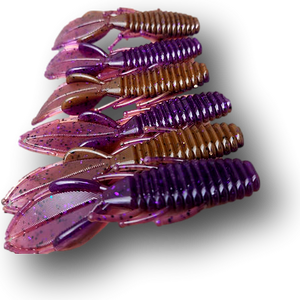
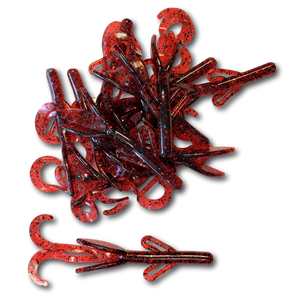
Soft plastic creature baits are built to suggest “alive” more than “exact.” They can look like bugs, bluegill snacks, small amphibians, or just a convincing mouthful. The practical win is versatility: the same bait family can be a Texas-rig flipper, a Carolina-rig dragger, a punching bait, or a jig trailer.
Creature baits create drag. That means the “right” weight is often lighter than you’d pick on a straight worm, because the bait itself slows the fall. If bites are off, change fall rate before you change color.
- Too fast: drop weight, unpeg, choose a flatter/less flappy profile, or go to a lighter-wire hook.
- Too slow: add weight, peg for punching/flipping, or use a bulkier hook that stabilizes the body.
- Wind/current: weight up only enough to keep contact, then slow cadence to keep it believable.
This category currently runs roughly 2" to 10" depending on what makers are pouring and listing—so treat the range as “living inventory.” Your decision stays stable even if inventory shifts: pick a size that fits the bite window, then tune fall rate.
- 2–3.5" (finesse): pressured fish, clear water, river smallmouth, or when bites are “tap-tap” not “thunk.”
- 4–5" (standard): your everyday flipping/dragging size that still trailers a jig cleanly.
- 6–10" (big): heavy cover, bigger bites, or lizard/water-dawg styles that sell the “easy meal” look.
- Beaver / flat-body: skips and punches well; subtle movement; clean bottom contact.
- Bug / Evo Bug: designed to “do something” at slow speeds; good when fish need help finding the bait.
- Brush hawg style: long arms/legs that keep moving on a drag; excellent for bottom coverage and pauses.
- Lizard / Water Dawg: longer profile that shines on slow drags, bedding zones, and grass lanes.
If you need quiet, pick flatter and simpler. If you need noticeability, pick more appendages and let drag work for you.
- Docks/wood: pitching and skipping; let it fall beside posts and cross braces.
- Grass: flip edges and holes; punch when fish bury; short drops beat long retrieves.
- Rock/transitions: drag/pause; let appendages “crawl” while you maintain contact.
- Rivers: keep it slow enough to look natural, heavy enough to maintain position; short drifts and controlled sweeps.
Creature baits are not a “match the hatch” trap. Once you’ve chosen size and tuned fall rate, color is simply: how do I make this readable?
- Clear water: natural greens/browns; lower contrast.
- Stained water: increase contrast (darker bodies, two-tone, or bolder patterns).
- Dirty water: silhouette first (often darker) or high-contrast options.
If you’re stuck, use the brand and color filters to narrow to what you trust, then let fall rate do the heavy lifting.
This is a bass category first—especially largemouth around cover and smallmouth in rivers. Creature baits also draw bites from pike and other opportunistic predators when you fish them like a slow, bottom-oriented meal (drag/pause, controlled sweeps, no panic).