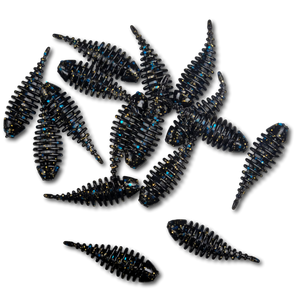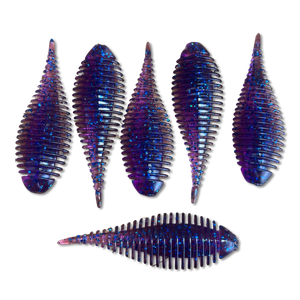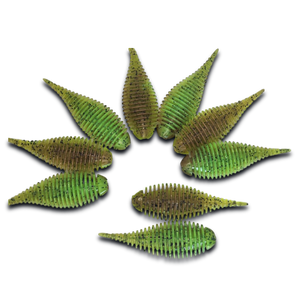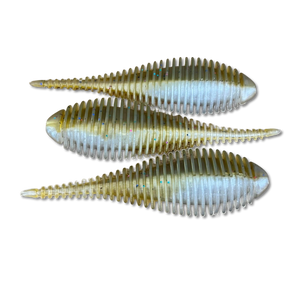

Soft Plastic Gilley Shad
A realistic shad/bluegill-style soft swimbait that’s already proven across panfish, crappie, bass, walleye, and trout. Start with fall rate (sink speed), then choose size (1.5"–4.8"), then profile (shad body vs paddle-tail), and finish with color for visibility.
Category page • quick answers + rig setupsFall rate first: control sink speed, then pick size (1.5"–4.8"), then shad-body vs paddle-tail—everything else is a cleanup pass.
Fall rate first: control sink speed, then pick size (1.5"–4.8"), then shad-body vs paddle-tail—everything else is a cleanup pass.
What is a Soft Plastic Gilley Shad?
A Soft Plastic Gilley Shad is a realistic, baitfish-style soft swimbait built to look natural on the drop and on the pause—not just on a straight retrieve. In this category you’ll see two main profile types: a gilley-style/shad body and a paddle-tail variant, in sizes from 1.5" to 4.8".
First lever: fall rate (your speed control)
Fall rate is the first lever because it controls how long the bait stays in the strike window. If fish are tracking but not committing, fall rate is usually the fastest path to “full eats.”
- Slower fall: more hang time, more realism on pause—great for panfish, crappie, and tough bites.
- Faster fall: better control in wind/current and easier depth repeatability—great when you need to stay in a lane.
Second lever: size (1.5"–4.8" in clean buckets)
Use the Length filter like a decision tool. Think in buckets (because your inventory will grow):
- ~2" bucket (1.5"–2.4"): panfish-first, crappie, finesse bass, slower presentations.
- ~3" bucket (2.5"–3.4"): the “do most things” size across crappie, bass, and many walleye situations.
- ~4" bucket (3.5"–4.8"): bigger bass and walleye opportunities; trout when they’re hunting larger forage.
If you’re unsure, start smaller and adjust fall rate before upsizing. That keeps the bait looking natural while you dial depth and cadence.
Second lever (part 2): profile — shad body vs paddle-tail
- Gilley-style/shad body: wins when you pause a lot. It keeps a believable posture on the drop and during dead-sticks.
- Paddle-tail variant: wins when you need consistent vibration and tracking on a steady retrieve (wind, stain, current).
Third lever: color (visibility first, matching second)
Color is your visibility control. Choose colors that help fish track the bait cleanly in your water and light, then fine-tune once the fall rate and size are right.
- Clear + bright: lean natural/translucent and reduce contrast.
- Stained + low light: increase contrast so the silhouette reads.
- Wind/chop: you can push contrast slightly more than calm water.
Where it shines
This profile shines when “realism on the pause” matters. It’s built for fish that inspect, follow, and finally commit when the bait looks alive without needing speed.
- Panfish + crappie: swim short lanes and pause frequently—many bites happen during the settle.
- Bass: edges and transitions—shade lines, grass lines, dock lines, and current seams.
- Walleye: controlled drops and short lifts along edges, especially when they’re feeding on baitfish.
- Trout: steady swim with clean pauses—keep the profile and fall rate consistent.
When & where to use (priority order)
Boat without electronics: use sink counts as your depth tool. Count down, swim, pause, repeat the same lane until you get proof.
River: quartering casts and controlled swings. Pick a fall rate that stays stable in flow.
Bank fishing: work parallel to edges (weedlines, riprap, current breaks) and pause at “changes.”
Docks: smaller sizes skip/pitch well; let them glide down and pause at the shade edge.
Category is NOT (quick boundaries)
- Not a bait that requires high speed to look right.
- Not the best tool when you need maximum vibration from far away.
- Not a heavy cover punch bait designed to crash through thick mats.
- Not a “one cadence only” lure—pauses are part of the deal.