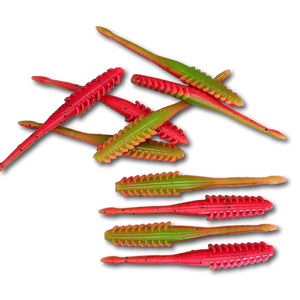



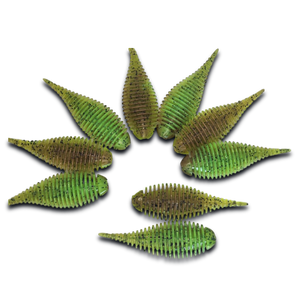

Four-Seven Lures 4.3" Fatback Shad Soft Plastic Bait
$6.99
(No reviews yet)

Write a Review

Four-Seven Lures 4.3" Fatback Shad Soft Plastic Bait
On-the-water overview (demo copy)
This is placeholder text for Jiggin’ Johnson’s new template shell.
Once we’re happy with the layout and behavior, we’ll plug in real product
descriptions, rigging tips, and JJ-specific language.
Specs & build (demo copy)
Specs & build (demo copy)
Care & storage (demo copy)
Care & storage (demo copy)
Best ways to fish it (demo)
Swim Jig Trailer
Shallow grass, slow roll
Texas Rig
Pitching to cover
Ball Jig Head
Dragging sand or rock
Split Shot
Natural subtle glides
How, where, and why it excels
Bladed Jig Trailer (3/8–1/2 oz)
When & where: Windy banks and grass edges; shad spawn.
How: Slow‑roll so the blade thumps; the tapered shad body tracks straight and resists roll‑out.
Spinnerbait Trailer (3/8–1/2 oz)
When & where: Stain + wind, shallow grass, and laydown lanes.
How: Steady retrieve with brief stalls after cover; trailer adds body and lift without killing blade spin.
Swim Jig Trailer (1/4–3/8 oz)
When & where: Submerged grass and shoreline reeds.
How: Swim‑and‑kill; one pop after a tick to trigger followers.
Underspin (1/4–3/8 oz)
When & where: Over points, drains, and bait balls visible on FFS.
How: Count‑down, slow roll, then kill in the fish—scythe tail keeps thumping at crawl speed.
Hover Jig (situational)
When & where: Suspended smallmouth/spot schools over 15–40 ft.
How: Slow glide and micro shakes; maintain forward motion to keep the tail breathing.
Standard (Ball) Jig Head (3/16–1/4 oz)
When & where: Rock/shell transitions and river seams.
How: Slow grind with rod‑tip pulses; short kills after deflections.
Weighted Swim‑Bait Hook (1/8–1/4 oz • 3/0–4/0)
When & where: Sparse grass, brush lanes, and docks where an open hook hangs.
How: Slow to medium retrieve; occasional rod sweeps to pulse the scythe tail.
Trim & Mods (quick hits)
- Tail slot: Keep the factory slit intact for tighter thump; deepen slightly for more kick at slow speeds.
- Nose ring: Add a small oval split‑ring on jig heads to improve tracking on heavy wire.
- Keeper dot: Tiny gel glue at the keeper prevents nose tear‑out on chatter/swim jigs.
Dial it in (color classes)
- Shad/White: Pearl, White Ice — wind, clouds, and shad‑spawn banks.
- Smokes/Silvers: Smoke w/ flake, Tennessee shad — sunny clear water over rock and sand.
- Greens/Naturals: Green Pumpkin Shad, Ayu — mixed forage, pressured fish, rivers.
- Chromes/Flash: Holo/Silver flake — dirty water or when bait is flashing high in the water column.
- Chartreuse Accents: Chartreuse shad — dingy water and smallmouth rivers.
Specs & Build
- Length: 4.3" (109 mm)
- Profile: Thick back, scaled body, tapered belly, and slit scythe tail for high‑pitch thump at slow speeds
- Material: Plastisol soft plastic
- Best Pairings: Underspin (1/4–3/8), Swim Jig (1/4–3/8), Bladed Jig (3/8–1/2), Weighted EWG 3/0–4/0 (1/8–1/4), Ball Head (3/16–1/4)
- Hook Sizes: Jig heads 3/0; weighted EWG 3/0–4/0
- Species: Bass (LM/SM/Spots); cross‑over for walleye/stripers when size‑matched
- Availability: Ships promptly when in stock.
Care & Storage
Store flat in the original bag; keep out of heat to preserve tail memory. Separate darks/lights to avoid dye bleed.
Plastics Recycling
Recycle or dispose of torn baits properly. Learn more here: Soft Plastics Recycling.
Proof & Community
On‑the‑Water Notes
- FFS schools: Count‑down an underspin to the depth of bait, then slow roll through fish; kill for one second when you pass the cone.
- Grass lanes: Swim jig + Fatback; when you feel a tick, rip free and kill—many strikes happen on the stall.
- Cold water: Ball head crawl on rock; the scythe tail still moves at creeping speeds.
Q&A
Q: Why choose a scythe‑tail shad over a paddle tail?
A: It produces a tighter, higher‑pitch vibration that holds track at slow speeds and in current, making it lethal in clear water and around pressured fish.
Q: What lines work best?
A: 12–17 lb fluoro on jigs/chatter; 30–40 lb braid to 12–15 lb leader for grass. For underspins in open water, 10–12 lb fluoro keeps the bait deep.