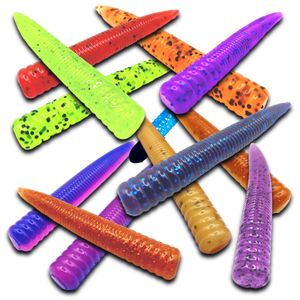



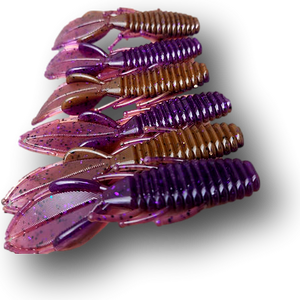

Bigg Mouth Fishing 3.8" Stealth Swimmer Soft Plastic Bait
$5.99
(No reviews yet)

Write a Review

Bigg Mouth Fishing 3.8" Stealth Swimmer Soft Plastic Bait
On-the-water overview (demo copy)
This is placeholder text for Jiggin’ Johnson’s new template shell.
Once we’re happy with the layout and behavior, we’ll plug in real product
descriptions, rigging tips, and JJ-specific language.
Specs & build (demo copy)
Specs & build (demo copy)
Care & storage (demo copy)
Care & storage (demo copy)
Best ways to fish it (demo)
Swim Jig Trailer
Shallow grass, slow roll
Texas Rig
Pitching to cover
Ball Jig Head
Dragging sand or rock
Split Shot
Natural subtle glides
How, where, and why it excels
Bladed Jig Trailer (3/8–1/2 oz)
When & where: Wind + stain; grass/rock transitions; pre‑spawn through fall.
How: Medium retrieve; add 2–3 short pops per cast. Keep the bait perfectly straight to avoid roll‑out.
Why: The Stealth Swimmer’s tight paddle adds lift without fighting the blade—more vibration transfer, less drag.
Buzz Bait Trailer (1/4–3/8 oz) — situational
When & where: Low light, wind lanes, or bank grass with lanes.
How: Slow roll to just break the surface; kill next to targets; restart clean.
Why: Adds lift for slower planing and a clean tail pulse for longer time in the strike zone.
Spinnerbait Trailer (3/8–1/2 oz)
When & where: Wind on grass edges/points; shad spawns; cloudy rock banks.
How: Steady grind with brief stalls after deflections. Willow + Stealth = speed without blowouts.
Why: Tail adds body and a baitfish kick without overpowering the blade cadence.
Swim Jig Trailer (1/4–3/8 oz)
When & where: Coontail/milfoil lanes; docks with shade; rip‑rap.
How: Slow‑to‑medium; kill‑and‑restart after cover; pop to free grass and re‑engage tail.
Why: Tight kick tracks straight in chop and carries speed in grass without rolling.
Underspin (1/8–3/8 oz)
When & where: Suspended bait, points, marinas, and shade lines you can trace on electronics.
How: Count‑down to depth; slow grind with 1–2 stalls; keep the blade tracking not flashing out.
Why: Blade flash + tight tail = clear‑water confidence for roamers and schoolers.
Drop Shot (nose‑hooked)
When & where: Vertical targets and shade lines; fish spotted on forward‑facing sonar.
How: Hold in place with micro shakes; swim it 5–10 ft, then stop and let the tail breathe.
Why: Minnow signal with a subtle paddle—coaxes pressured fish that ignore larger swimmers.
Ned / Finesse Head (1/16–1/8 oz) — situational
When & where: Ultra‑clear water and post‑front conditions when they won’t chase.
How: Thread perfectly straight; slow swim‑and‑glide; drag‑pause on bottom.
Why: Gives a micro‑swimbait look with a narrow tail beat.
Standard (Ball) Jig Head (1/8–1/4 oz)
When & where: Open‑water points, humps, rip‑rap seams.
How: Count‑down; slow roll; tick cover then kill for 1–2 seconds—watch your line jump.
Why: Bread‑and‑butter swimbait delivery for small shad profiles.
Texas Rig (light, 1/16–1/8 oz)
When & where: Sparse grass, brush lanes, or dock walkways.
How: Slow swim with stalls; twitch to free in grass; keep it straight to maintain track.
Why: Weedless control while keeping the baitfish kick intact.
Weighted Swimbait Hook (3/0, 1/8–3/16 oz keel)
When & where: Shallow wind lanes and grass pockets you want to slow‑roll.
How: Grind, stall, grind; keep rod low to track and feel tail cadence.
Why: Keel keeps the 3.8" tracking; adds hang time vs. heavier jigheads.
Weightless / Damiki‑style glide (situational)
When & where: Calm mornings, marinas, shade pockets.
How: Cast past target; count 2–4; short twitches to make the tail breathe; let it pendulum past the ambush point.
Gear Dial‑in (line • rod • reel)
- Jigheads/Underspin: 8–12 lb fluoro on a 7' M/F spinning or 7' ML/MF BFS‑style casting; slow gear (5.6–6.8:1) for cadence control.
- Swim/Spinner/Bladed: 12–16 lb fluoro or 30 lb braid to 12–15 lb leader; 7' M or MH/MF casting; 7.1:1 to burn‑and‑kill on demand.
- Grass lanes: Favor braid‑to‑leader for snappiness freeing the bait; downsize heads (1/8) to carry speed without roll.
Tuning & Mods (quick hits)
- Pin the head with a dot of gel glue on keepers to prevent tearing.
- Heat‑straighten kinked tails: a brief dunk in hot water realigns the paddle.
- Downsize hook (2/0) and lighten heads in ultra‑clear water to keep the kick tight.
- Blade balance: If a bladed jig rolls at high speed, trim 1–2 mm from belly to reduce lift.
Color Classes
Shad / Pearl / White — bright days, shad spawn, suspended bait
- Why: Clean baitfish silhouette that flashes on stalls.
- Use: Spinnerbait/Swim jig on wind; underspin in marinas or over points.
- Tip: Add silver flake in sun; go matte/opaque on overcast so fish track better.
Ghost / Smoke / Ayu — ultra‑clear, high sun, pressured fish
- Why: Translucent body keeps the profile subtle while the tail does the work.
- Use: Jighead slow‑roll; count‑down to brush lines; long even retrieves.
- Tip: Downsize head/hook to maintain a micro tail beat and avoid helicoptering.
Naturals (Green Pumpkin / Baitfish browns) — mixed forage, sun over rock/grass
- Why: Blends craw/bluegill cues with a shad shape—great around grass and docks.
- Use: Swim jig/texas light in lanes; kill‑and‑restart after cover.
- Tip: Gold/green flake shines on sunny banks; darker backs for stain.
Dark / Silhouette (Black Sapphire / Junebug) — mud, low light, night
- Why: Maximum contrast to help fish track the kick.
- Use: Bladed jig and spinnerbait; slow the cadence and let the bait “hang.”
- Tip: Pair with gold or Colorado blades in mud for more thump.
Signal / High‑Viz (Chartreuse, Fire‑Tiger accents) — wind, dingy water, schoolers
- Why: Adds trackability for you and triggers reaction bites.
- Use: Spinnerbait or swim jig in wind; underspin for chasing fish.
- Tip: Keep the body natural and accent just the tail for balance.
Specs & Build
- Length: 3.8" (96.5 mm)
- Profile: Compact ribbed swimbait with a tight “stealth” paddle—designed to kick at slow speeds and track in chop/grass.
- Material: Plastisol soft plastic; balanced salt for casting + tail cadence.
- Density/Buoyancy: Neutral‑to‑slightly sinking for level swims on 1/8–1/4 oz heads; hangs longer on keel hooks.
- Best Pairings: Bladed Jig (3/8–1/2), Spinnerbait (3/8–1/2), Swim Jig (1/4–3/8), Underspin (1/8–3/8), Standard Ball Head (1/8–1/4), Weighted Swimbait Hook (3/0, 1/8–3/16), Light Texas (1/16–1/8)
- Pack Qty: Varies by batch; see product options above.
- Availability: Ships promptly when in stock; some colors may be poured to order based on demand.
Care & Storage
Keep baits straight in the original bag to protect the paddle alignment. Separate dark/bright colors to prevent bleed. Rinse after salt use. Bagged (no clamshell).
Plastics Recycling
Don't toss torn baits, recycle or dispose of properly. Learn more here: Soft Plastics Recycling.
Proof & Community
On‑the‑Water Notes
- Shad spawn mornings: White/pearl on spinner/swim jigs; burn along grass edges then kill—bites on the hang.
- Cold fronts: Underspin slow‑roll over 12–20 ft; two mid‑retrieve stalls per cast.
- Suspended schools: Count‑down ball head or underspin; long, even retrieves with gentle S‑turns.
Q&A
Q: 3.8" vs. 3.3" or 4.3"—why choose the middle?
A: It’s the small‑shad sweet spot—casts on 1/8–3/8 heads, tracks in light grass, and still convinces pressured fish.
Q: Hook sizes?
A: Ball heads 1/0–2/0; weighted swimbait 3/0; swim/spinner/bladed jig use standard keeper hooks sized for 3.8" trailers.
Related Products
- So Good 6" Jerk Bait (Hand‑poured) — neutral‑glide follow‑up for followers and sight fish.
- Parsons 3.5" Paddle Tail Shiner — finesse paddletail for clear water.
- Doug’s 3.75" Rippin’ Shad — tight shad profile for roamers.
- Doug’s 3.75" Coreshot Rippin’ Shad — high‑contrast core for low‑light or stain.
- Four‑Seven 3.8" FlexFin Shad — similar size with a flexible paddle for slower kicks.
- Liquid Baits 3.8" Fat Swimmer — bulked tail for more thump/presence.
- Doug’s 4" Pintail Shad — dart‑and‑glide alternative for cold water.
- Snoopy’s 4" Ribbed V‑Tail Jerk Shad — ribbed jerk shad when you want less thump, more glide.