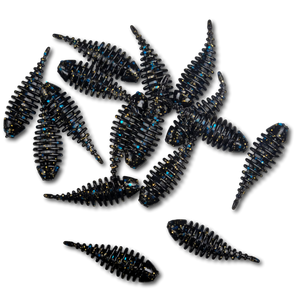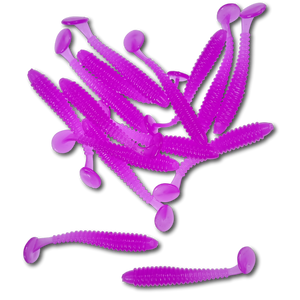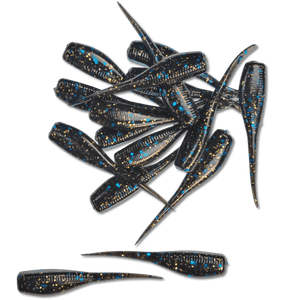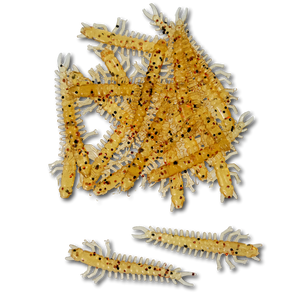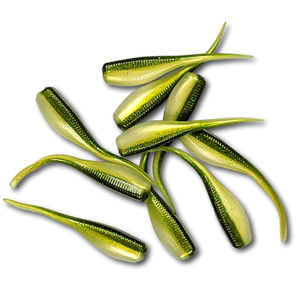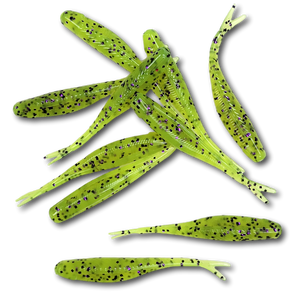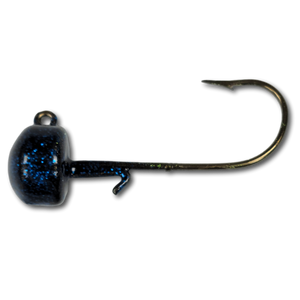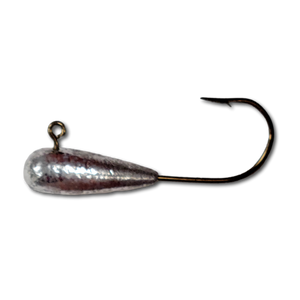

Crappie Soft Plastics
Small profiles, big payoff. These are precision soft baits for crappie and other panfish—built to fish clean on light jig heads, slip floats, and simple cast-and-countdown setups from the dock, bank, or boat.
Category page • quick answers + rig setupsPick a size, choose a profile, and fish it with confidence—without overthinking it.
What is a crappie soft plastic?
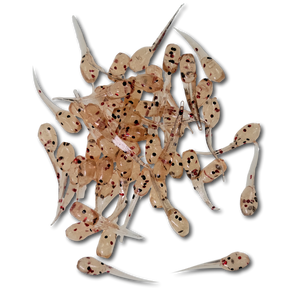
A crappie soft plastic is a small, finesse-profile bait (roughly 0.5"–2") meant to look like easy forage: tiny minnows, bugs/hellgrammites, micro craws, grubs, and baby panfish shapes. They shine when fish want a clean look and a natural pace.
Order of operations (what to tune first):
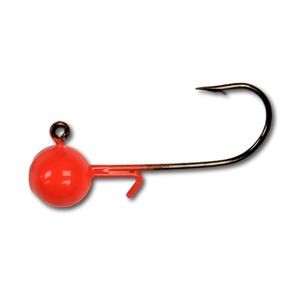
- Fall rate (jig head weight) → most important lever for crappie.
- Size (micro <1" vs 1"/1.5"/2") → match bite window and pressure.
- Profile (minnow / bug / twin tail / tube / gilley) → match how fish are feeding.
- Color → match water clarity and light.
Where crappie soft plastics shine (rigs & situations)
- Docks & shade: small jig + slow pendulum fall under floats, pontoons, and walkways.
- Weed edges: tiny paddletails, minnows, and grubs swum just above the tops.
- Brush & cribs: vertical jigging with micro bugs, tubes, and minnows.
- Rock & current seams: bug/hellgrammite profiles and twin tails drifted or hopped.
- Pressured fish: micro plastics (<1") and slower falls get more bites.
Colors & materials
For crappie and panfish, color is mostly about visibility and confidence. Start simple and adjust when you have a reason.
- Clear water: translucent smoke, natural baitfish, light green, subtle glitter.
- Stained water: chartreuse, brighter shad tones, two-tone tails for contrast.
- Muddy/low light: darker silhouettes (black/blue) or high-vis chartreuse tips.
Materials vary by brand, but for this category the key is action at slow speeds. If you’re fishing docks or brush, pick plastics that move on a pause—not only on a burn.
Best colors & sizes for crappie soft plastics
Size guide (matches your filter logic):
- Micro (<1"): tough bites, small fish, high pressure, or when you want bites immediately.
- 1": everyday dock/brush size—still finesse, but big enough to show up.
- 1.5": “meal” size for better fish—great for minnows, tiny tubes, and gilley-style shapes.
- 2": when you want to filter for quality or when fish are feeding on larger forage.
Quick color shortlist:
- Start natural: smoke/clear with flake, subtle shad, green pumpkin-ish “water” tones.
- Add contrast: chartreuse accents, two-tone bodies, brighter heads.
- Go dark: when light is low or water is dirty and you need silhouette.
Why crappie soft plastics are so effective
- Slow-speed realism: plastics keep working when you’re barely moving them.
- Repeatability: you can make the same cast and the same fall every time.
- Profile control: minnow, bug, grub, tube—swap “what it looks like” without changing your whole plan.
- Efficiency: less re-baiting compared to live options—more time fishing.
When & where to use crappie soft plastics
Start here: fish where crappie can pin prey—shade, edges, and hard cover.
- Docks: shade lines, corners, cables, and the “darkest spot you can reach.”
- Brush/cribs: make it vertical and controlled—small hops and pauses.
- Weed edges: swim just above the tops; don’t bury the bait.
- Current areas: seams and calm pockets—bugs and twin tails drift naturally.