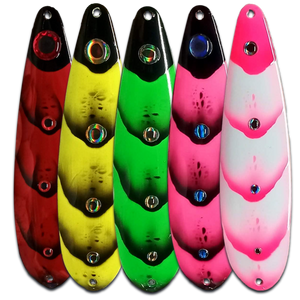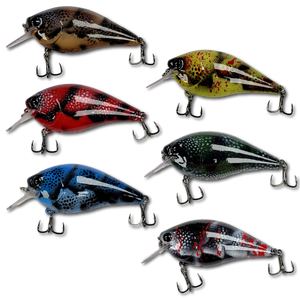



Litts Fish Lures Primer Base Craw Pattern Bandit Style Crank Bait
$15.00
(No reviews yet)

Write a Review
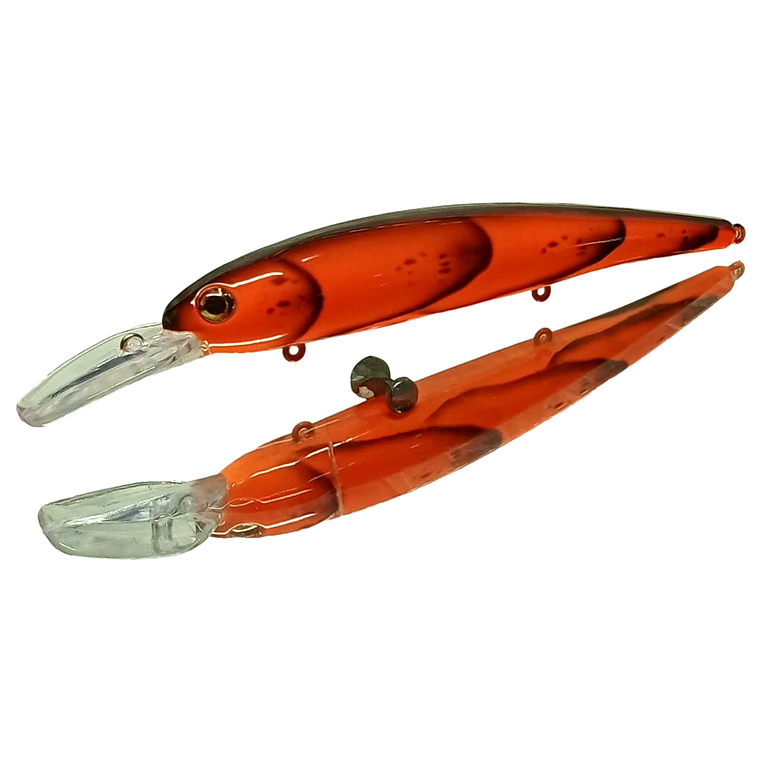
Litts Fish Lures Primer Base Craw Pattern Bandit Style Crank Bait
Trolling
When & Where: Open water walleye, lake trout, and salmon — structure edges, thermocline breaks, and mid-column fish over depth. The primer-base colors in this lineup are built to show up and get noticed, making them especially effective when you need the bait to stand out in a trolling spread.
How: Let out line to reach the strike zone and dial in speed with the depth you need. The Deep Diver gets down into the column without added weight; the Shallow Diver runs the upper water and works flat-line or with light planer boards for spread coverage. Productive trolling speeds typically run 2.0–3.5 mph depending on species and water temp.
Why: The primer-base process gives these colors a boldness and opacity that the chrome-base finish doesn't — the paint reads true and solid at depth, with no underlying flash to soften it. When fish want a strong target, these deliver it.
Tuning: Deep Diver for suspended fish, main-lake structure, and cold thermocline breaks. Shallow Diver when fish are riding higher or along inside edges and points. Running both depths in the same pattern is a proven way to find where they're sitting in the column.
Casting
When & Where: Rocky shorelines, river mouths, current breaks, and points where walleye or pike stage to feed. Best in low light — morning and evening windows when predators push shallow. The bolder primer-base colors are particularly effective in low-visibility or low-light situations where you want the bait to register fast.
How: Cast past the target and retrieve with a steady wind, varying speed until you find what triggers. Let the bait's wobble do the work. Occasional hesitations and speed bumps can trigger following fish.
Why: At 4.75" the Craw pattern pushes enough water to attract attention from distance. The primer-base finish gives these colors strong visual presence without relying on chrome flash — effective when fish are keying on color contrast over reflectivity.
Tuning: Shallow Diver is the better pick for casting shoreline structure — keeps the bait in the productive zone longer before it bottoms out. Deep Diver works for steep drop-offs and deeper points where you want it digging fast.
River & Current Fishing
When & Where: River mouths, current seams, tailwaters, and tributary flows where walleye or pike stack up in moving water. Works well in the transition zones where rivers meet big water. The Shallow Diver is the practical choice for most river applications; the Deep Diver suits bigger, deeper systems — major tributaries, tailwaters, and river mouths with significant depth where fish hold down in the current.
How: Drift or backtroll against current to keep the bait in the zone. Let it sweep through seams and slow-roll through eddies. Control your speed so the crankbait maintains its action without spinning out.
Why: The Craw pattern's earthy tones blend naturally in the stained water common to river mouths and tributary flows — and the primer-base opacity means the color holds even in low-clarity conditions where chrome-based translucency loses its effect.
Tuning: Shallow Diver for most river situations — stays in the zone on shallower systems and tighter current seams. Deep Diver for larger rivers with significant depth, strong tailwater currents, or when fish are holding well down in the column.
On-the-water overview (demo copy)
This is placeholder text for Jiggin’ Johnson’s new template shell.
Once we’re happy with the layout and behavior, we’ll plug in real product
descriptions, rigging tips, and JJ-specific language.
Specs & build (demo copy)
Specs & build (demo copy)
Care & storage (demo copy)
Care & storage (demo copy)
Best ways to fish it (demo)
Swim Jig Trailer
Shallow grass, slow roll
Texas Rig
Pitching to cover
Ball Jig Head
Dragging sand or rock
Split Shot
Natural subtle glides