
Dougs Custom Lures Wacky Jig Head
$5.99
(No reviews yet)

Write a Review

Dougs Custom Lures Wacky Jig Head
On-the-water overview (demo copy)
This is placeholder text for Jiggin’ Johnson’s new template shell.
Once we’re happy with the layout and behavior, we’ll plug in real product
descriptions, rigging tips, and JJ-specific language.
Specs & build (demo copy)
Specs & build (demo copy)
Care & storage (demo copy)
Care & storage (demo copy)
Best ways to fish it (demo)
Swim Jig Trailer
Shallow grass, slow roll
Texas Rig
Pitching to cover
Ball Jig Head
Dragging sand or rock
Split Shot
Natural subtle glides
Classic Wacky Drop — Docks, Laydowns & Shallow Cover
When/Where: The most common and productive wacky presentation. Anywhere bass hold in or near shallow cover — floating docks, boat lifts, laydowns, brush piles, and shoreline vegetation. Spring through fall, but especially lethal during the post-spawn when bass are shallow and finicky.
How: Hook through the center of a stick bait so both ends hang down freely. Cast to the target, let it hit the water, and then do nothing — watch the line and let the bait sink on completely slack line. Both ends of the stick bait wobble and undulate on the fall. Most strikes come on the way down before the bait ever reaches the bottom.
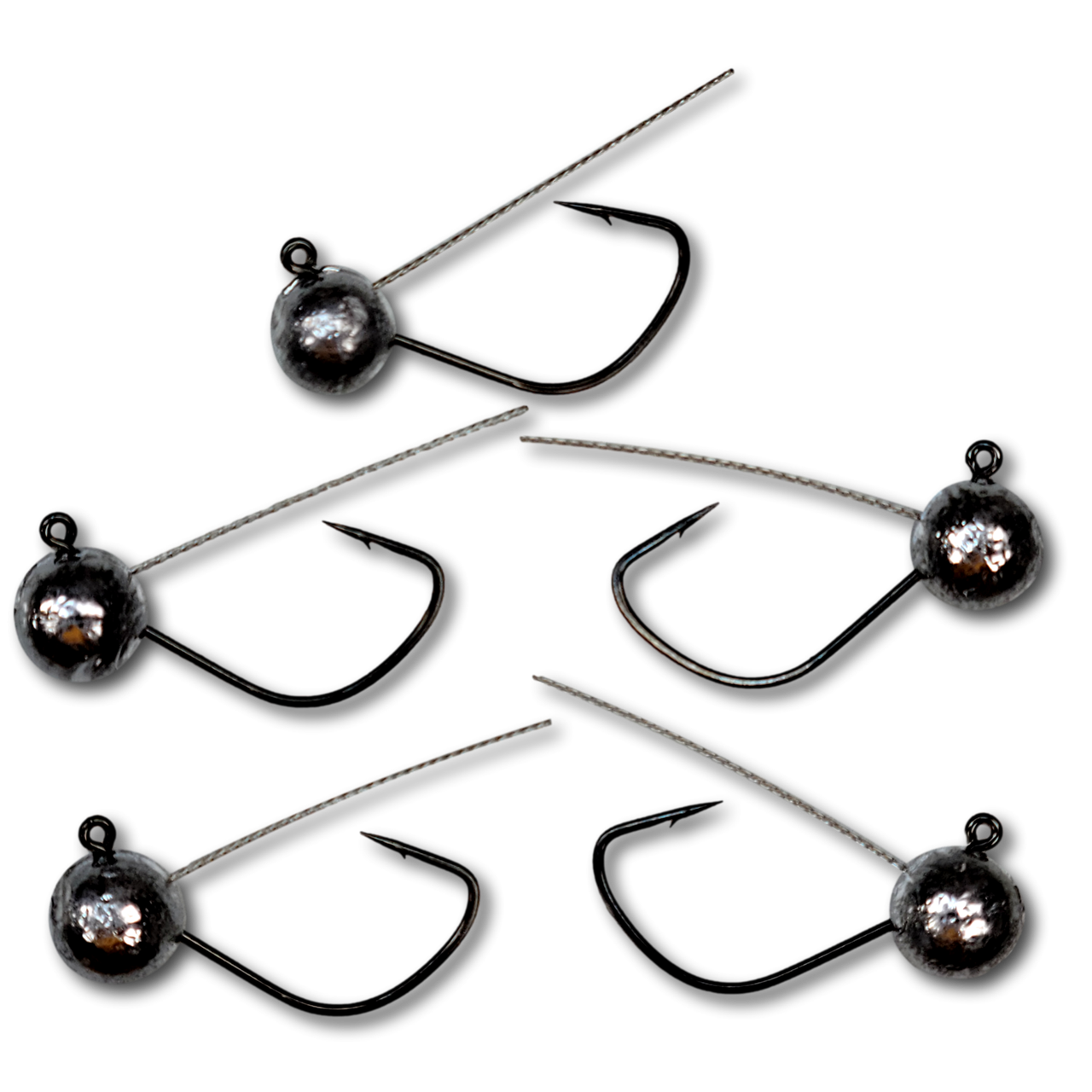
Why: The wacky jig head adds controlled weight to a presentation that's almost impossible to fish effectively without it. The ball head holds the hook centered in the bait so both ends flutter symmetrically, and the weight gets the bait down into the strike zone faster than a weightless setup — critical around dock pilings and laydowns where you need depth quickly.
Tuning: 1/16 oz for ultra-shallow and calm water; 1/8 oz is the all-around starting point for most dock and laydown fishing. Go up to 3/16 oz when you need to punch through wind or reach fish in slightly deeper water (6–10 ft).
Weighted Wacky — Deeper Water & Bottom Contact
When/Where: When bass have pushed a bit deeper — 8–15 feet — or are holding on bottom rather than suspended under cover. Points, humps, and deeper dock pilings in summer and fall.
How: Use a heavier head (3/16–1/4 oz) and allow the bait to reach the bottom. Once it touches down, give the rod a subtle shake to make the ends quiver in place, then let it sit. Inch it along slowly with small hops. The added weight keeps the bait in the strike zone at depth instead of hovering out of reach.
Why: A weightless wacky rig loses effectiveness past about 8 feet — it falls too slowly and gives fish too much time to reject it. The wacky jig head solves this by getting the bait down efficiently while preserving the side-to-side wobble that triggers strikes.
Tuning: 1/4 oz gives a noticeably faster fall for deeper presentations without sacrificing the wacky action. Pair with a longer stick bait (5"–6") so both ends still have plenty of material to work on the quiver.
Wacky Skip Cast — Under Docks & Overhanging Cover
When/Where: Low-clearance cover that most anglers can't reach — floating dock walkways, boat lifts with barely any gap, overhanging brush and willows. These spots hold fish all summer precisely because so few lures ever get in there.
How: Use a sidearm or backhand cast and skip the bait across the surface into the gap. The round ball head and slim stick bait profile make this one of the more skippable wacky setups available — it slides flat across the water instead of tumbling. Once it's under the cover, let it sink freely on slack line.
Why: The combination of a centered weight and a flat-profiled stick bait is ideal for skipping. The ball head gives enough mass for a controlled skip without making the bait so heavy it sinks immediately on contact with the water.
Tuning: 1/8–3/16 oz is the sweet spot for skipping — light enough to glide, heavy enough to cast accurately. Fluorocarbon line helps the bait sink quickly once it clears the surface under the cover.
Finesse Shake — Clear Water & Pressured Fish
When/Where: Post-cold-front conditions, heavily pressured fisheries, and clear water where bass have seen everything and are short-striking or ignoring most presentations. A finesse wacky rig gets bites when nothing else will.
How: Downsize to a 1/16 oz head with a smaller stick bait (2"–4"). Use light spinning tackle and 6–8 lb fluorocarbon. Cast to visible fish or likely holding spots and let the bait fall with zero rod input. If it reaches the bottom without a strike, shake it gently in place — just enough to make the ends tremble — then let it sit again.
Why: The 1/16 oz head slows the fall dramatically compared to heavier options, giving reluctant fish more time to commit. The wacky hook position means both ends of the stick bait are moving even with the subtlest rod shake — it's a high-action presentation with minimal angler effort. Pair with the Jiggin' Johnsons 2" Micro Stick for the ultimate finesse wacky setup.
Tuning: Patience is the tuning. Let the bait sit longer than feels comfortable. Finesse fishing rewards anglers who can slow down.
Swimming Wacky — Active Fish & Open Water
When/Where: When bass are actively feeding and willing to chase — early morning topwater windows transitioning to subsurface, active fish over submerged grass, and open-water suspended bass in spring and fall.
How: Cast out and retrieve with a slow, steady swim just below the surface or at a controlled depth. The wacky hook position causes the stick bait to kick side to side with a unique swimming wobble unlike any other presentation. Vary the retrieve speed and try occasional pauses to trigger following fish.
Why: Most anglers only think of wacky rigs as a drop bait. A slow-swum wacky is a genuinely different look that bass don't see often — especially effective over grass flats where you want a bait that stays in the top few feet of the water column without planing up to the surface.
Tuning: 1/8 oz keeps the bait just subsurface at a moderate retrieve. Go heavier (3/16–1/4 oz) to fish it a few feet deeper while still swimming. A longer stick bait (5"–7") gives more side-to-side kick on the swim.
Big Stick Wacky — Trophy Bass & Low-Pressure Presentations
When/Where: When you're specifically targeting bigger fish and are willing to sacrifice numbers for quality. Early spring pre-spawn, late fall, and any time you're fishing a body of water known for producing large bass. Also effective in clear-water lakes where big fish can see and commit to a larger meal.
How: Hook a 6"–10" stick bait through the center on a 3/16–1/4 oz wacky head. The extra length means more material fluttering on both ends, which creates significantly more water displacement and a larger profile. Fish it the same as a standard wacky drop — slack line, let it sink, watch the line.
Why: Big baits catch big fish. A 7"–10" stick bait on a wacky head is a mouthful that smaller bass often ignore but that genuinely large bass will eat without hesitation. The wacky presentation keeps it moving naturally at any size. Check out the Barracuda Baits 10" Tournament Series Stick Bait for a go-big option.
Tuning: Upsize to 3/16–1/4 oz to get a larger bait down through the water column at a reasonable pace. Use heavier line (12–15 lb fluorocarbon or braid-to-leader) to handle the bigger fish this presentation attracts and to manage a larger bait on the hookset.