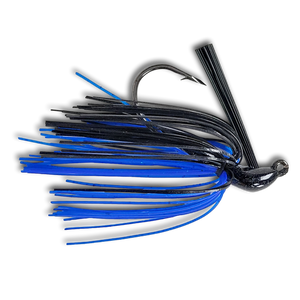



Dougs Custom Lures Tube Jig Heads
$5.99
(No reviews yet)

Write a Review

Dougs Custom Lures Tube Jig Heads
On-the-water overview (demo copy)
This is placeholder text for Jiggin’ Johnson’s new template shell.
Once we’re happy with the layout and behavior, we’ll plug in real product
descriptions, rigging tips, and JJ-specific language.
Specs & build (demo copy)
Specs & build (demo copy)
Care & storage (demo copy)
Care & storage (demo copy)
Best ways to fish it (demo)
Swim Jig Trailer
Shallow grass, slow roll
Texas Rig
Pitching to cover
Ball Jig Head
Dragging sand or rock
Split Shot
Natural subtle glides
Internal Rigging — The Classic Tube Setup
When/Where: The go-to setup for bass and smallmouth on rocky structure, rip-rap, gravel points, and hard-bottom flats. Works in 4–20 feet of water wherever fish are holding near the bottom.
How: Insert the tube jig head inside the tube body from the open tail end, pushing the head up toward the nose until the hook eye exits just behind the head of the tube. The hook point exits through the side of the tube body. The tentacles hang naturally off the tail and flutter on every movement.
Why: Internal rigging keeps the profile compact and natural-looking — the head is completely concealed inside the tube, giving the bait a realistic baitfish or crayfish silhouette with no hardware visible. Fish can fully commit before feeling any resistance.
Tuning: Make sure the tube sits straight on the head so it doesn't spin or roll on the retrieve. A slightly lighter head than you think you need will slow the fall and give the tentacles more time to work.
Drag & Hop — Bottom Crawling for Bass
When/Where: Largemouth and smallmouth bass holding near rocky and hard-bottom structure. One of the most consistent tube presentations from spring through fall, especially effective in 6–15 feet.
How: Cast past the target area and let the tube sink to the bottom on a semi-slack line. Then drag it slowly along the bottom with the rod tip low, pausing frequently. On the pause, give the rod a subtle shake to make the tentacles quiver in place. Most strikes come during or just after a pause.
Why: The drag-and-hop mimics a crayfish or small baitfish feeding along the bottom — exactly what bass in rocky environments are keying on. The tube's hollow body and tentacles produce lifelike action with minimal angler input.
Tuning: Slow down when fish are finicky. If you're getting follows but not commitments, try dragging instead of hopping — sometimes less movement is what triggers the strike.
Swimming — Mid-Column & Suspended Fish
When/Where: Open water and mid-depth structure for bass and walleye when fish are suspended or actively chasing baitfish. Works well over submerged humps, along weedlines, and in open-water basin areas.
How: Swim the tube at a consistent depth with a slow, steady retrieve. The tentacles flutter continuously during the swim, and the hollow body gives the bait a slightly erratic, baitfish-like wobble. Keep the rod tip at a consistent angle to maintain depth control.
Why: A swum tube doesn't look like much at rest, but in the water it has a lifelike shimmy that's hard for suspended fish to ignore. It's an underused presentation that often out-fishes more conventional swimbaits in pressured water.
Tuning: Use a lighter head (1/8–3/16 oz) to slow the sink rate and keep the tube in the strike zone longer. In current, heavier heads (1/4–3/8 oz) help maintain depth and direction.
Vertical Fishing — Docks, Bluffs & Deep Structure
When/Where: Vertical presentations around dock pilings, bluff walls, bridge supports, and steep structure drops. Particularly effective for bass in summer when fish go deep and stack on vertical cover.
How: Position the boat directly over or beside the structure and lower the tube straight down. Work it with subtle lifts and drops of 6–12 inches, letting the head pull the tube down while the tentacles flutter on the fall. Stay in contact with the structure the whole time.
Why: Vertical fishing puts the bait in front of fish that won't chase — you bring the tube to them rather than asking them to move. The fluttering tentacles generate strikes even from lethargic fish.
Tuning: Heavier heads (3/8 oz) sink faster and are easier to control on deep vertical presentations. If fish are high in the water column on the structure, start lighter and let the tube spiral down slowly.
Drifting & Trolling — Walleye on Open Structure
When/Where: Walleye on mid-depth flats, points, and open-water structure in 8–25 feet. Drifting a tube is a highly effective and often overlooked walleye technique, particularly on larger natural lakes and reservoirs.
How: Let out enough line to keep the tube ticking along the bottom as the boat drifts or slow-trolls over structure. The tube's action is generated entirely by forward movement — the tentacles stream behind and flutter naturally. Vary your speed to find what triggers bites on a given day.
Why: Walleye respond to the tube's baitfish profile and subtle action, especially when it's moving through their strike zone at a consistent pace. It covers water efficiently while maintaining a natural, bottom-oriented presentation.
Tuning: Match weight to drift speed and depth — 1/4–3/8 oz is a good starting range. If the tube is bouncing off the bottom too aggressively, go heavier. If it's dragging, go lighter.
Skipping — Under Docks & Overhanging Cover
When/Where: Bass hiding under floating docks, boat lifts, overhanging brush, and low bridges — anywhere fish seek shade and cover that's otherwise hard to reach with a standard cast.
How: Use a sidearm or underhand cast and aim to skip the tube across the surface like a flat stone. The tube's compact profile and internal head make it one of the better skipping baits available — it slides easily and doesn't tumble like bulkier lures. Let it sink naturally after it comes to rest under the cover.
Why: Docks and overhanging cover hold some of the biggest bass in any body of water, especially in summer. Skipping a tube gets in front of fish that rarely see pressure because most anglers can't reach them effectively.
Tuning: 3/16–1/4 oz gives enough weight for a controlled skip without sinking too fast after landing. Fluorocarbon line helps the bait sink quickly once it's under the cover.
Finesse Tube — Light Line, Clear Water, Tough Bites
When/Where: Post-cold-front bass, clear-water situations, and heavily pressured fisheries where fish have seen every standard presentation. Smaller tube profiles (1.75"–3") on lighter heads shine here.
How: Downsize to a 1/16–1/8 oz head paired with a finesse tube. Fish with a light spinning rod and 6–10 lb fluorocarbon. Use a slow, subtle drag-and-shake presentation and let the bait do the work — finesse fishing is about patience and keeping the bait in the strike zone longer than feels necessary.
Why: When fish are pressured or finicky, a smaller, slower tube presentation often gets bites that nothing else will. The compact profile is less threatening and the slower fall gives reluctant fish more time to commit.
Tuning: The Jiggin' Johnsons 1.75" Skirted Tube is a natural fit for this style of fishing — small, detailed, and built for exactly this kind of presentation.