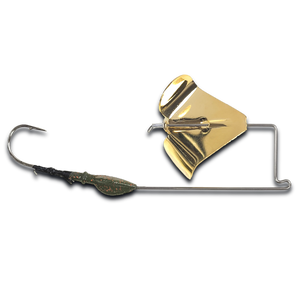

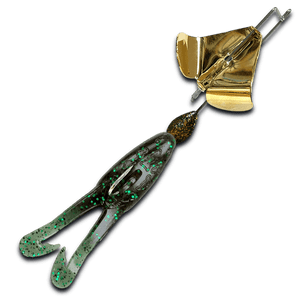

Dougs Custom Lures Premium Buzz Baits
$6.99
(No reviews yet)

Write a Review

Dougs Custom Lures Premium Buzz Baits
On-the-water overview (demo copy)
This is placeholder text for Jiggin’ Johnson’s new template shell.
Once we’re happy with the layout and behavior, we’ll plug in real product
descriptions, rigging tips, and JJ-specific language.
Specs & build (demo copy)
Specs & build (demo copy)
Care & storage (demo copy)
Care & storage (demo copy)
Best ways to fish it (demo)
Swim Jig Trailer
Shallow grass, slow roll
Texas Rig
Pitching to cover
Ball Jig Head
Dragging sand or rock
Split Shot
Natural subtle glides
Buzz Bait — Classic Topwater Retrieve
When & Where: Low-light windows at dawn and dusk, overcast days, and any time bass are actively feeding in the shallows. Shines over grass flats, alongside laydowns, and around dock edges from late spring through early fall.
How: Cast past your target and begin your retrieve the instant the lure hits the water — don't let it sink. Keep the rod tip elevated at roughly 10 o'clock and reel just fast enough to keep the blade churning on the surface. A steady "blub-blub-blub" cadence is the sweet spot. Slow down over open water, speed up when crossing pockets in grass.
Why: The cupped aluminum blade displaces water and creates an aggressive clattering commotion that triggers reaction strikes from bass that aren't actively feeding. The full silicone skirt pulses and breathes on every retrieve, adding a lifelike secondary action.
Tuning: To increase noise and castability, add a soft plastic trailer — a 3"–4" split-tail grub or paddle-tail swimbait fished directly on the hook shank. Bend the blade arm slightly upward if you want more blade-to-body contact for extra clatter. In heavy cover, switch to a heavier wire hook or add a trailer hook on the bend for short-striking fish.
Weight Selection — 3/8 oz vs. 1/2 oz
When & Where: The 3/8 oz shines in calmer conditions, shallower water, and when fish are pressured — its lighter presentation stays up on slower retrieves. The 1/2 oz earns its keep on windy days, longer casts, and in 3–5 feet of water where you need a little more authority to keep contact.
How: Match weight to conditions rather than personal preference. Calm, clear, shallow: reach for the 3/8 oz. Choppy, stained, or you need to cover water fast: the 1/2 oz keeps up without burying the blade.
Why: Heavier heads cast farther and hold a shallower running angle more easily at faster retrieves. Lighter heads let you slow down to a near-dead-stop crawl over the top of submerged vegetation.
Grass Mats & Shallow Cover
When & Where: Anywhere vegetation or structure tops out within 18 inches of the surface — lily pads, coontail clumps, hydrilla edges, and flooded brush in 1–4 feet of water.
How: Walk the bait right along the weed edge or over the top of submerged mats. When the blade clips vegetation, give a tiny speed burst rather than slowing down — that sudden "pop" out of the grass is one of the most reliable strike triggers in topwater fishing.
Why: Bass stage along edges and ambush from below. A buzzbait running the break line is almost impossible for an aggressive largemouth to ignore.
Tuning: In heavy matted grass, the wire-arm design helps deflect stems rather than fouling. If you're losing fish at the net, drop down to the 3/8 oz for a slower crawl pace that lets the fish fully engulf the bait.
Night Fishing
When & Where: Summer nights when water temperatures push above 75°F and daytime pressure has the bite locked down. Focus on shallow docks, riprap banks, and main-lake points under 4 feet.
How: Slow your retrieve until you can barely keep the blade on top. The noise is the trigger — let the clatter do the work. Cast parallel to the bank and retrieve toward structure. Use the 1/2 oz for extra sound in the dark.
Why: Bass rely heavily on their lateral line at night. A slow, loud buzzbait is one of the easiest sounds a bass can home in on in complete darkness.
Spinnerbait Day — Swap to Buzz at Dawn/Dusk
When & Where: Any outing where you're already throwing a spinnerbait through mid-depth cover. The buzz bait is the natural companion for the first and last 30 minutes of light when fish are pushed up into the skinny stuff.
How: Start with the buzz bait before the sun clears the horizon, work the top 18 inches. Once fish move off the surface, transition to a spinnerbait or bladed jig to follow them down a few feet.
Why: The buzz bait covers surface-feeding fish faster than any subsurface option, and the transition to a bladed jig or spinnerbait keeps you in the strike zone all morning without restarting your approach.