
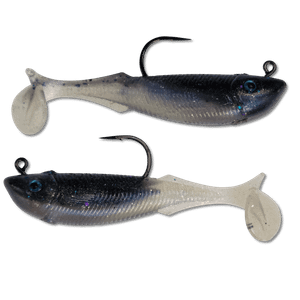

Dougs Custom Lures 4.0" Pre-Rigged Tailkicker Soft Plastic Kicker Tail
$7.99
(No reviews yet)

Write a Review

Dougs Custom Lures 4.0" Pre-Rigged Tailkicker Soft Plastic Kicker Tail
On-the-water overview (demo copy)
This is placeholder text for Jiggin’ Johnson’s new template shell.
Once we’re happy with the layout and behavior, we’ll plug in real product
descriptions, rigging tips, and JJ-specific language.
Specs & build (demo copy)
Specs & build (demo copy)
Care & storage (demo copy)
Care & storage (demo copy)
Best ways to fish it (demo)
Swim Jig Trailer
Shallow grass, slow roll
Texas Rig
Pitching to cover
Ball Jig Head
Dragging sand or rock
Split Shot
Natural subtle glides
Steady Retrieve
When/Where: Open flats, points, and mid-depth structure where fish are actively chasing. Works from shallow docks all the way down to deeper ledges depending on jig head weight.
How: Tie on, cast out, let the bait sink to depth, then wind at a consistent medium-slow pace. Keep the rod tip low and just fast enough to feel the kicker tail working throughout the retrieve.
Why: The curled kicker tail produces a distinctly different action than a paddle tail — a wider, more erratic sweep that mimics a larger, wounded baitfish. On a steady retrieve it generates strong vibration and visible tail movement that fish can track from a distance.
Tuning: Speed up in warm water when fish are active and aggressive. Slow down in cold or post-front conditions to keep the bait in the strike zone longer without losing tail action.
Slow Roll
When/Where: Grass edges, submerged vegetation, and shallow to mid-depth timber. Best when bass are holding in or just off cover and need the bait presented slowly.
How: Retrieve as slowly as possible while still maintaining kicker tail action. The goal is to crawl the bait just above or alongside the cover — slow enough to keep fish from getting a long, clean look but fast enough to keep that tail sweeping.
Why: The Tailkicker's curled tail produces action at lower retrieve speeds than a standard paddle tail, making it particularly well-suited to the slow roll when fish want something deliberate. The larger 4.0" profile also makes it a strong choice for bigger bass holding in heavier cover.
Lift & Drop
When/Where: Hard-bottom structure — rocky points, gravel humps, channel edges, and dock posts. Highly effective for both bass and walleye holding tight to the bottom.
How: Let the bait hit bottom, then lift the rod tip smoothly from the 3 o'clock to 11 o'clock position and drop back on semi-slack line, reeling up slack as the bait falls. The bite often comes on the fall.
Why: The curled kicker tail flutters and kicks erratically during the free fall, mimicking a disoriented or dying baitfish — one of the most reliable triggers for bottom-oriented predators. The 4.0" size reads as a more substantial meal, which can draw larger fish off the bottom that might ignore a smaller bait.
Tuning: Let the bait fully settle between lifts for inactive fish. Shorten the pause for more aggressive fish or in faster current.
Count Down & Suspend
When/Where: Open water over deep structure or basin areas. Best for suspended bass and walleye that won't come up or down to chase.
How: Cast out and count the bait down to the depth where fish are holding, then begin your retrieve and maintain a consistent speed that keeps the bait tracking at that level throughout.
Why: Suspended fish are notoriously difficult to trigger because most retrieves pull the bait out of their zone almost immediately. Counting down and staying at depth puts the Tailkicker in front of fish that would never see a bait fished near the surface or bottom.
Tuning: Note the count and speed when a bite happens — repeatability at the right depth is the single biggest factor for suspended fish.
Yo-Yo / Burn & Kill
When/Where: Warm water, active fish, and post-spawn bass on open flats and points where reaction strikes are the primary trigger.
How: Burn the bait quickly for 3–5 reel turns, then kill the retrieve entirely and let it flutter down on slack line. Repeat. The stop-and-fall is almost always when the bite comes.
Why: Fast-moving prey that suddenly goes limp is one of the most instinctive triggers for predatory fish. The Tailkicker's curled tail sweeps hard during the burn phase, then collapses and kicks erratically on the fall — a two-stage action that can draw strikes from fish that ignored a steady retrieve entirely.