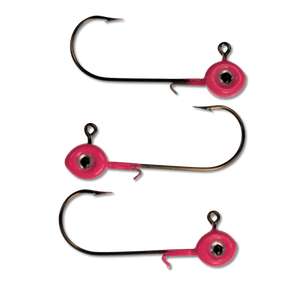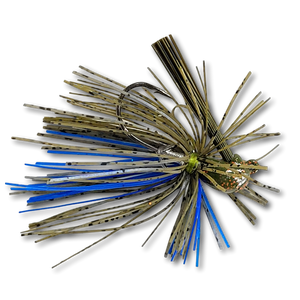



Dougs Custom Lures Go-To Skirted Underspin
$6.99
(No reviews yet)

Write a Review

Dougs Custom Lures Go-To Skirted Underspin
On-the-water overview (demo copy)
This is placeholder text for Jiggin’ Johnson’s new template shell.
Once we’re happy with the layout and behavior, we’ll plug in real product
descriptions, rigging tips, and JJ-specific language.
Specs & build (demo copy)
Specs & build (demo copy)
Care & storage (demo copy)
Care & storage (demo copy)
Best ways to fish it (demo)
Swim Jig Trailer
Shallow grass, slow roll
Texas Rig
Pitching to cover
Ball Jig Head
Dragging sand or rock
Split Shot
Natural subtle glides
The Go-To Skirted Underspin takes the same proven round-head underspin design and adds a full silicone skirt — giving you built-in action, bulk, and color without a trailer required. At 1/4 oz it carries well on a cast and holds depth on a steady retrieve, making it a strong searchbait for active bass, pike, and walleye. Fish it alone or tip it with a soft plastic to push even more water. When & Where: Open water, points, channel edges, and weed lines where fish are actively feeding. The skirt already provides substantial movement, so a paddle tail trailer adds a secondary kicking action at the rear — a strong combination when fish are keyed on larger baitfish. How: Thread a 3"–4" paddle tail onto the hook so it trails just beyond the skirt. Retrieve at a steady medium pace, keeping the bait in the upper half of the water column over cover. The skirt pulses around the trailer on every pause. Why: The layered action — skirt fanning, paddle tail kicking, blade spinning — creates a multi-signal presentation that reads as a larger, more prominent baitfish than any single component on its own. Tuning: Try the bait without a trailer first. The skirt alone is often enough; add a trailer when you want more profile or a different tail action. Shop shad & paddle tail profiles → When & Where: Cold fronts, post-spawn periods, and any time fish are less aggressive but still willing to eat something that looks alive. The grub tail adds a tight, fast-frequency wiggle that contrasts with the skirt's slower pulse. How: Rig a 3" curly tail grub on the hook so the tail clears the skirt slightly. Fish it on a slow to medium steady retrieve, staying just above bottom or over submerged structure. Why: Three independent action sources — skirt, grub tail, blade — at three different frequencies. That combination is particularly effective on neutral fish that need a reason to commit. Shop grub profiles → When & Where: Active feeding periods, warm water, and anywhere you want a fast-moving searchbait that doesn't require re-rigging. The full silicone skirt provides enough bulk, movement, and color to draw strikes on its own. How: Cast and retrieve at medium to fast speed. The skirt fans out and breathes on every pause or speed change. The 1/4 oz weight keeps it moving through light cover without hanging up. Why: Fewer components means faster fishing. When bass or pike are aggressive, the skirt-only presentation is clean, quick, and highly effective — especially in murky or stained water where bulk matters more than fine detail. When & Where: Clear-water situations and schooling fish scenarios where a larger baitfish profile is needed. The skirt adds body around the hook shank while the fluke trails behind with its characteristic side-to-side glide. How: Nose-hook a 4"–4.5" fluke so it extends past the skirt. Retrieve with occasional pauses — the skirt collapses and fans as the bait decelerates, which can trigger following fish into striking. Why: The fluke's darting action combined with the skirt's flutter gives this setup a unique look that's different from anything else in the tackle box. Shop fluke profiles → When & Where: Walleye and bass on natural lakes, especially during evening and low-light periods when leeches are active forage. The skirt adds visual bulk at the head while the leech body trails naturally behind. How: Rig a 2.5"–4.25" leech-style soft plastic on the hook. Fish it on a slow crawl or gentle lift-and-flutter just above bottom. The gold blade catches available light even at minimal retrieve speeds. Why: Walleye in particular respond to the combination of blade flash and a natural, undulating trailer profile. The skirt adds a presence that makes the bait more visible from a distance in low light. Shop leech profiles → When & Where: When you want a slimmer profile extending from a skirted head — useful for pressured fish that have seen a lot of bulkier swim jig presentations. Also a productive trout setup in rivers and lakes. How: Rig a 4"–4.5" finesse worm onto the hook so it trails past the skirt. The worm's subtle movement contrasts with the skirt's more active pulse, creating a mixed-signal presentation. Why: The slim trailing body keeps the overall profile from looking too large or too loud — a useful adjustment when fish are feeding selectively. Shop worm profiles → When & Where: Targeting pike and larger bass with a big-profile presentation. The skirted head already reads as a larger bait; adding a willowcat or stickbait behind it creates a substantial silhouette that big predators key on from a distance. How: Rig the willowcat on the hook so it extends well past the skirt. Retrieve at medium speed along weed edges, timber lines, or open flats. The combined bulk is visible and attractive from a considerable distance in stained water. Why: For pike especially, bigger is often better. The skirt-plus-stickbait combination gives you the profile of a large swimbait with the versatility of a jig head setup. Shop willowcat profiles →Swimbait / Paddle Tail
Curly Tail Grub
Skirt Alone (No Trailer)
Fluke / Soft Jerkbait
Leech / Ribbon Body
Finesse Worm / Straight Tail
Willowcat / Soft Stickbait